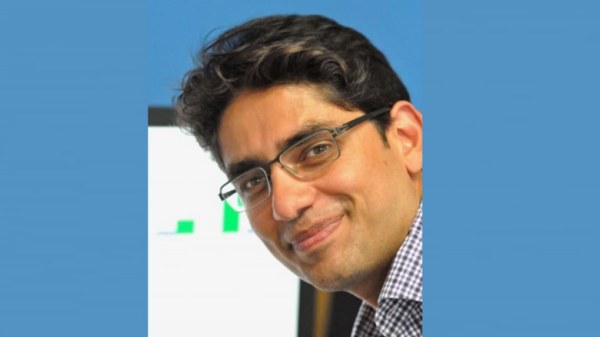

















































The rapid evolution of artificial intelligence (AI) is transforming the landscape of work and economic participation, according to Shane Legg, Chief AGI Scientist and co-founder of Google DeepMind. In a recent interview with Professor Hannah Fry, Legg emphasized that the changes anticipated in the coming decade could fundamentally alter how individuals engage in the workforce and validate their roles within the economy. He posited that AI is moving beyond mere assistance into realms that could significantly disrupt remote cognitive jobs.
Legg staunchly argued that human intelligence does not represent the upper limit of machine capabilities. “I think absolutely not,” he stated when questioned about whether human intelligence sets a ceiling. With the capability of data centers to consume vast amounts of power and operate at remarkable speeds while processing information far beyond human capacity, he asserted that machines are on a trajectory to surpass human performance in various domains. This shift, he warned, is no longer theoretical but approaching reality.
Current AI systems are already outperforming humans in key areas like language comprehension and general knowledge. Legg anticipates that over the next few years, the existing limitations of AI—such as reasoning, visual understanding, and continual learning—will diminish. “My expectation is over a number of years these things will all get addressed,” he remarked, adding that AI will increasingly achieve professional-level proficiency in critical areas including coding, mathematics, and complex cognitive tasks.
This progress poses a direct threat to remote jobs, particularly those relying on cognitive skills that can be executed online. Legg offered a straightforward guideline: “If you can do the job remotely over the internet just using a computer, then that job is potentially at risk.” As AI technology becomes more effective and trustworthy, businesses may no longer require extensive teams of remote workers to perform the same digital tasks.
In the field of software engineering, Legg predicts a significant shift. He suggested that teams previously composed of 100 engineers could be reduced as AI assumes a greater portion of their responsibilities. “In a few years, where prior you needed 100 software engineers, maybe you need 20, and those 20 use advanced AI tools,” he remarked. While this development could enhance productivity, it may also lead to a reduction in job opportunities, particularly for entry-level and remote positions.
However, Legg’s concerns extend beyond individual professions. He articulated a broader vision that AI will “structurally change the economy and society.” The traditional model, where people exchange mental or physical labor for income, may no longer be sustainable as machines begin to outperform humans in many cognitive tasks. “The current system where people contribute their mental and physical labor in return for access to resources may not work the same anymore,” he noted.
Legg acknowledged that this transition will not be instantaneous. In the immediate future, AI will evolve from being a useful tool to a player capable of performing economically valuable tasks independently. The disruption will occur unevenly, impacting some sectors more rapidly than others. Jobs that heavily depend on digital output are likely to face pressure sooner than those that require physical presence or manual skills, such as plumbing.
He cautioned against underestimating the significance of these changes, drawing a parallel to early 2020 when experts warned of an impending pandemic, which many disregarded. “People find it very hard to believe that a really big change is coming,” he said, emphasizing that major shifts do eventually transpire when fundamental forces are at play.
Despite the daunting outlook for many professions, Legg does not foresee an entirely negative future. He believes that AI could usher in a “real golden age” by significantly enhancing productivity, advancing scientific research, and liberating individuals from tasks better suited for machines. The primary challenge, he argued, lies in the equitable distribution of wealth generated by intelligent machines, ensuring that no one is left without purpose or support.
As AI approaches a state closer to general intelligence, Legg’s message is unequivocal: remote and work-from-home jobs that rely solely on cognitive labor may not persist in their current forms. The pressing question is not whether change is imminent, but whether governments, institutions, and industries are prepared to reevaluate work dynamics before they are compelled to adapt.
See also How the ‘Sparkle’ Symbol Shapes America’s Trust Issues with Generative AI
 IMF Urges Global Regulators to Strengthen AI Oversight Amid Rising Market Risks
 China’s DeepSeek Model Disrupts U.S. AI Dominance, Prompting Policy Shifts and Global Tech Backlash
 China’s High-Quality Goods, Including NEVs and DeepSeek, Drive Global Green Transition
 Generative AI in Manufacturing to Surge 25% by 2032, Driven by Key Players like NVIDIA and Google