

















































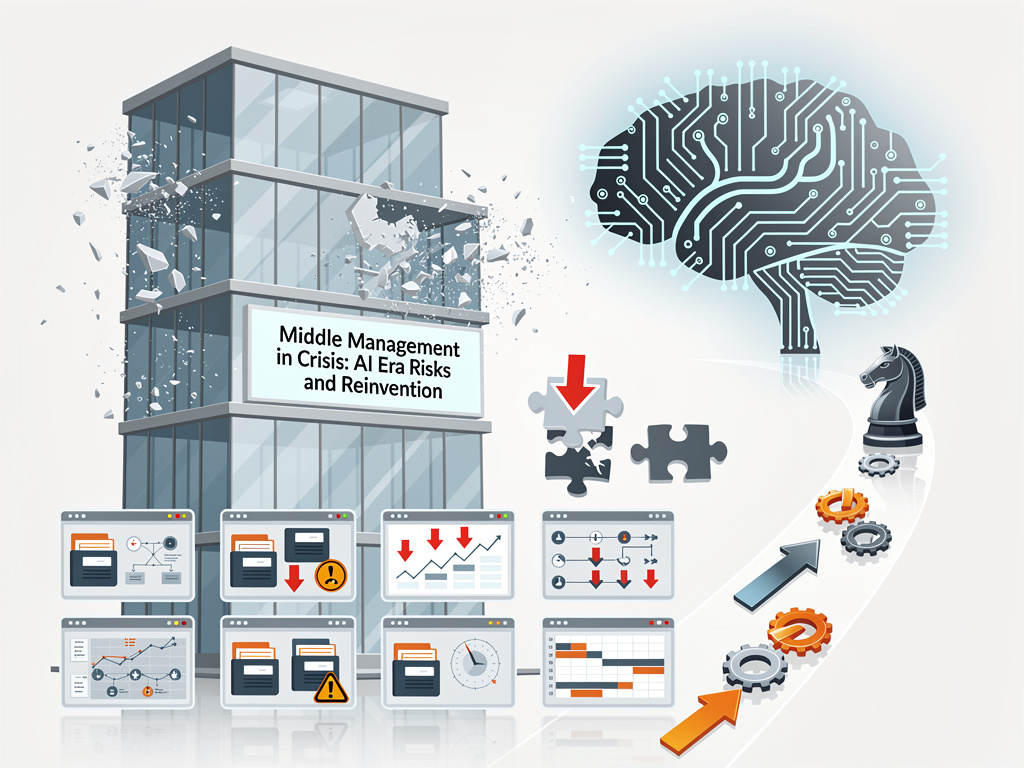
As corporate cost-cutting measures continue to gain momentum through 2025, middle managers are increasingly becoming prime targets for layoffs at major tech companies and beyond. Despite the ongoing trend of corporate delayering aimed at boosting efficiency and reallocating funds toward artificial intelligence investments, leadership experts argue that these roles are more crucial than ever. Ron Carucci, a partner at management consultancy Navalent, emphasizes that middle managers play a vital role in translating strategy into execution, a function that remains indispensable even as companies like Meta, Amazon, and Verizon reduce their workforce.
The paradox of this situation arises from aggressive efforts to flatten organizational hierarchies. According to a recent analysis by Forbes, over 120 companies had announced layoffs by mid-year, with AI and self-managed teams taking the place of traditional supervisory roles. This shift often leaves the remaining middle managers overburdened, facing the challenge of managing larger teams while executives overlook the critical human element these managers provide.
Sentiment on social media platform X reflects this tension, as users point out the precarious position of middle managers, often deemed expendable as companies focus on hiring engineers. Experts like Ethan Mollick assert that these managers are essential for balancing strategic goals, employee needs, and operational constraints—a complex task that cannot simply be automated. “It’s a hard job,” he notes, highlighting that middle management is irreplaceable in the algorithm-driven workplace.
The landscape of layoffs is particularly pronounced in the tech industry. A layoff tracker from Business Insider lists significant cuts at firms such as American Airlines, Meta, and Intel, all driven by increasing cost pressures and technological shifts. Middle managers, often viewed as non-revenue generating roles, have become the most affected. A July report from CNBC detailed the struggles faced by laid-off managers, including countless applications met with ghosting from HR departments amidst a contracting job market.
This trend persisted into December, as tracked by InformationWeek, which recorded ongoing layoffs following the post-COVID hiring boom. Platforms like X have become forums for recruiters and job seekers alike to voice their concerns, with many noting that cuts are increasingly favoring individual contributors over managerial positions.
As artificial intelligence continues to automate routine tasks, it simultaneously heightens the need for skilled oversight. Carucci warns executives that underestimating the role of middle managers could hinder organizational resilience. “Middle managers are the ones who make or break execution,” he states, underscoring their importance in guiding ethical AI deployment and maintaining team morale.
The rise of self-led teams and AI tools is prompting a transformation in the responsibilities of remaining managers. They must now evolve into “prompt engineers,” aligning AI systems with strategic objectives, while also managing the human aspects of their teams. This shift requires new skills, including data fluency, coaching, and strategic translation, to avoid execution gaps that could arise from a lack of effective middle management.
Laid-off managers are confronting a grim job market. As reported by CNBC, many find themselves in a “shrinking pool of opportunities” amid heightened competition from their peers. The phenomenon of ghosting by potential employers reflects a broader trend of uncertainty in the white-collar job sector.
Expert advice for those seeking to remain relevant in the workforce includes becoming indispensable by going beyond standard duties, arriving early, assisting colleagues, and enhancing visibility to their superiors. These strategies have begun to circulate on social media, illustrating the proactive measures individuals are taking to navigate this challenging landscape.
Carlucci has expressed concern that excessive cuts can erode company resilience. In an era defined by rapid technological innovation, middle managers are essential for bridging the technical and human elements of organizations, thereby preventing burnout and misalignment. Navalent’s experience with Fortune 500 companies reveals that delayering often backfires if not accompanied by adequate retraining.
Looking ahead, companies that are successfully navigating the post-layoff landscape are empowering their remaining managers with the tools and autonomy necessary to thrive. This approach not only counteracts potential morale dips stemming from workload increases but also highlights the importance of middle managers in driving innovation and reducing turnover. Studies cited by Mollick on X indicate that effective middle management has an outsized impact on outcomes, suggesting that organizations neglecting this function risk stagnation.
Ultimately, the lesson for businesses as they streamline operations through 2025 is clear: in the pursuit of efficiency, it is crucial to preserve the vital connections that middle managers forge between strategy and execution. These roles, while often cut, remain the linchpins that executives cannot afford to lose.
See also Character.AI Hosts Pro-Anorexia Chatbots Despite Violating Service Terms, Report Reveals
 China Unveils Draft AI Regulations to Curb Emotional Dependency and Ensure Ethical Use
 Global Leaders to Converge at India AI Impact Summit 2026, PM Modi to Inaugurate Key Event
 Nine AI Giants Reshape Industry in 2025; Google Secures $20B in TPU Orders
 Global Leaders, CEOs Confirm for India AI Impact Summit 2026 to Drive AI Democratisation