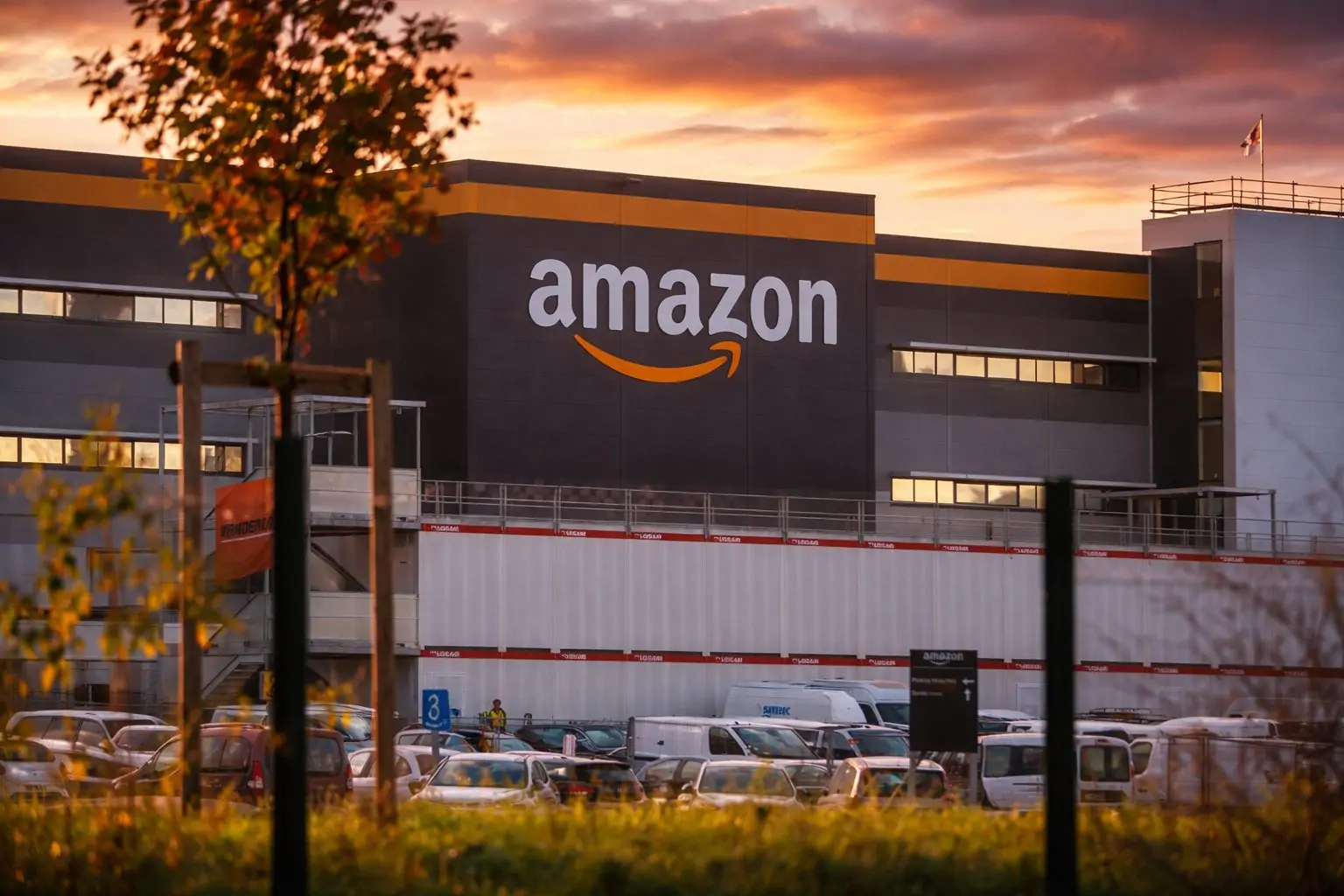
Ahead of the next U.S. stock market open, Amazon.com, Inc. (NASDAQ: AMZN) is once again a focal point for investors, primarily due to reports suggesting that the company is in early talks for a multi-billion-dollar investment in OpenAI. This potential investment could facilitate the migration of AI training and inference workloads onto Amazon Web Services (AWS) and leverage Amazon’s proprietary chips. This pre-market briefing is aimed at the U.S. session beginning Monday, December 22, 2025, a period shaped by Amazon’s strategic positioning in AI, key earnings forecasts, and ongoing regulatory scrutiny.
As of the last trading session, AMZN shares were quoted at around $227.35. The holiday trading week is set to be significant, with U.S. equities closing early on Wednesday, December 24, and remaining closed on Thursday, December 25, conditions that typically lead to thinner liquidity and heightened reactions to news.
The most consequential headline is the report that Amazon is exploring an investment of approximately $10 billion in OpenAI. This move, if formalized, would not only signify financial backing for OpenAI but also position Amazon as a critical player in AI infrastructure, capitalizing on the increasing demand for compute power. As OpenAI’s training and inference requirements grow, the ability to provide scalable compute resources becomes a central competitive advantage in the cloud sector.
The implications of such an investment extend beyond financial metrics; it would bolster Amazon’s market position against established players like Microsoft and Google. Microsoft has maintained a long-standing partnership with OpenAI, and a partnership between Amazon and OpenAI would directly challenge this relationship while also enhancing AWS’s share of the AI infrastructure market in the coming years.
However, potential pitfalls are evident. The discussions are described as “very fluid,” indicating uncertainty around the negotiations. Large investments invite scrutiny regarding valuation and governance, and questions regarding return on capital could arise, particularly if AWS’s AI business does not yield immediate financial benefits.
Amazon’s strategy in the AI space includes substantial investments in its own Trainium chips and associated infrastructure. The launch of Project Rainier aims to power advanced AI workloads, with projections indicating that Amazon will deploy nearly 500,000 Trainium2 chips across multiple U.S. data centers. This project reflects Amazon’s commitment to controlling the full stack of AI infrastructure, from silicon to software, thereby increasing potential margins as reliance on third-party providers diminishes.
In addition, Amazon has announced plans to invest up to $50 billion to expand its AI and high-performance computing infrastructure for U.S. government agencies, adding almost 1.3 gigawatts of capacity. This focus on government contracts represents a stable demand source but comes with its own complexities regarding compliance and procurement.
As for financial metrics, Amazon’s latest quarterly report for Q3 2025 revealed a complex narrative. While AWS sales reached $33.0 billion, marking a 20% increase year-over-year, the company also faced a decline in free cash flow linked to heightened capital expenditures. This backdrop creates a duality in investor perception: a robust, high-margin cloud business juxtaposed against a capital-intensive logistics operation.
For the upcoming holiday quarter, Amazon is guiding net sales between $206 billion and $213 billion, with operating income projected between $21 billion and $26 billion. This guidance reflects a crucial evaluation period for Amazon, as analysts remain cautiously optimistic about AWS’s growth trajectory and the efficacy of its advertising services, which are increasingly vital for offsetting margin pressures.
Regulatory concerns are also high on the agenda, especially following a $2.5 billion settlement with the FTC concerning deceptive practices related to Prime subscriptions. This settlement not only involves a $1 billion civil penalty and $1.5 billion in consumer refunds but has also impacted Amazon’s reported operating income for Q3. Refunds are currently being processed, complicating the company’s financial narrative as it strives to maintain investor confidence amid ongoing scrutiny.
Looking ahead, investor sentiment remains broadly constructive, with analysts generally rating Amazon as a “Strong Buy.” The average price target is around $284.70, reflecting optimism about AWS’s re-acceleration and AI capacity expansion. However, the market remains vigilant about the balance between capital expenditures and the return on investment, particularly in the context of the competitive AI landscape.
As trading begins, all eyes will be on Amazon, particularly regarding any confirmation or details about the investment discussions with OpenAI, the implications of its AI reorganization, and any insights into its capital expenditure strategy. The holiday season’s performance will also be scrutinized for signs of consumer demand and margin discipline. The fundamental question for Amazon at this juncture revolves around its ability to translate significant AI investments into sustainable growth while navigating regulatory challenges.
See also Lenovo’s AI Strategy: 5 Proven Tactics to Boost Business Efficiency and Innovation
 Transform Consumer Products with AI: A Six-Step Strategy for Immediate Value Creation
 Microsoft’s Mustafa Suleyman Declares No Support for Autonomous AI Systems Amid Azure Adoption Struggles
 SenseTime Stock Dips 0.53% to HK$1.88 Amid Intensifying AI Market Competition