

















































Updated: Dec. 25, 2025 (U.S. markets reopen Friday, Dec. 26)
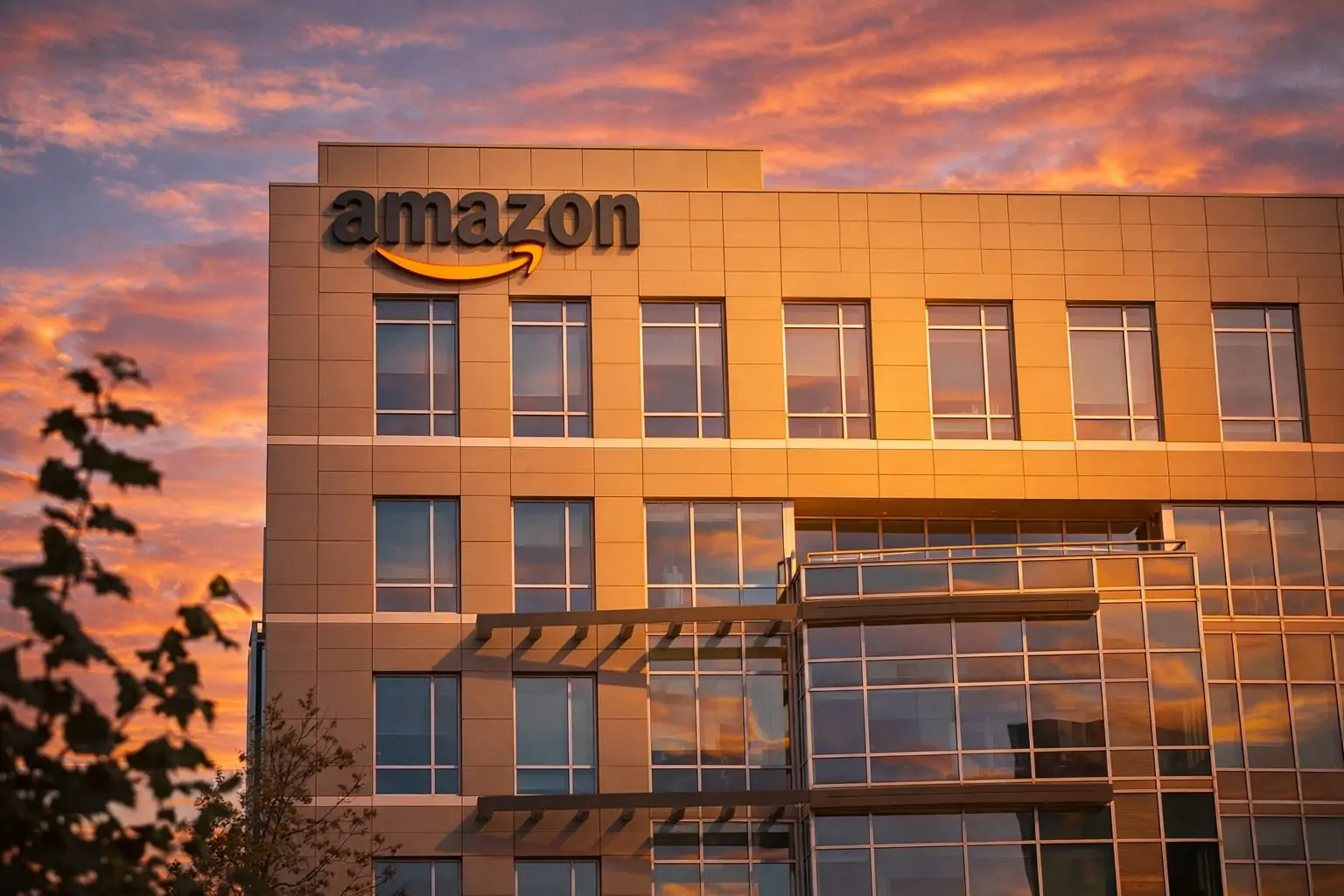
Amazon.com, Inc. (NASDAQ: AMZN) enters the market on December 26 with investors focused on a blend of familiar factors influencing stock performance: growth in Amazon Web Services (AWS), increased spending on AI infrastructure, retail execution during the holiday season, and ongoing regulatory risks. The company’s shares closed at $232.38 on a shortened trading session on December 24, a slight decrease in after-hours trading to around $232.01.
As trading resumes, Amazon’s market capitalization stands near $2.45 trillion, with shares approximately 10% below their 52-week high of $258.60. The holiday trading volume was notably lower, with around 11.4 million shares exchanged on December 24, which can lead to volatile price movements.
In its most recent quarterly report for Q3 2025, Amazon reported net sales of $180.2 billion, representing a 13% year-over-year increase. AWS sales reached $33.0 billion, a 20% rise from the previous year, with operating income for the segment at $11.4 billion. This AWS growth is significant as many investors view Amazon primarily as a cloud and AI entity, with its retail and advertising operations serving as secondary contributors.
Amazon is currently emphasizing a vertically integrated AI strategy that combines models, chips, and cloud infrastructure. On December 16, CEO Andy Jassy appointed Peter DeSantis, a veteran AWS leader, to oversee a newly formed organization focused on Amazon’s expansive AI models, silicon development, and quantum computing. This restructuring aims to enhance coordination across the AI stack, a critical element in determining AI performance and competitive advantage in the cloud sector.
The recent AWS re:Invent conference served as a platform for Amazon to showcase its advancements in AI infrastructure, including updates on the Amazon Nova foundation models and customized silicon efforts. The company highlighted the addition of 3.8 gigawatts in power capacity over the past year to meet AI demand, underscoring its commitment to expanding AI capabilities.
However, the narrative surrounding capital expenditure poses a dual-edged sword; while AI infrastructure investments are seen as fueling future growth, they have also exerted pressure on free cash flow. Over the trailing twelve months leading to September 30, 2025, Amazon reported operating cash flow of $130.7 billion, up 16% year over year, but free cash flow had decreased to $14.8 billion, largely due to a $50.9 billion increase in capital expenditures.
Amazon’s strategic investments include a planned $15 billion for data center campuses in Northern Indiana, targeting AI and cloud demand, and up to $50 billion for expanding AI and supercomputing infrastructure for U.S. government agencies, with construction expected to begin in 2026.
In retail logistics, Amazon’s ongoing negotiations with the U.S. Postal Service (USPS) pose a potential risk and opportunity. Reports suggest that discussions around contract terms have stalled, raising concerns about shipping costs and last-mile delivery reliability, which directly affect Prime’s value perception. Amazon has emphasized fulfillment network enhancements aimed at delivering Prime orders at accelerated speeds, a crucial factor for customer retention as the holiday season concludes.
Regulatory risks linger, particularly following the Federal Trade Commission’s (FTC) settlement concerning Prime subscription practices, which entails a total payment of $2.5 billion, including a $1 billion civil penalty and $1.5 billion in consumer refunds. Although the market has largely absorbed this charge, the refund process could generate headlines that affect perceptions of Prime growth and churn risk.
On the antitrust front, updates indicate that the FTC’s trial against Amazon has been rescheduled to commence on March 29, 2027, relieving some immediate pressure from the company’s trading dynamics, though the regulatory overhang remains significant.
Wall Street analysts maintain a positive outlook on Amazon, categorizing it as a “Strong Buy” with an average price target of approximately $284.7, ranging from $195 to $340. Some notable target adjustments include BMO Capital raising its estimate to $304 and Wedbush reiterating a target of $340.
As investors prepare for the market to open, several factors may drive trading activity. Key areas to monitor include developments in USPS negotiations, overall sentiment around AI infrastructure, and the ongoing impacts of the FTC settlement. Given the thin liquidity typical of late December trading, movements in Amazon’s stock may be exaggerated.
Overall, as Amazon approaches December 26, the stock reflects a familiar tension for long-term holders, balancing the bullish narrative surrounding AWS and AI advancements against concerns over cash flow pressures and regulatory uncertainties. The immediate focus will be on whether AMZN can maintain support levels around $230, which could reinforce positive momentum or shift attention back to broader market risk factors.
See also Korea’s 2025 AI Strategy: Nvidia Supplies 260,000 GPUs Amid $6.94B National Push
 AI’s Energy Demand Surges to 415 TWh, Outpacing Bitcoin’s 205 TWh Amid Grid Strain
 Grok AI Faces Bias Challenges as Vitalik Buterin Advocates for Truthfulness in Chatbots
 AI Vibe-Coding Revolutionizes Software Creation but Risks Buggy Code and Security Flaws
 AI Risks Reverting Humanity to Pre-Enlightenment Dependence, Warns New Study