






















































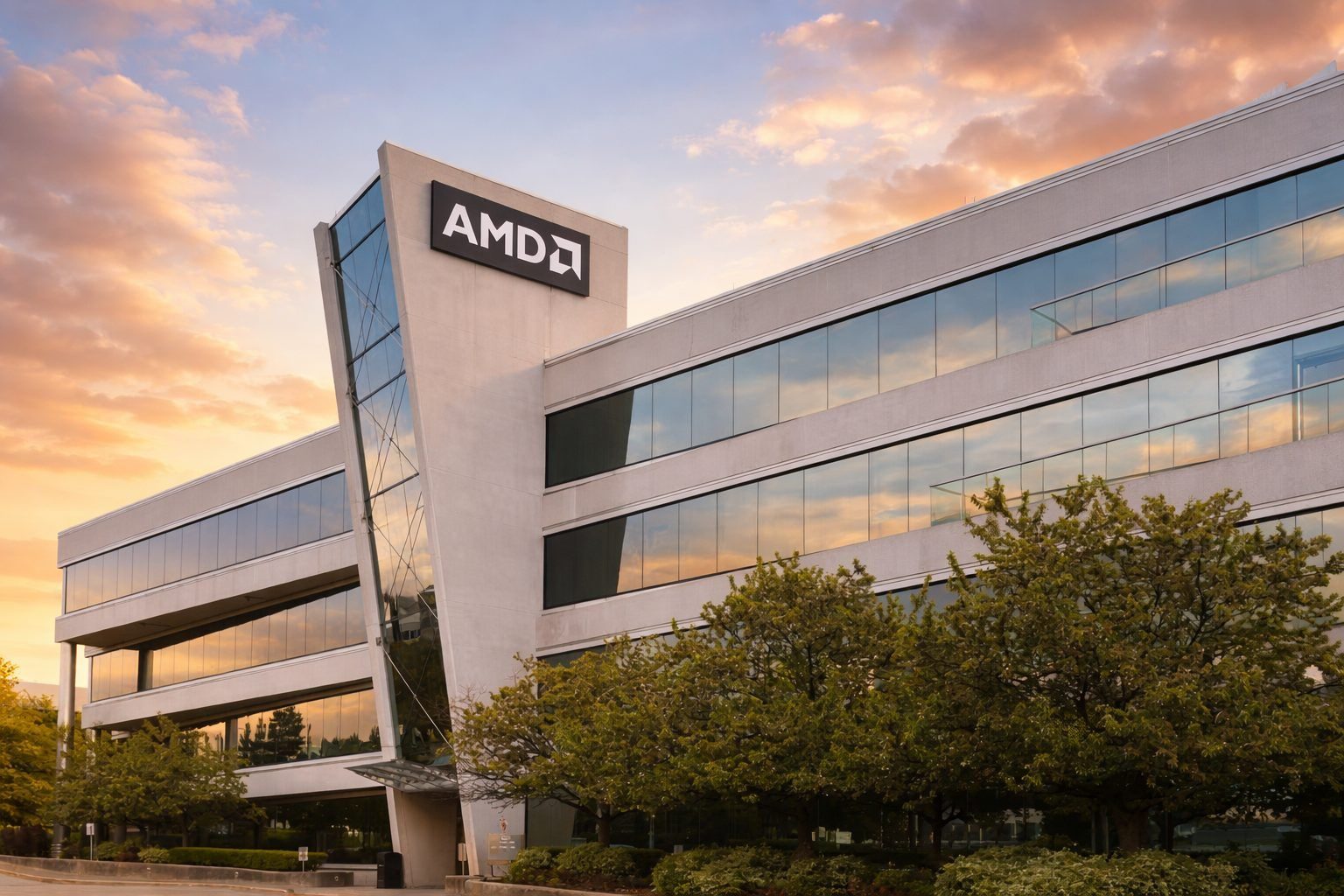
Advanced Micro Devices (NASDAQ: AMD) shares experienced a rebound on Thursday, December 18, following a sharp selloff in the semiconductor sector the previous day. As of mid-session Thursday, AMD stock was trading around $204.80, reflecting a gain of $6.69 or approximately 3.4% from the prior close, after fluctuating between $199.50 and $206.12.
This uptick followed a drop of about 5.3% on Wednesday, when shares fell to around $198 after a close near $209. The decline was attributed to renewed concerns regarding the funding of large AI data-center projects, which impacted AI-linked chip manufacturers, including AMD.
The story behind AMD’s stock movement encapsulates a tug-of-war between near-term sentiment shocks, primarily around credit and capital expenditure headlines related to AI infrastructure, and a longer-term narrative focused on the company’s MI-series accelerators and its “Helios” rack-scale strategy.
One of the key factors in today’s market movement was a broader rebound in technology stocks, bolstered by U.S. inflation data that came in below expectations. According to reports, November consumer prices rose 2.7% year-over-year, less than anticipated, which has fueled hopes for lower interest rates in the coming years. This environment supports long-duration growth stocks like semiconductor companies.
However, the AI sector remains highly sensitive to funding discussions. Market analysts attributed the recent downturn in AI-related equities to fears that neocloud and data-center companies might struggle to secure sufficient debt financing for expansion, with particular attention given to developments involving Oracle and Blue Owl. This has raised concerns of an “AI-bubble” that could negatively affect the entire AI supply chain, including chipmakers like AMD.
Not all signals were negative, however. Micron’s report on data-center memory demand provided some reassurance, contributing to a stabilization of several chip stocks after the Oracle news. Analysts noted that Micron’s performance appeared to calm investors’ nerves in the AI sector.
A significant AMD-specific catalyst today came from a call by Piper Sandler, which recommended a “Keep On Buying” stance based on a recent webinar with AMD management. Analyst Harsh Kumar highlighted several positive developments, including the progress of the MI300 series and the upcoming MI400 series launch as vital components of AMD’s roadmap.
Kumar underscored that AMD’s competitive edge lies in its performance-per-total cost of ownership, which resonates well with customers. He also mentioned ambitious performance claims, forecasting a nearly 10x performance increase from MI355 to MI450, indicating that the company aims to deliver substantial improvements rather than incremental gains.
Moreover, AMD’s strategy for its Helios platform, which will not be sold directly but rather licensed to OEMs/ODMs, is designed to enhance scalability by leveraging the existing server ecosystem. The acquisition of the ZT Systems engineering team, now exceeding 1,200 engineers, is positioned as a strategic execution advantage, particularly given the complexity of rack-scale systems.
Despite the optimism, uncertainties loom over AMD’s operations, especially regarding its exposure to the Chinese market, which is viewed as a significant risk factor beyond the company’s control.
Market sentiment surrounding AMD has not gone unnoticed, with analysts maintaining a bullish outlook. Piper Sandler set a price target of $280, while Daiwa reiterated a buy rating with a target of $300. The broader consensus among analysts appears to cluster in the high $200s, with some projections reaching $300, reflecting AMD’s potential as demand for AI workloads rises.
Looking ahead, AMD’s visibility will increase significantly with the upcoming CES 2026, where CEO Dr. Lisa Su is slated to present a vision for AI solutions. Scheduled for January 5, the presentation is expected to shape sentiment around AMD’s client CPU roadmap and AI-related products.
The next earnings report is also eagerly anticipated, with market calendars estimating a release on February 3, 2026. This announcement could further clarify AMD’s positioning in a rapidly evolving market.
In summary, AMD’s stock rebound on December 18 appears to be a reaction to broader market conditions and specific positive developments within the company, although significant risks remain, particularly around AI infrastructure financing and geopolitical factors. The ongoing narrative suggests a focus on the MI-series accelerator roadmap and the Helios platform, as investors weigh the potential for growth against the backdrop of varying market dynamics.
See also Interconnects Doubles Audience to 40K in 2025 Amid Surge in Open Model Discussions
 BTIG Boosts Amplitude (AMPL) Rating, Spotlights AI Potential Amid Investment Risks
 Kakao Unveils Kanana-2 Language Model on Hugging Face with Enhanced Tool Calling Features
 AI and Global Regulation Challenge Anonymization: Key Strategies for Compliance and Risk Management
 Doosan Bobcat Unveils AI-Driven Jobsite Solutions at CES 2026 to Transform Construction Efficiency