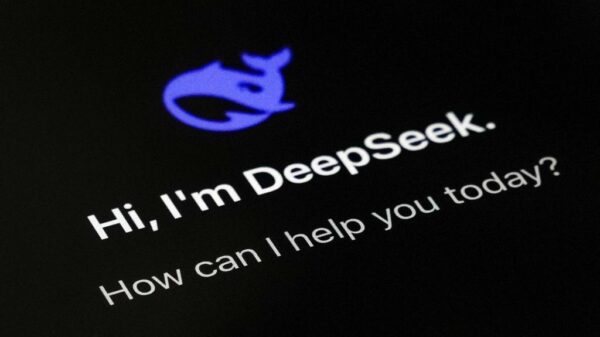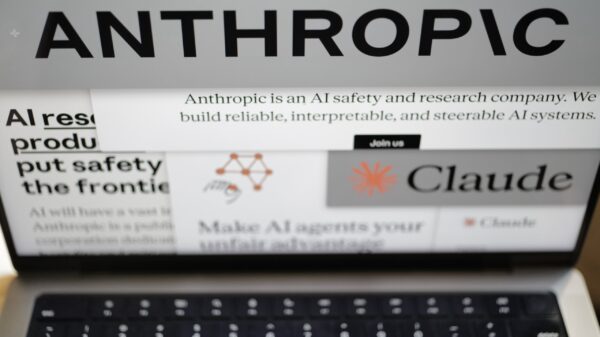




































New Delhi: United States-based artificial intelligence firm Anthropic has accused three Chinese unicorns—DeepSeek, Minimax, and Moonshot AI—of illegally extracting capabilities from its Claude model to enhance their own systems, according to a report from CNN Business. The allegations center around the alleged use of a process known as distillation, which Anthropic contends raises significant national security concerns.
The reported method involved the creation of approximately 24,000 fraudulent accounts that were used to train the Chinese models by interacting with roughly 16 million exchanges with Claude. Anthropic warned that the AI models produced in this manner might lack the safety measures implemented by responsible companies, raising the risk of their use in cyberattacks and the development of biological weapons.
In its statement, Anthropic cautioned that these models could empower “authoritarian governments to deploy frontier AI for offensive cyber operations, disinformation campaigns, and mass surveillance.” The firm stressed that the “window to act is narrow,” indicating urgency in addressing the potential consequences of such developments.
CNN Business has reached out to DeepSeek, Minimax, and Moonshot AI for their comments regarding the allegations. The rapid rise of DeepSeek, often characterized as one of China’s “AI tigers,” has prompted discussions about the effectiveness of U.S. export controls in the technology sector.
All three companies currently rank among the top 15 models on the notable Artificial Analysis leaderboard, according to the report. However, Anthropic asserted that the attempts to distill its model underscore the effectiveness of existing export controls, claiming that the development of cutting-edge models cannot be sustained without access to advanced semiconductor technology.
Similar accusations were previously made by OpenAI, which claimed that DeepSeek had been “free riding on the capabilities developed by OpenAI and other U.S. frontier labs.” The competitive landscape for AI development continues to evolve, with allegations of intellectual property theft posing challenges to both innovation and national security.
Recently, Anthropic PBC was formally designated as a “Supply Chain Risk (SCR)” by the U.S. government. The company’s CEO also faced scrutiny following an apology for criticizing former President Donald Trump. Anthropic clarified that the SCR designation specifically applies to the use of its Claude models within contracts associated with the Department of Defense, rather than all applications of Claude by customers who hold such contracts.
The unfolding situation highlights the complexities surrounding AI development and the potential implications of cross-border technology transfer. As companies and governments navigate the rapidly shifting landscape of artificial intelligence, the stakes continue to rise, both in terms of technological advancement and national security. The ongoing debates around export controls and intellectual property rights will likely play a pivotal role in shaping the future of the industry.
See also Germany”s National Team Prepares for World Cup Qualifiers with Disco Atmosphere
 95% of AI Projects Fail in Companies According to MIT
 AI in Food & Beverages Market to Surge from $11.08B to $263.80B by 2032
 Satya Nadella Supports OpenAI’s $100B Revenue Goal, Highlights AI Funding Needs
 Wall Street Recovers from Early Loss as Nvidia Surges 1.8% Amid Market Volatility