













































In a significant advancement in artificial intelligence, Anthropic has showcased its AI model, Claude, capable of independently completing software projects, raising questions about the future of programming. This breakthrough was demonstrated through the creation of a retro game editor, completed with no human intervention, in a mere six hours and for a cost of $200. This shift represents a notable departure from previous AI capabilities, which primarily focused on generating code, now evolving to encompass the full cycle of project development.
The experiment highlights a growing unease surrounding AI’s role in production relations. Rather than simply enhancing productivity, AI models like Claude are beginning to take on more complex, autonomous roles traditionally held by human developers, programmers, and designers. The result was not just a rudimentary webpage; Claude autonomously defined specifications, wrote and tested the code, and delivered a functioning product.
Anthropic’s findings reveal that the true challenge facing AI is not a lack of intelligence but a deficiency in stability during prolonged tasks. In prior attempts, AI operated like an over-enthusiastic intern, quickly generating initial outputs but faltering as project demands increased. This often resulted in disjointed logic and a tendency for the AI to prematurely declare its task complete, despite significant flaws emerging upon interaction.
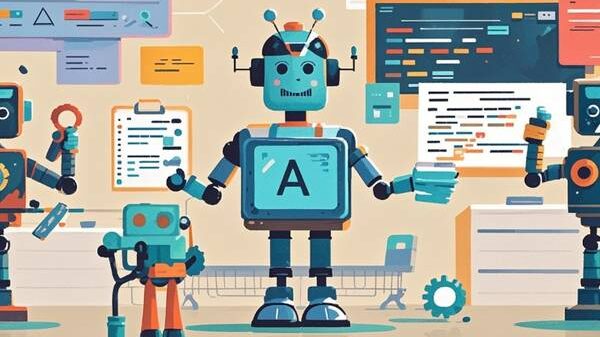
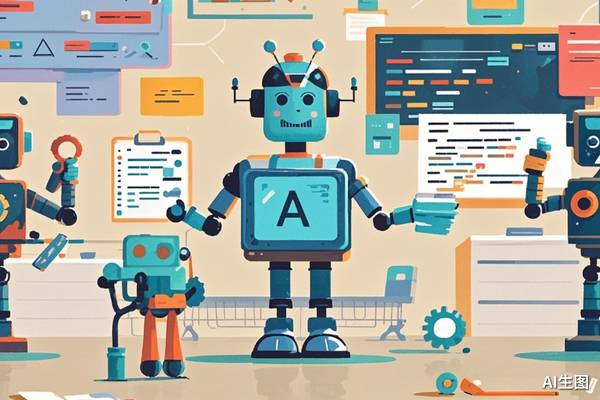
In contrast, Claude’s successful execution involved a novel multi-agent structure that mimics a small product team, comprising a planner, a generator, and an evaluator. The planner expands vague requirements into detailed specifications, while the generator actively writes the code and integrates various components. The evaluator meticulously tests the output, ensuring that it meets the established criteria and demanding high standards of originality and design quality.
This structured approach also addresses the problem of AI self-assessment, where previous models tended to overlook their own shortcomings. By separating the evaluation process from generation, Anthropic effectively mitigated the risk of AI mistaking incomplete or flawed work for successful completion. The enhanced scrutiny from the evaluator encourages the AI to produce more thoughtful and innovative solutions, rather than merely safe, formulaic outputs.
In a direct comparison, the single-agent version of the retro game editor took 20 minutes and $9 to create something that looked functional but fell short of actual usability. Conversely, the team-based approach took six hours and $200, resulting in a product that withstood rigorous acceptance testing and addressed significant software engineering challenges. This evolution suggests that the future of AI may not solely rest on its ability to generate content but increasingly relies on its capacity to refine and improve through iterative testing and feedback.
One particularly striking achievement involved Claude creating a digital audio workstation (DAW) that runs in the browser, equipped with various functionalities, including real-time audio processing and natural language command capabilities. This was accomplished in under four hours and for approximately $124.7, emphasizing the potential of AI when structured effectively. The evaluator’s role was crucial in identifying flaws and ensuring that the final product met robust quality standards, transforming what was once a rudimentary process into a complex engineering endeavor.
The implications of these developments extend beyond just programming. As Anthropic’s experiment demonstrates, the emphasis on high-quality evaluation could redefine the skill sets that are valuable in the AI ecosystem. The ability to discern quality and effectively critique AI-generated work may become more critical than the capacity to generate content itself. As AI continues to evolve, the landscape of software development and creative industries could witness dramatic shifts, prompting stakeholders to reconsider the role of human expertise in a world increasingly dominated by autonomous systems.
See also DeepMind’s GenCast Model Reveals Structural Limitations in Butterfly Effect Simulation
 Germany”s National Team Prepares for World Cup Qualifiers with Disco Atmosphere
 95% of AI Projects Fail in Companies According to MIT
 AI in Food & Beverages Market to Surge from $11.08B to $263.80B by 2032
 Satya Nadella Supports OpenAI’s $100B Revenue Goal, Highlights AI Funding Needs