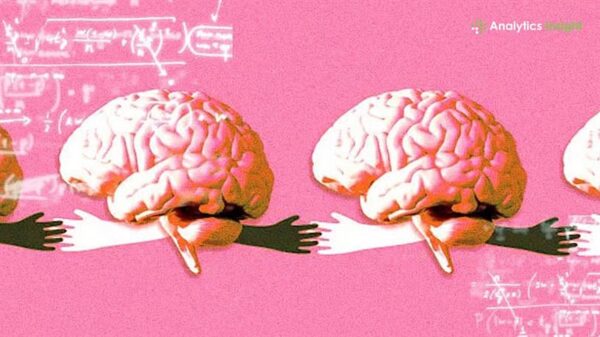















































AI initiatives within organizations are encountering a significant hurdle: a lack of trust among employees. Despite executives championing these technologies as engines for growth and efficiency, many employees perceive them as threats to their job security. This growing emotional divide is manifesting in behaviors that impede the adoption of AI tools, which, according to experts, is a deeper issue than mere technological shortcomings.
Leaders are often enthusiastic about deploying AI, seeing it as an opportunity to modernize operations and gain competitive advantages. However, employees express skepticism, resulting in a widening gap that hinders progress. Adoption is not only slow but often marked by quiet resistance, where teams drift back to familiar workflows rather than embrace new AI-driven processes they don’t fully trust.
One core issue is the low level of trust in the AI strategies rolled out by companies. Reports indicate that, on the surface, AI adoption appears robust, with new tools and pilot programs in place. Yet, beneath this facade lies a troubling reality: employees feel disconnected from the rationale behind AI implementations, leading them to question the intentions of leadership. According to a report from the Massachusetts Institute of Technology, while merely 2.2% of total U.S. wage value is visibly tied to AI adoption, a more extensive examination reveals that cognitive tasks like document processing and analysis account for nearly 11.7% of wage value—approximately $1.2 trillion. This disparity contributes to widespread anxiety about job displacement.
As employees grapple with fears of being replaced by algorithms or judged by opaque metrics, their concerns often go unaddressed by leadership. Such silence can create a narrative filled with assumptions and dread, leading to a trust deficit that can stall AI projects even before they begin to show their potential. Many organizations are caught in a cycle where stalled adoption feeds mistrust, ultimately leading to diminished engagement and an erosion of morale.
The real costs of low trust in AI strategies are often insidious. Employees may shy away from using new tools, try them once with unsatisfactory results, or even create inefficient workarounds rather than rely on AI-generated outputs. This incremental resistance builds up, transforming what should be a productivity enhancer into a source of friction. The implications extend beyond individual projects; a culture of low trust can stifle innovation and breed skepticism towards future initiatives.
In this context, leaders may misdiagnose the root of the problem, attributing low adoption rates to inadequate training or technical glitches instead of recognizing the cultural dimensions at play. Financial repercussions also loom large, as stalled AI initiatives can lead to ballooning budgets without meaningful results, further frustrating stakeholders.
As organizations seek to realize the potential of AI, it becomes evident that fostering a culture of trust is crucial. An effective AI strategy is not merely a technological implementation but requires a robust foundation built on employee confidence. Transparency, clarity, and shared ownership are essential for cultivating this trust. When employees feel included in the conversation around AI, they are more likely to engage with the tools being implemented, transforming AI from a source of anxiety into an ally for innovation.
Looking ahead, the organizations that will thrive are those where employees trust the systems shaping their work and the leaders guiding those systems. The narrative surrounding AI will not be defined by the sophistication of its algorithms but by the degree to which employees feel their concerns are acknowledged and addressed. Only by prioritizing trust can companies unlock the full potential of AI and create transformative change instead of experiencing stagnation.
In conclusion, building an AI-ready culture begins with a simple yet profound decision: prioritize trust, enabling organizations to move forward effectively and outpace competitors still grappling with resistance and fear.
See also OpenAI Introduces Ads Feature in ChatGPT Android App Beta, Targeting Commercial Queries
 Judges Warn Against AI Dependence in Courts, Cite Risks of ‘Hallucinated’ Citations
 Google Stock Soars as Meta Eyes TPUs, Signaling Major Shift in AI Hardware Landscape
 Over 1,000 Amazon Staff Warn AI Push Threatens Jobs, Democracy, and the Environment
 Global Education Leaders to Tackle Learning Crisis at World Schools Summit in Abu Dhabi