














































Dell has raised the entry-level price of its XPS 14 to over $2,000, reflecting the current volatility in the computing industry. At the ongoing CES 2026, industry leaders have signaled a challenging year ahead, marked by rising costs and limited availability of consumer goods. An executive from AMD predicts a trend where PC builders will favor piecemeal upgrades rather than complete system builds due to these market conditions.
The surge in prices is largely attributed to escalating demand for RAM, particularly driven by the burgeoning AI sector. As Samsung’s marketing leader, Wonjin Lee, stated in an interview with Bloomberg, “There’s going to be issues around semiconductor supplies, and it’s going to affect everyone. Prices are going up even as we speak.” The situation has become starkly evident, especially as new AI supercomputers from NVIDIA and AMD are consuming significant amounts of RAM.
Initially, Dell’s latest XPS 14 and XPS 16 models were anticipated to be more affordable, with earlier pricing projections at $1,650 and $1,850, respectively. However, the XPS 14 now starts at $2,050, while the XPS 16 costs $2,200. A Dell representative indicated that while these current prices are not for entry-level configurations, there are plans for cheaper models below $2,000 to be available in February.
Although Dell’s earlier models could be configured to exceed $2,000, the lack of lower-priced options at launch is disappointing for consumers. In contrast, Apple has maintained its pricing for the MacBook Pro 14-inch at $1,599, making Dell’s new offerings comparatively more appealing than the $2,499 price tag for the MacBook Pro 16-inch.
On the desktop front, AMD’s David McAfee, Corporate Vice President and General Manager of Client Channel Business, highlighted that the longevity of the company’s AM4 and AM5 platforms could benefit gamers. This allows for CPU upgrades without the need to replace RAM kits or motherboards, facilitating improved performance with less financial strain amid high RAM costs. “I think that will be potentially a trend that we see in 2026 with more component upgrades, as opposed to full system swap outs,” McAfee noted during a group interview.
McAfee revealed that approximately 30 to 40 percent of AMD’s business continues to revolve around the AM4 platform, despite the challenges posed by the current memory market. He noted, “There’s no product that has memory in it that’s immune to some of these forces around DRAM pricing.” He characterized the recent price fluctuations as “unprecedented,” and while he anticipates stabilization within the first half of the year, he did not elaborate on the reasoning behind his prediction.
Interestingly, McAfee’s comments on RAM are significant, given that other PC manufacturers, including Dell and Acer, have been reluctant to discuss the volatile state of the memory industry. The ongoing fluctuations may indeed be influencing product pricing strategies as manufacturers navigate the limited supply of RAM.
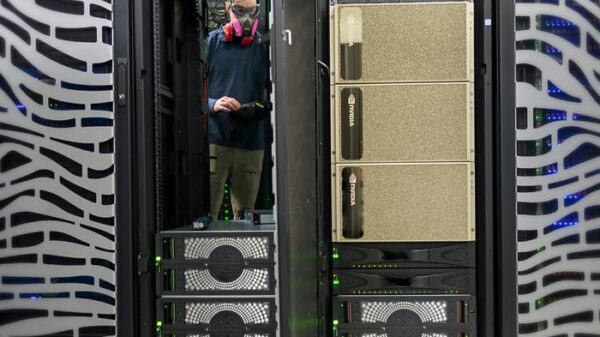
The demand for memory is expected to continue as NVIDIA recently unveiled its new Vera Rubin AI supercomputer, which accommodates up to 54TB of RAM across 36 CPUs and 20.7TB of memory across 72 GPUs. Similarly, AMD introduced its Helios AI rack, supporting up to 31TB of memory. This insatiable hunger for computing power to support AI applications is likely to drive demand for high-performance systems.
In summary, the global supply of memory is increasingly being redirected to support the AI industry, benefiting companies like OpenAI, Microsoft, and NVIDIA, while posing a challenge for consumers seeking affordable PC products. As the industry braces for a year of price hikes, the implications for everyday users remain significant.
Update 1/12, 3:00p: Added a mention of lower entry-level configurations coming eventually.
See also TD SYNNEX Reports Q4 Revenue of $17.38B, Driven by Cloud and AI Demand
 RegulatingAI Appoints Mehdi Jomaa to Bolster Global AI Governance Amid Rising International Concerns
 Meta Unveils ‘Meta Compute’ Initiative, Aiming for $600B AI Infrastructure by 2028
 NVIDIA’s Jensen Huang Reveals AI’s Job Growth Potential and Future by 2025
 WEF Report Warns: AI, Geopolitical Fragmentation Fuel Cyber Fraud Risks by 2026