








































China’s Ambitious AI Plus Plan Signals Future Economic Direction
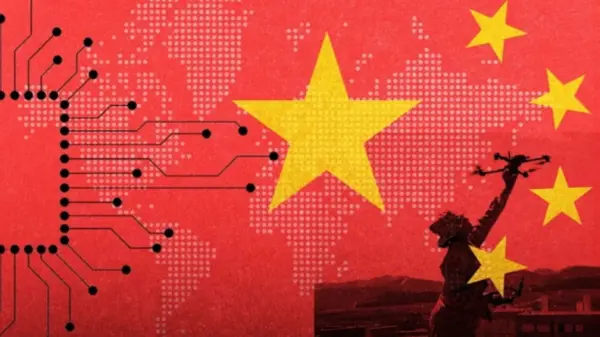
In August 2025, China’s State Council unveiled the “AI Plus” initiative, a comprehensive policy aimed at streamlining the integration of Artificial Intelligence (AI) throughout the nation’s economy and society. This directive follows momentum gained from the World Artificial Intelligence Conference (WAIC) held in Shanghai the previous month, where the “Global AI Governance Action Plan” was launched. Such initiatives reflect a broader strategy first outlined in the country’s 2017 New Generation Artificial Intelligence Development Plan, which aspires to position China as a global AI leader by 2030.
The “AI Plus” plan is designed as a roadmap to accelerate AI adoption across diverse sectors, including consumption, industrial enhancement, scientific innovation, and social welfare. It reflects China’s view of AI as a public good and a critical engine for economic growth, encapsulating a holistic approach that mobilizes resources nationwide towards AI integration. The long-term goal is for China to establish a fully AI-integrated economy and society by 2035, in line with its ambitions for “socialist modernization”—balancing technological advancement with its socialist governance model.
Historically, China’s long-term plans have had mixed success. The “Made in China 2025” initiative, launched in 2015, significantly reduced reliance on foreign technology and bolstered domestic capabilities in key sectors like electric vehicles and renewable energy. Despite uneven results in areas such as aviation and semiconductor manufacturing, the plan demonstrated China’s ability to implement extensive industrial policies without the disruptions faced by democracies. This sets a precedent for the ambitious AI Plus initiative.
In the short term, China aims to integrate AI-powered “intelligent terminals” and AI agents across key sectors, targeting a penetration rate of 70% by 2027. While specifics on measuring this AI penetration remain unclear, the ambitious timeline emphasizes the urgency for institutions nationwide to adopt AI technologies. Already, numerous sectors have begun digitization efforts, utilizing AI to optimize production in manufacturing, enhance medical diagnostics, and improve renewable energy management. With a robust manufacturing base, these initiatives position China favorably for rapid AI integration.
However, the AI Plus plan does not stipulate exact measures for implementation, allowing regions and institutions the flexibility to tailor AI initiatives to their unique circumstances. This approach could lead to regional disparities in AI development and adoption rates.
Access to advanced semiconductors, essential for AI systems, poses a significant challenge for China. The United States has tightened controls on the export of cutting-edge chips, even as second-tier options remain available under strict licensing. To overcome this vulnerability, China is keen on developing domestic semiconductor capabilities that reduce dependence on foreign manufacturers. This includes directing major domestic AI firms like ByteDance and Alibaba to avoid purchasing chips from companies like Nvidia, amidst concerns about security. Meanwhile, Huawei is ramping up its high-end chip manufacturing efforts.
China’s Global AI Governance Action Plan, introduced during the WAIC, outlines a strategic framework for the development and regulation of AI on a global scale. It emphasizes cooperative governance and proposes 13 actionable initiatives aimed at promoting safe and controllable AI. Chinese Premier Li Qiang stressed the need for joint governance and equitable distribution of AI benefits, particularly for developing nations, while proposing the establishment of a new international “World Artificial Intelligence Cooperation Organisation” (WAICO). This move aims not only to position China as a leader in global AI governance but also to counter the narratives around the insecurity of Chinese technologies.
For Australia and the Indo-Pacific, China’s advancements in AI pose both opportunities and challenges. Australia’s approach towards China, characterized by cooperating where possible and disagreeing where necessary, will be vital in navigating this complex landscape. The Australian government has expressed interest in collaborating on emerging technologies, including AI and renewable energy, suggesting a potential avenue for constructive engagement. In specific sectors such as energy and climate, AI applications could provide mutually beneficial solutions, enhancing both nations’ capabilities.
As China enhances its AI capabilities, other Indo-Pacific nations may gravitate towards its technological solutions, particularly given the cost-effectiveness of Chinese hardware. This trend could place pressure on Australia to define its technology adoption boundaries, especially concerning sensitive infrastructure. With ongoing dialogues about decarbonization and sustainable energy, areas such as “AI for climate” may provide a less contentious basis for collaboration.
Ultimately, as AI technologies evolve and proliferate, Australia will need to clarify what aspects of the technology stack are acceptable from China, while finding collaborative opportunities in AI governance. The emergence of WAICO could offer a multilateral framework for engagement, hinting at a future where international cooperation in AI might unfold against a backdrop of geopolitical tensions between China and the United States. The challenge remains for Australia to maneuver its position amidst these competing influences, ensuring its national interests are protected while exploring avenues for beneficial collaboration.
For more details, visit the official pages of Alibaba, ByteDance, Nvidia, and Huawei.
See also Anthropic Launches HIPAA-Ready Claude Tools for Healthcare, Enhancing Billing and Compliance
 Unit4 Celebrates 100th ERPx Go-Live, Accelerates AI Investments Amid Growing Demand
 AI Mimics Human Perception of Optical Illusions Using Quantum-Driven Neural Networks
 Alibaba Cloud’s Qwen AI Models Surpass 700 Million Downloads on Hugging Face