











































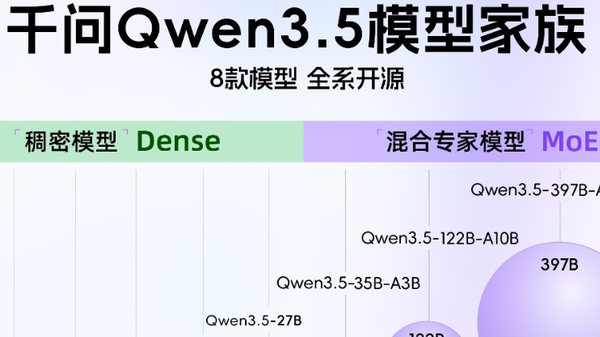

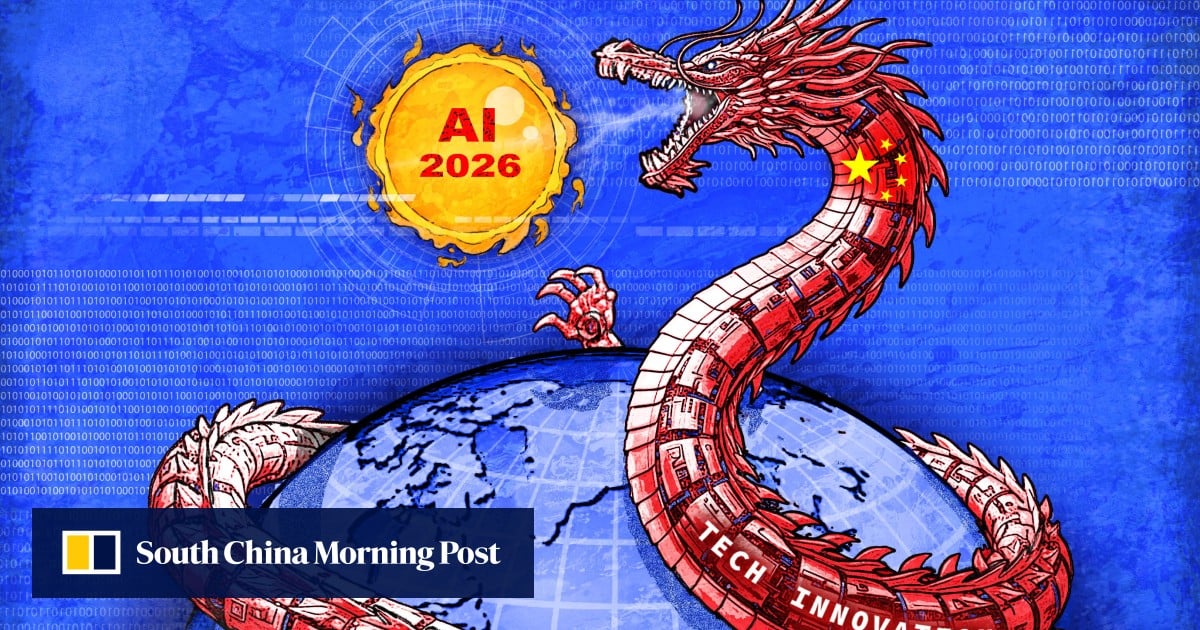
Chinese AI companies are sharpening their focus on innovation as they seek to establish a stronger foothold in the rapidly evolving technology landscape, especially during the peak of the Christmas holiday season. This renewed emphasis on development is epitomized by DeepSeek, which gained traction last year after releasing its large language model (LLM), DeepSeek-V3, shortly before the holidays. The company followed up with the launch of its reasoning model, DeepSeek-R1, on January 20. Both models have either surpassed or matched the performance of competing products from major U.S. tech firms across several industry benchmarks, all while being developed at a fraction of the cost and computational resources typically associated with such advanced technologies.
The release of these models contributed to a significant downturn in the tech market, resulting in a sell-off that wiped nearly US$1 trillion from tech stocks on January 27, including a staggering US$600 billion loss for Nvidia alone. Analysts suggest that the momentum for Chinese AI firms will persist throughout 2023. Factors contributing to this outlook include policy support from Beijing, improved funding opportunities, increased adoption of AI technologies across various industries, and an influx of talent being recruited for innovative projects.
A co-founder of a domestic AI start-up, who requested anonymity, predicted that by 2027, China could surpass the United States to become the world’s leading power in artificial intelligence. The co-founder attributed this potential dominance to China’s deep talent pool, which continues to expand alongside significant investments in AI research and development.
In his New Year’s address, Chinese President Xi Jinping highlighted the competitive landscape of the domestic AI market, noting that numerous large models are vying for prominence. He remarked on the breakthroughs being made in domestic semiconductor development, stating that these advancements have positioned China as one of the economies with the fastest-growing innovation capabilities. This has led to a renewed focus on AI innovation, particularly in light of the rapid advancements being made by local companies.
The continued rise of Chinese AI firms comes amid a backdrop of increasing global competition in the technology sector. As companies like OpenAI, Google, and Microsoft invest heavily in AI capabilities, Chinese enterprises are working diligently to close the gap. The combination of government support and a robust labor market for tech talent has allowed Chinese companies to innovate at a brisk pace. Industry observers are keenly watching how these dynamics will evolve, especially as regulatory frameworks in both the U.S. and China shift in response to the burgeoning field of artificial intelligence.
The implications of these developments extend beyond technology, raising questions about the future of global competition and collaboration in AI. As countries race to establish leadership in this critical sector, the outcomes could shape economic policies and market strategies in the years to come. As the world observes the trajectory of Chinese AI companies and their U.S. counterparts, the unfolding landscape will likely define the contours of the global technology ecosystem for decades ahead.
For more detailed insights about AI advancements, you can visit OpenAI, Google DeepMind, and Microsoft.
See also DOE’s Genesis Mission Unites 17 Labs, Major Firms to Drive AI-Powered Scientific Breakthroughs
 2026 Cyber Risk: Geopolitical Tensions, Maritime Targets, and Shadow AI Transform Resilience Strategies
 Microsoft Shares Dip 0.8% Amid Tech Slowdown; Wedbush Sees FY26 as AI Inflection Year
 Top 3 AI-Focused ETFs to Maximize Returns amid Rapid Tech Growth