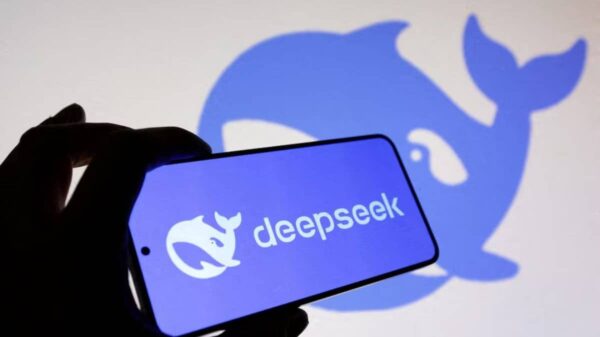









































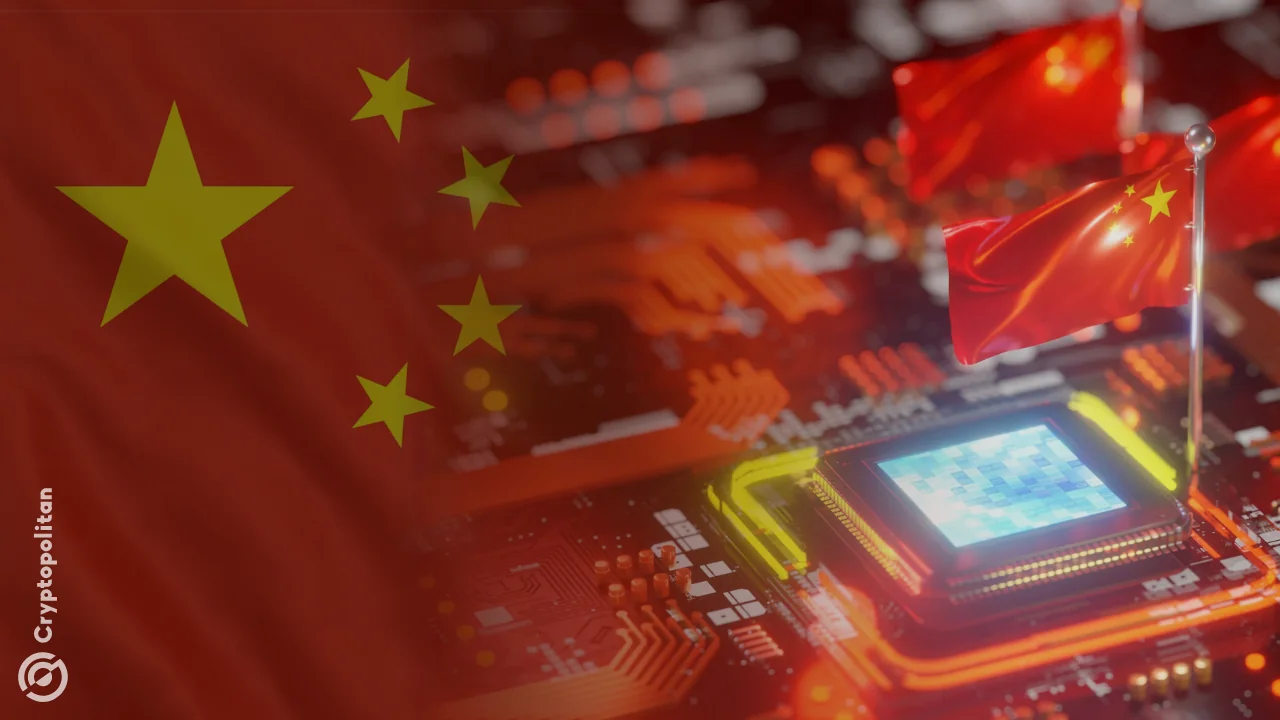
China has continued its push in artificial intelligence (AI) innovation as it enters 2026, with significant developments from AI firm DeepSeek. The company recently published a technical paper co-authored by 19 individuals, including CEO and founder Liang Wenfeng, outlining a framework for training AI systems on a large scale, referred to as “manifold-constrained hyper-connections.” This paper not only highlights China’s efforts to advance foundational models but also serves as a reminder of the country’s determination to maintain a competitive edge in the fast-evolving AI sector, particularly during festive times when global attention is often diverted.
DeepSeek’s recent activity follows its emergence on the global stage last year, marked by the release of its large language model (LLM), DeepSeek V3. Shortly thereafter, the company introduced its reasoning model, DeepSeek-R1, which was launched on January 20. Both models demonstrated impressive performance, either matching or exceeding rival models in various benchmark tests, catching the eye of international observers.
Notably, DeepSeek developed these models at a fraction of the cost and computational resources typically required by major American tech companies. The unveiling of DeepSeek’s capabilities contributed to a significant sell-off in tech stocks on January 27, resulting in nearly $1 trillion in losses across the sector, with Nvidia alone accounting for a $600 billion drop in market value. Analysts suggest that, bolstered by supportive policies from Beijing, Chinese AI firms are poised to maintain their momentum through 2026.
In addition to favorable governmental policies, these firms have benefited from improved funding opportunities, increased adoption of AI technologies across multiple industries, and a growing pool of talent dedicated to advancing these initiatives. A co-founder of a domestic AI startup, speaking on the condition of anonymity, speculated that China could surpass the United States and emerge as the leading AI powerhouse by 2027, identifying the nation’s talent pool as a crucial competitive advantage.
Chinese President Xi Jinping, in his New Year’s address, remarked on the burgeoning competition among large AI models vying for dominance and noted advancements in domestic semiconductor technology. He emphasized that these developments position China as one of the economies with the fastest-growing innovation capabilities. Winston Ma, an adjunct professor at New York University specializing in AI and the digital economy, echoed this sentiment, stating that China is set for policy-driven innovation in the upcoming year, with AI at the heart of the nation’s economic and industrial strategies.
China is also home to a robust group of companies innovating in the AI space beyond DeepSeek. According to Stanford University’s DigiChina Project, which is part of the university’s Centre for International Security and Cooperation and the Institute for Human-Centered Artificial Intelligence, key players include Alibaba Cloud, known for its Qwen model, as well as startups like Moonshot AI, MiniMax, and Zhipu AI, which operates internationally as Z.ai.
The project’s report suggests that China’s open-source AI models may have not only caught up with but could also surpass their American counterparts in terms of capabilities and adoption. For instance, Meta Platforms, the parent company of Facebook, has reportedly utilized Alibaba Cloud’s open-source Qwen model in the training process for a new model called Avocado. This trend underscores the shifting dynamics in the AI landscape, where Chinese firms are increasingly recognized for their innovative contributions.
As the year unfolds, China’s AI sector is expected to capitalize on its current trajectory, driven by both local policy support and a competitive environment that fosters innovation. With a focus on nurturing talent and enhancing technological capabilities, the country aims to solidify its position as a formidable player in the global AI arena.
See also AI Headset Predicts Epileptic Seizures Minutes in Advance, Revolutionizing Patient Care
 OpenAI’s Data Center Faces Continued Pushback Amid Michigan’s Tech Expansion Plans
 India Unveils 100 AI Solutions for Global Leaders at February Summit, Showcasing Impact Across Sectors
 U.S. Army Launches 49B AI/ML Officer Path to Enhance Data-Driven Warfare by 2026
 Microsoft’s AI Strategy Faces Backlash as “Microslop” Trends Amid Public Concerns