








































From initial hype to tangible industrial momentum, the 2025 China Apparel Industry AI Technology Application Summit emerged as a key battleground where fashion companies demonstrated their technological advancements. The summit, held in Hangzhou, followed the Global (Shenzhen) “AI+Fashion” Innovative Application Scenarios Competition, marking a pivotal moment for the sector.
In early 2025, the AI upheaval sparked by DeepSeek not only rattled U.S. stock markets but also ignited widespread enthusiasm across various Chinese industries, including fashion, which quickly ramped up its AI strategy. However, by the year’s end, concerns over the AI bubble surfaced, fueled by circular trading models and heavy debt reliance on the part of giants like Nvidia and OpenAI. This volatility, particularly evident in Oracle’s stock, sent market sentiment into a tailspin.
As the situation unfolded, the question loomed large: Will AI’s disruption truly transform the fashion industry? The answer is becoming clearer with the emergence of two significant events in December 2025 that highlight the industry’s commitment to technological integration.
Both events pulled together nearly 100 fashion enterprises and cutting-edge AI tech companies, signaling that the technology’s transformation of China’s fashion sector has entered deeper, more complex waters. This transformation is not merely a response to current trends; it represents a broader shift towards a “technology implementation plus value reconstruction” model.
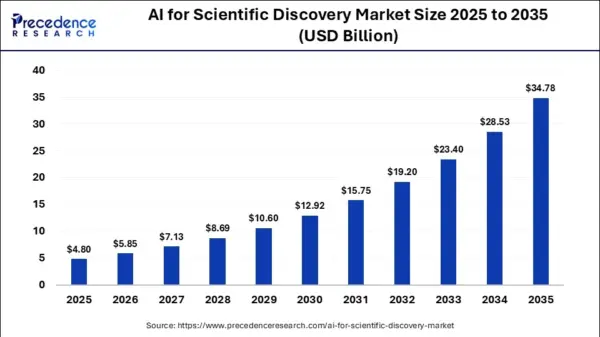
China’s fashion industry is increasingly evolving from traditional manufacturing to a more digitally integrated ecosystem, turning once-hyped concepts into a force for industrial upgrading. The Business Research Company forecasts that the AI market in the global fashion industry will reach $1.75 billion by 2025, with an annual growth rate exceeding 39 percent. Major players like LVMH Moët Hennessy Louis Vuitton are actively expanding their AI efforts. However, challenges such as the high costs and low outputs of large language models (LLMs), alongside technical debates, have prompted skepticism regarding AI’s practical value.
Amidst this “dance between enthusiasm and rationality,” China’s fashion industry is poised to leverage its core advantage: end-to-end adaptability. With a complete supply chain from design to production and robust capabilities in cross-border e-commerce and livestreaming, China can swiftly implement AI technologies into practical solutions. Qu Fei, vice president and secretary-general of the China National Garment Association, stated, “China’s apparel industry is at a critical juncture, transitioning from an industrial economy to a digital economy, where technological innovation is the key driver.”
The shift in the apparel industry is evident as it moves from being “experience-driven” to “data-driven.” According to Du Yanbing, full-time vice president of the China National Garment Association and president of the China Apparel Technology & Innovation Research Institute, AI technologies are advancing from basic data mining to complex multi-modal integrations, with innovative applications emerging across five key areas: precision marketing, digital R&D, product innovation, supply chain collaboration, and intelligent manufacturing.
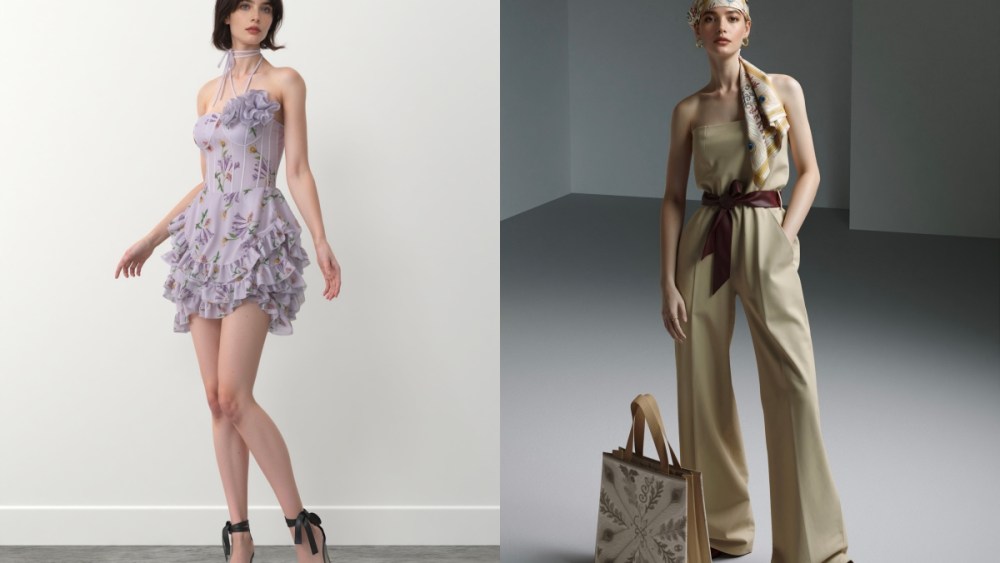
In the design sector, the leap in AI-driven efficiency is becoming apparent. For example, Style3D integrates AI with 3D technology to digitize the entire process from style generation to precision adjustment, significantly reducing the approval cycle for first samples from one week to just one day. Chen Mengjie, head of German Operations, revealed that overseas business now accounts for 50 percent of Style3D’s total sales, illustrating the company’s rapid international expansion.
Government initiatives are also propelling this technological transformation forward. In Linping District, a hub for Hangzhou-style womenswear, the local government has partnered with the China National Garment Association to accelerate the “design plus digital plus technology” transformation, supporting over 200 textile and garment enterprises.
Zhejiang Shenfu Artificial Intelligence Technology Co. exemplifies how AI is empowering small companies in Haining. By leveraging AI tools to optimize design processes, they expanded production capacity without additional investment, creating 200 “virtual factories” and enhancing production efficiency. Similarly, Kashion, a Ningbo-based ODM company, has integrated AI into its operations to streamline production, collaborating with Style3D to build a standardized database that enables precise matching between print designs and 3D garment models.
Furthermore, Wensli, specializing in silk cultural and creative industries, has harnessed AI to design “100,000 unique silk scarves per person,” allowing designers to focus on more creative tasks. This reflects a growing understanding of AI as a tool to augment human creativity rather than replace it.
The next challenge for China’s fashion industry lies in transitioning from isolated tools to fully integrated ecosystems. AI’s ultimate value resides in its potential to restructure entire business models, connecting supply with consumer demands and unlocking new market space. Lu You, head of AI Apparel Business at Alibaba International Digital Business Group, emphasizes this potential for reshaping business models, noting that while supply-side efficiency through AI is recognized, proving its effectiveness on the consumer side remains critical.
AI-powered platforms like MyTwins.ai have already begun transforming e-commerce, helping brands such as New Balance increase sales and improve ROI through AI hosts that engage customers, demonstrating product features during off-peak hours.
These innovative practices are propelling the transformation of the fashion industry from a “product-driven” to a “demand-driven” approach, focusing on solutions that meet consumer needs rather than merely selling products. While the hype surrounding AI may eventually subside, the applications that deliver true value are likely to endure. Despite ongoing debates over the AI bubble and challenges surrounding technology and business models, AI’s role in China’s fashion industry is on track to become more substantial, paving the way for a more resilient and dynamic future.
Editor’s note: China Insight is a monthly column from WWD’s sister publication WWD China looking at trends in that all-important market.
See also Malaysia Blocks Elon Musk’s Grok Chatbot Over Inadequate Safeguards Against AI Pornography
 Former Isro Chief Urges Ethical AI Leadership at GM University’s Inaugural Convocation
 Google Unveils Universal Commerce Protocol, Enabling AI Agents to Manage Seamless Checkout
 Anthropic Cuts Off xAI’s Access to Claude, Enforcing Competitor Restrictions
 Broadcom and AMD Poised for AI Market Disruptions, Outpacing Nvidia’s Growth Potential