





































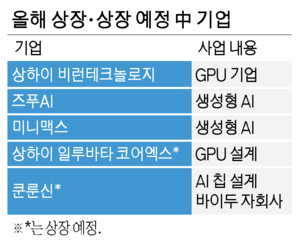
Virentech, ZpuAI, and Minimax are among the companies driving significant advancements in the artificial intelligence (AI) and semiconductor sectors, reflecting a broader trend toward technology independence in China. This surge in interest has been particularly pronounced since the beginning of the year, as the race for AI supremacy intensifies between the U.S. and China.
According to recent data from the Hong Kong Stock Exchange, shares of AI and semiconductor firms have experienced a notable increase. On January 9, 2023, Shanghai Birn Technology closed at HK$34.06, marking a 1.31% rise from the previous day. Since its public debut on January 2, BirnTech’s stock has surpassed its initial offering price of HK$19.60 for six consecutive days, accumulating a gain of over 75%.
VirunTech, a key player in China’s GPU manufacturing landscape, co-founded by Jang Won, a veteran of SenseTime, and Zhao Guofang from Qualcomm and Huawei, has gained attention for its high-performance chips that rival Nvidia’s H100 GPU. This follows stricter U.S. regulations on AI chip exports imposed in 2022, which has pushed Chinese companies to enhance their capabilities.
Other firms have also reported strong stock performances. ZpuAI, which publicly listed on January 8, closed at HK$131.5, up 13.1% from its public offering price. ZpuAI is recognized as a leader among the “六 Small Generative AI,” a group of six Chinese generative AI startups valued at over $1 billion, and has been acknowledged by OpenAI as a competitor.
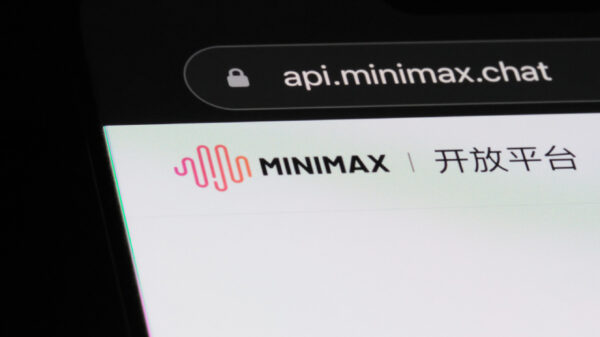
Minimax, which went public a day after ZpuAI, saw its shares soar by 105.2% on its listing day, closing at HK$338.6, up from an initial price of HK$165.
The positive stock trends extend beyond newly listed companies, with established semiconductor entities also witnessing gains. Notably, SMIC, China’s largest foundry, saw an increase of approximately 4% in early January, while Huahong Semiconductor experienced a rise of over 20% during the same timeframe.
Analysts suggest that these stock market movements indicate a structural change, rather than merely a response to short-term events. The Chinese government’s push for AI and semiconductor independence is seen as a core industrial strategy, further fueled by the recent rollout of an “autonomous AI system” designed to conduct scientific research without human intervention. This shift has ignited renewed investor enthusiasm for the AI sector, as reported by South China Morning Post.
The concentration of technology listings in Hong Kong marks a significant transformation in the local market, previously dominated by real estate and financial stocks. The flexibility of Hong Kong’s listing system is attracting global investors, distinguishing it from mainland China’s more rigid framework. Zhang Feng Zfu, CEO of ZpuAI, emphasized that Hong Kong serves as an essential gateway for global expansion.
Looking ahead, the trend of Chinese AI companies entering the Hong Kong market is expected to persist. Kunlunxin, a subsidiary of Baidu focusing on AI chip design, has already filed for a public listing, while Shanghai Ilubata Core X Semiconductor recently launched its public offering. These developments underscore the ongoing momentum in the pursuit of technology independence in China, particularly in the high-tech sectors of AI and semiconductors.
See also Transforming Credit Evaluation: How Agentic AI and GenAI Revolutionize Lending Efficiency
 AI Adoption Surges: 1 Billion Users Shift Focus to Responsible Governance and Sustainability
 Jimmy Joseph’s AI Breakthrough Cuts Healthcare Payment Anomalies by 35% and Wins Global Award
 China’s Fashion Industry Transforms with AI: Key Innovations Propel $1.75B Market Growth by 2025
 Malaysia Blocks Elon Musk’s Grok Chatbot Over Inadequate Safeguards Against AI Pornography