
















































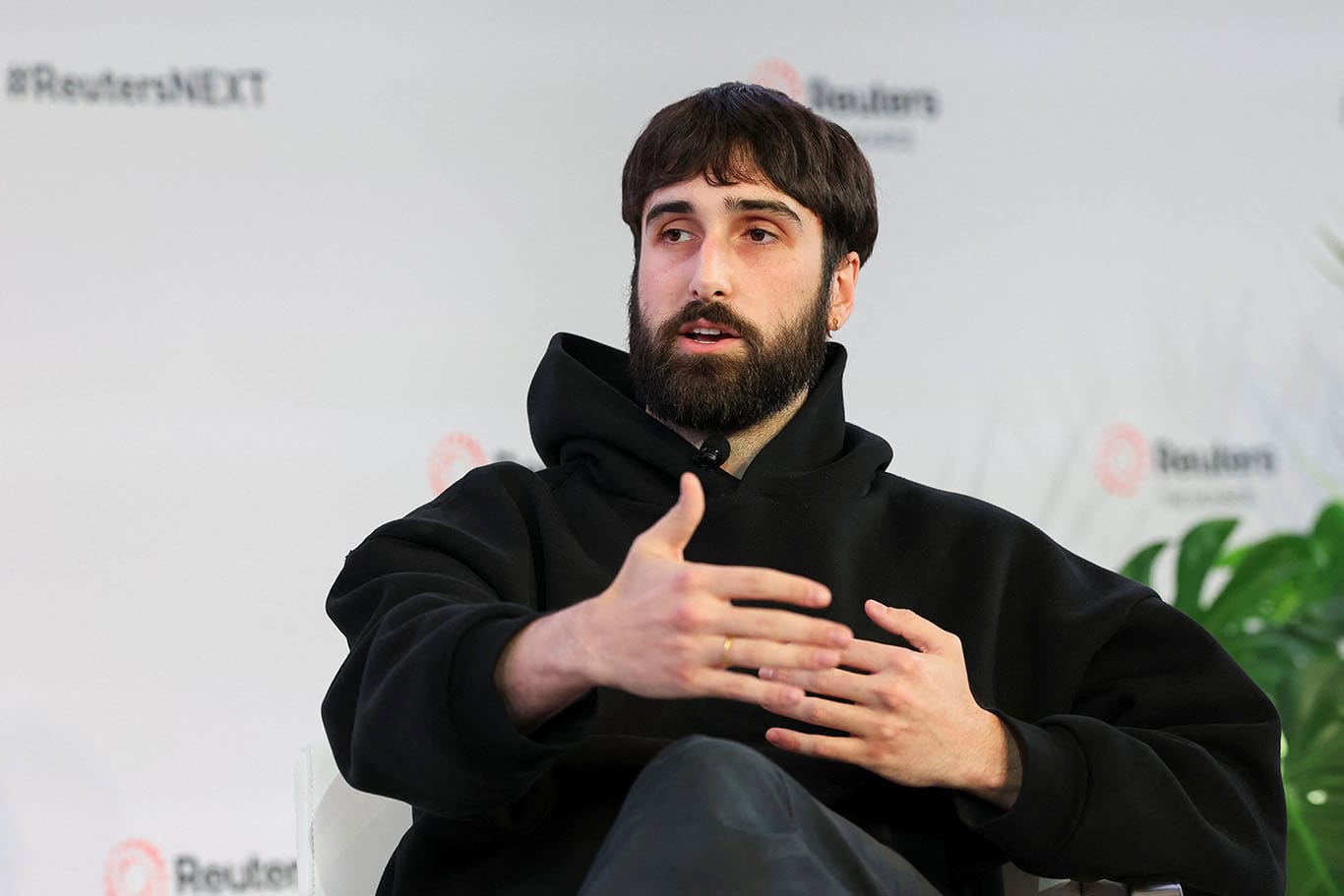
Canadian tech startup Cohere’s CEO Aidan Gomez stated on December 4 at the Reuters NEXT conference in New York that the U.S. and Canada are uniquely positioned to lead the global artificial intelligence (AI) landscape. He emphasized the importance of commercializing AI technology, arguing that it is not merely about who develops it first, but rather who can provide it effectively at scale. Gomez expressed confidence that the North American nations could edge out competitors, particularly China, in the ongoing AI race.
Despite acknowledging that China has produced high-performing AI models that have narrowed the gap with leading closed-source large language models like those from OpenAI, Gomez asserted that the U.S. and Canada have the potential to serve as global partners in AI adoption. “I think we will win against China,” he declared, highlighting a strategic advantage that he believes liberal democracies hold over authoritarian regimes when it comes to technology partnerships.
The comments come amidst heightened competition between the U.S. and China, particularly following the rise of Chinese AI startup DeepSeek, which gained notoriety early this year. In response, Chinese tech giants such as Alibaba and Baidu have accelerated the release of new models and upgrades to their AI products. As a result, significant investments have poured into enhancing AI infrastructure and computing capabilities in the U.S., with companies seeking to establish themselves as leaders in this rapidly evolving field.
In contrast to Gomez’s optimistic outlook, Nvidia CEO Jensen Huang recently warned that China is “nanoseconds behind America in AI” and suggested that it could ultimately triumph in the AI race. China’s access to advanced AI chips, particularly those manufactured by Nvidia, has become a contentious issue in the tech rivalry between the two nations.
Gomez pointed out that many liberal democracies are increasingly hesitant to rely on Chinese technology for critical infrastructure. “If you’re going to pick a partner to rely on to transform your entire economy, I think you will pick a liberal democracy,” he argued, further underscoring the geopolitical dimensions of the AI landscape.
Cohere specializes in developing enterprise-specific AI models, and Gomez voiced skepticism about the return on investment for incremental spending in AI development. “Spending an incremental $10 billion a year to improve your model does not deliver the return on investment on the technology itself to justify that,” he remarked, noting a recent slowdown in model improvement despite substantial scaling efforts. This perspective resonates with growing concerns among investors regarding the effectiveness of the vast sums being allocated to AI development by major firms like Microsoft and Alphabet’s Google.
While the pursuit of artificial super-intelligence remains a high priority for many companies, Gomez suggested that fears surrounding advanced AI technologies may be overstated. “I personally don’t believe a lot of these stories of ‘Terminators’ and doomsdays and these sort of sci-fi narratives that emerged,” he said, indicating that public apprehension may have shifted as people become more familiar with the realities of AI technology.
As the global competition for AI leadership intensifies, the ability of the U.S. and Canada to adapt and innovate will be critical. Leaders like Aidan Gomez suggest that a focus on commercializing AI, rather than merely developing it, could be the key strategy for maintaining a competitive edge in this transformative technology landscape.
See also States Attempt AI Regulation Amid Federal Inaction, Facing Industry Pushback and Lobbyist Pressure
 Google DeepMind Engineer Reveals Meta Prompting Technique for Enhanced Video Generation in Gemini
 Freddie Mac Mandates AI Governance Framework for Mortgage Companies by 2026
 U.S. Federal AI Regulation Looms: Key Framework to Boost Startups and Global Competitiveness
 Meta’s AI Spending Hits $1,117 Price Target, Analyst Predicts 68% Upside Potential