
















































The Toronto-based enterprise artificial intelligence company, Cohere, has entered into a partnership with the Canadian subsidiary of French defence contractor Thales to enhance operational capabilities for the Royal Canadian Navy. The collaboration was announced today and aims to integrate Cohere’s AI technology into Thales Canada’s contracts with the Department of National Defence, focusing on the maintenance and operation of naval fleets.
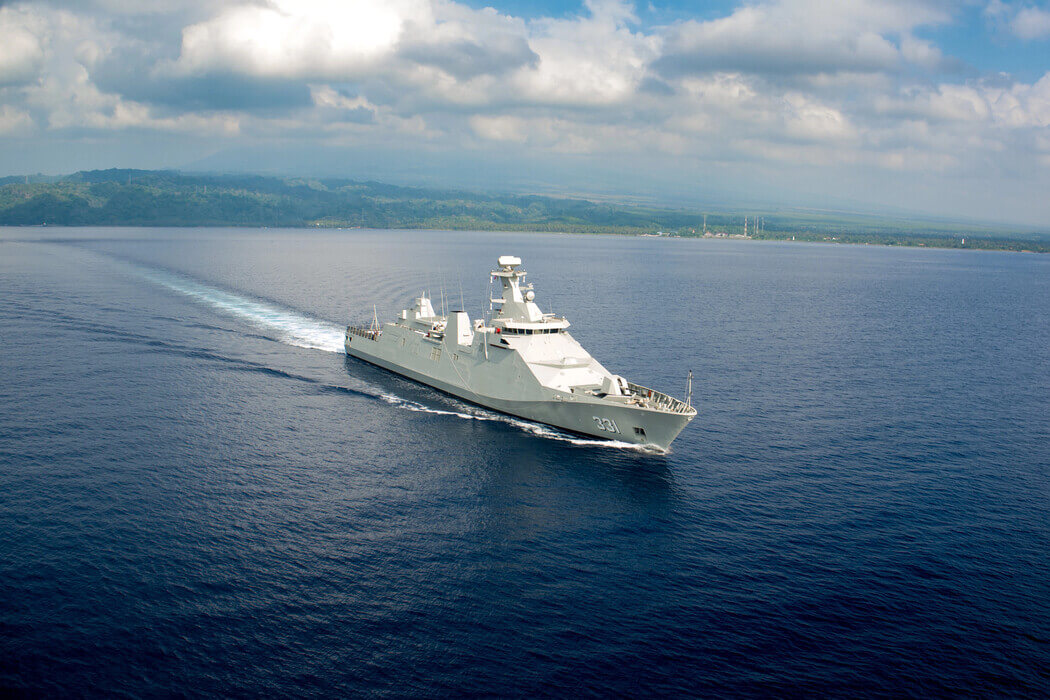
Cohere’s advanced AI tools will support Thales Canada’s efforts to maintain operational readiness for a variety of vessels, including Arctic and offshore patrol ships, joint support ships, minor warships, and auxiliary vessels. With this partnership, Thales plans to utilize Cohere’s expertise alongside its in-house AI accelerator division, cortAIx, to optimize support services through enhanced data analysis and cybersecurity measures.
“This partnership with Thales Canada marks a strategic leap in responsibly deploying AI for national defence,”
According to Cohere co-founder Ivan Zhang, this collaboration signifies a commitment to developing secure AI solutions tailored for Canada’s maritime operations. “Together, we’re bringing secure, sovereign AI solutions to Canada’s maritime forces that analyze complex naval environments in real time,” Zhang stated.
Cohere, which was founded in 2019 by former Google researchers, specializes in large language models (LLMs) that empower various applications, including chatbots for businesses and government agencies. The company has positioned itself as a leader in enterprise and cybersecurity-focused AI, amidst increasing competition from larger American developers.
This partnership represents one of the first applications of Cohere’s AI technologies within the Canadian Armed Forces. Previously, Cohere has collaborated with a range of enterprise clients across sectors with stringent data security requirements, such as healthcare and financial services. Additionally, it has forged partnerships with US defence software company Second Front Systems, which contracts with the US Department of Defense.
The announcement comes at a time when the Canadian government is ramping up funding for the defence industry, drawing scrutiny for its policies that appear to favor foreign companies operating in Canada. Thales Canada spokesperson Jennifer Tumminio confirmed that the company holds two significant contracts with the Royal Canadian Navy that involve maintaining the operational readiness of various naval vessels while leveraging AI and cybersecurity to enhance service efficiency.
Tumminio noted that through the integration of agentic AI—such as Cohere’s platform, North—Thales aims to improve operational readiness and efficiency while adhering to stringent security and ethical guidelines. In 2023, the Canadian government awarded a joint venture between Thales Canada and Thales Australia a contract valued at $450 million CAD for servicing minor warships and related vessels. This follows a previous $800 million CAD contract in 2017, which included maintenance for Arctic and offshore patrol ships, with potential expansion up to $5.2 billion CAD.
While the specific value of the Cohere contract has not been disclosed, Thales Canada highlighted that the partnership aligns with the Canadian Industrial and Technological Benefits Policy, which mandates that defense contractors undertake business activities equivalent to the value of the contracts they receive.
In addition to its work with Thales, Cohere has signed a memorandum of understanding with the federal government aimed at transforming public sector operations through AI. At the recent Reuters NEXT conference in New York, Cohere CEO Aidan Gomez asserted that Canada and the US hold a competitive edge over China in the global technology development race.
Recently valued at $7 billion USD ($9.7 billion CAD), Cohere has raised approximately $1.6 billion USD to date and expanded its workforce to 450 employees. The company reported surpassing $200 million USD in annual recurring revenue, with Gomez suggesting that an initial public offering may be forthcoming.
As the partnership unfolds, it signals a significant step in leveraging advanced technologies to ensure the operational efficiency and security of Canada’s naval forces while navigating the complexities of the modern defence landscape.
See also AI Surge Fuels $500 Billion Wealth Increase for US Tech Titans, Sparking Market Concerns
 Getty Images Wins Trademark Claim Against Stability AI, Loses Copyright Infringement Case
 IMSS Launches Advanced Hemodynamics Unit, Elevates Cardiac Care Amid Ethical AI Governance
 Biometrics Market Sees 50 Acquisitions in 2025 as AI Fraud Fuels Urgent Consolidation