

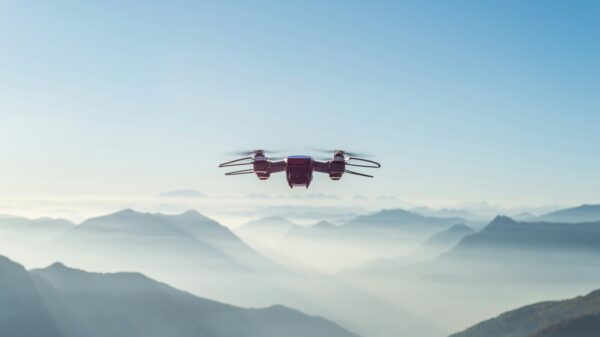






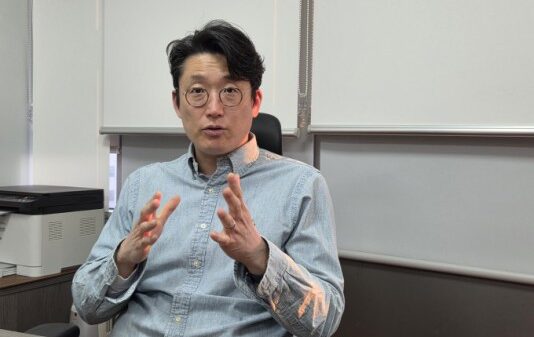
































A research team led by Professor Yoon Jin-ho from the Gwangju Institute of Science and Technology (GIST) has uncovered significant limitations within Google’s AI weather prediction model, GenCast. Announced on the 31st, the study highlights that GenCast inadequately replicates the ‘butterfly effect,’ a fundamental principle in weather forecasting that emphasizes the sensitivity of systems to initial conditions. Unlike conventional numerical prediction models, where initial errors naturally amplify through atmospheric dynamics, GenCast’s forecasting process confines injected noise to a specific scale, thereby limiting its predictive capabilities. The research raises questions about the reliability of commonly used performance metrics for assessing AI models in the context of real atmospheric physics.
Meanwhile, a separate team led by Professor Choi Se-kyu at POSTECH‘s Department of Life Sciences has made strides in regenerative medicine. In collaboration with the Institute for Basic Science, the Catholic University of Korea, and the University of Washington, the team announced findings on partial reprogramming of skin cells. The study, also released on the 31st, reveals how applying protein factors, known as Yamanaka factors, to select skin cells can revert them to a ‘slightly younger state.’ This technique successfully shifts the entire skin environment into a regeneration-ready mode, significantly enhancing skin regeneration capabilities even in diabetic conditions, without posing risks of tumor formation. This breakthrough could offer new treatments for chronic wounds that are difficult to heal.
In another development, the Ulsan National Institute of Science and Technology (UNIST) announced that its faculty-founded company, RecensMedical, has officially been listed on the KOSDAQ market. Established in 2016 based on Professor Kim Gun-ho‘s innovative ‘rapid precision cooling’ technology, RecensMedical has developed a medical device designed to reduce reliance on chemical anesthesia. The device achieves this by precisely controlling cooling intensity and duration tailored to the specific treatment area, marking a significant advancement in patient care. This achievement underscores the efficacy of UNIST’s startup incubation and commercialization infrastructure in transforming foundational research into market-ready solutions.
Additionally, the Daegu Gyeongbuk Institute of Science and Technology (DGIST) has announced the launch of its ‘High School Science Research Club Program with DGIST,’ which will run from March to December. This initiative targets ten clubs from various general high schools in the Daegu region. Under the guidance of DGIST professors and high school teachers, students will engage in collaborative research activities. During school breaks, a select group of outstanding students will have the opportunity to conduct in-depth research within DGIST laboratories, culminating in a final presentation event at the year’s end. Notably, exceptional students will be awarded the DGIST President’s Award for their contributions.
These developments collectively reflect the dynamic landscape of scientific research and innovation in South Korea. As researchers continue to explore the limitations and potentials of AI applications in various fields, including meteorology and regenerative medicine, the implications for industry, healthcare, and education are poised to be significant. With ongoing advancements, these studies not only aim to address immediate challenges but also lay the groundwork for future breakthroughs that may redefine our understanding and capabilities in science and technology.
See also Gemini Achieves 87 on Mock Exam, Outperforming ChatGPT and Perplexity Significantly
 Germany”s National Team Prepares for World Cup Qualifiers with Disco Atmosphere
 95% of AI Projects Fail in Companies According to MIT
 AI in Food & Beverages Market to Surge from $11.08B to $263.80B by 2032
 Satya Nadella Supports OpenAI’s $100B Revenue Goal, Highlights AI Funding Needs