




















































(Bloomberg) — Chinese artificial intelligence startup DeepSeek has reportedly utilized Nvidia Corp. chips that are banned in the country to develop an upcoming AI model, according to a recent report from The Information. The use of these advanced semiconductors highlights the lengths AI developers in China are willing to go to access cutting-edge technology amid escalating export restrictions.
The report details that Nvidia’s Blackwell chips were smuggled into China through countries that allowed their sale. DeepSeek allegedly accessed these chips by first installing them in data centers in unspecified nations, then dismantling and shipping them to China after passing inspections conducted by firms involved in server equipment.
The U.S. has imposed a ban on the sale of sophisticated semiconductors to China, prompting AI developers to seek alternative routes for hardware access. This trend has led to creative and often illicit methods of procurement, such as shipping chips through foreign data centers. In November, U.S. prosecutors charged two Chinese nationals and two Americans for attempting to transport chips to China via Malaysia using a fake real estate business.
A representative for DeepSeek did not immediately respond to requests for comment regarding these allegations. In contrast, an Nvidia spokesperson stated that the company “hasn’t seen any substantiation or received tips” about the operation described by The Information. The spokesperson further noted, “While such smuggling seems farfetched, we pursue any tip we receive.”
DeepSeek garnered international attention in January when it launched an AI model that reportedly competes with some of Silicon Valley’s leading technologies, claiming to have developed it at a fraction of the cost. The startup received funding from the Chinese hedge fund High-Flyer, which had acquired 10,000 Nvidia GPUs in 2021, prior to the U.S. exporting ban on advanced chips and GPUs.
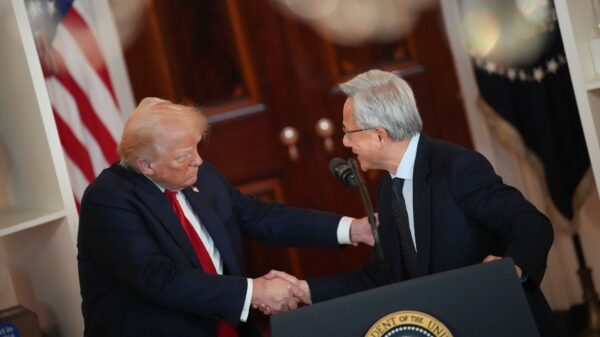
Earlier this week, former President Donald Trump granted Nvidia permission to export an older version of its AI accelerators, the H200. However, the ban on the more powerful Blackwell version remains firmly in place, complicating efforts for Chinese companies like DeepSeek to access cutting-edge technology.
In response to U.S. restrictions, Beijing has urged domestic tech companies to rely on local equipment for AI development. DeepSeek recently announced the launch of a new AI model in September, signaling its ongoing efforts to collaborate with Chinese chipmakers on future projects.
The complexities surrounding the semiconductor supply chain in the context of U.S.-China tensions reflect broader trends in the global tech landscape, where access to advanced technology is increasingly tied to geopolitical factors. As companies navigate these challenges, the ability to innovate while adhering to regulations will be critical for the future of AI and semiconductor development.
–With assistance from Ed Ludlow.
See also SIMPLE CHARM Transforms Beauty Tech with AI-Powered Precision and Safety Standards
 Pew Research Reveals 64% of U.S. Teens Use AI Chatbots Daily, Led by ChatGPT
 UAE’s BRIDGE Summit 2025 to Host 60,000+ Attendees, Set to Transform Global Media Landscape
 Florida Lawmakers Review AI Data Center Infrastructure Amid Rising National Demand
 Integrate AI into 2026 Planning to Secure Competitive Edge and Drive Measurable Growth