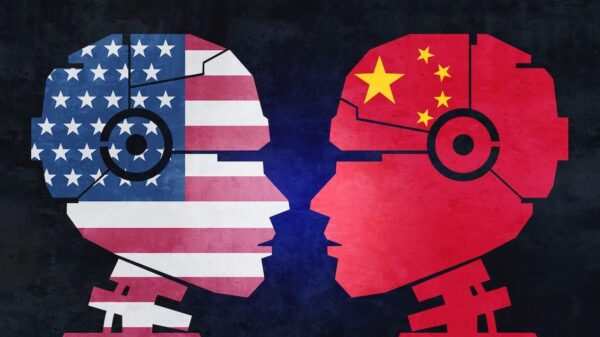


















































Washington — Despite ongoing U.S. restrictions on exporting advanced artificial intelligence (AI) chips to China, the Chinese startup DeepSeek has reportedly trained its latest AI model on Nvidia’s state-of-the-art Blackwell chips. This development, set to be unveiled next week, raises significant concerns regarding the efficacy of U.S. export controls and underscores the escalating tensions between China’s AI ambitions and American technological leadership.
A senior official from the Trump administration has disclosed that DeepSeek’s use of the Blackwell chip, which is explicitly prohibited for shipment to China, exemplifies potential loopholes within existing regulatory frameworks. The official speculated that DeepSeek aims to obfuscate traces of its use of American technology, complicating detection efforts. This situation not only puts a spotlight on DeepSeek’s operations but also invites scrutiny about the robustness of U.S. measures designed to curb advanced technology transfer to rival nations.
DeepSeek, believed to be utilizing a cluster of Blackwell chips situated in Inner Mongolia, employs a method known as “distillation” to refine its AI models. This technique allows the company to enhance the performance of its algorithms significantly, which could further narrow the technological gap between China and the United States in the AI sector. The implications of this development are profound, as it challenges U.S. efforts to maintain its competitive edge in technology and raises questions about the long-term viability of its export controls.
The Trump administration official highlighted concerns that the advanced capabilities of the Blackwell chips would be pivotal in bolstering China’s AI initiatives, thereby drawing attention to the potential for an arms race in AI technology. The release of DeepSeek’s latest AI model could have wide-ranging ramifications, reinforcing the perception that China is making significant strides in AI despite restrictions intended to hinder its progress.
The U.S. government’s next steps in response to this revelation remain uncertain. Analysts speculate whether tighter export controls will be implemented or whether a more nuanced strategy will be adopted to navigate the complex balance between fostering technological advancement and ensuring national security. The outcome of this decision could have far-reaching effects on both the U.S. tech industry and international relations.
This situation illustrates a broader challenge faced by policymakers as they grapple with the intricacies of global technology governance. The ongoing rivalry over AI advancements signifies not only a competition for economic supremacy but also a struggle for ethical leadership in an increasingly interconnected digital landscape. As such, the fallout from this incident could prompt a reevaluation of how nations approach technological collaboration and competition moving forward.
In conclusion, the emergence of DeepSeek’s AI model underscores the ongoing friction between China’s aspirations in AI development and U.S. efforts to curb its technological rise. As the geopolitical landscape evolves, the effectiveness of existing export controls will be tested, sparking discussions on the need for a more comprehensive strategy to manage the competitive dynamics of advanced technologies worldwide.
See also Germany”s National Team Prepares for World Cup Qualifiers with Disco Atmosphere
 95% of AI Projects Fail in Companies According to MIT
 AI in Food & Beverages Market to Surge from $11.08B to $263.80B by 2032
 Satya Nadella Supports OpenAI’s $100B Revenue Goal, Highlights AI Funding Needs
 Wall Street Recovers from Early Loss as Nvidia Surges 1.8% Amid Market Volatility