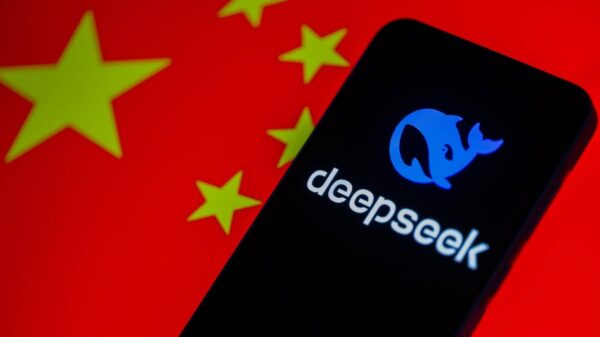















































In a significant shift within the artificial intelligence landscape, the emergence of DeepSeek, a Hangzhou-based AI lab supported by the quantitative hedge fund High-Flyer, has prompted alarm among U.S. technology leaders. The company unveiled its flagship model, R1, in late January, showcasing reasoning capabilities that rival those of OpenAI‘s advanced systems, while costing just $6 million to train—compared to the estimated $100 million-plus for GPT-4. This development has sent shockwaves through Wall Street, briefly erasing billions from U.S. chip stock valuations and reigniting debates around national security and software supply chain integrity.
As financial analysts have focused on the impressive efficiency of DeepSeek’s unique Mixture-of-Experts architecture, cybersecurity professionals are sounding alarms about the potential risks of integrating Chinese state-affiliated technology into Western systems. While the allure of an open-weights model that performs comparably to proprietary systems is enticing for cost-conscious Chief Technology Officers (CTOs), the implications of DeepSeek’s origin pose significant challenges. Unlike the closed ecosystems of companies like Anthropic or Google, DeepSeek promotes a decentralized approach, allowing developers to download and modify its logic directly, which could create novel vulnerability pathways that conventional firewalls may not adequately address.
Despite the technological sophistication of DeepSeek’s architecture, seasoned cybersecurity experts caution that the widespread adoption of open-weights models could introduce hidden layers of risk within the software supply chain. Security risks are amplified by the nature of how Large Language Models (LLMs) are utilized in coding environments. Arian Evans, Senior Vice President of Product at HackerOne, explained that a model capable of generating code that developers might not scrutinize carefully can automate the introduction of vulnerabilities or insecure dependencies, potentially creating backdoors. Evans noted that while human oversight is a standard preventive measure, the volume of AI-generated code is escalating beyond the capacity for thorough auditing, thereby accumulating what he described as “security debt” that organizations may not recognize until it culminates in a breach.
Compounding these concerns is the opaque nature of the training data used by DeepSeek. Although the weights are open, the details around data curation remain unclear, echoing concerns raised about Western counterparts but bearing different implications due to China’s legal framework. Nigel Jones, co-founder of the privacy-focused firm Kovert, highlighted that the intersection of high-performance AI with obscure data governance creates a potential “perfect storm” for risk, particularly for companies managing sensitive information. The model’s terms of use explicitly reserve rights for monitoring interactions, raising compliance issues that could result from China’s National Intelligence Law, which mandates organizations to assist state intelligence efforts.
Market Context
DeepSeek’s disruptive training methodology has prompted Western tech giants to reevaluate their investment strategies, underscoring the tenuous balance between operational efficiency and the safeguarding of intellectual property. The company, founded by reclusive computer scientist Liang Wenfeng, has adopted an approach that emphasizes algorithm optimization over raw computational power, thereby raising questions about the long-term demand for GPUs. Reports suggest that DeepSeek may have utilized a technique known as “distillation,” learning from OpenAI’s outputs to rapidly enhance its reasoning capabilities, thereby compressing the R&D cycle and offering a cheaper alternative to established leaders.
While the DeepSeek models offer powerful performance at no cost to run locally, integrating them could inadvertently mean outsourcing core processing to an architecture operating under a regulatory framework prioritizing state security. This situation mirrors the ongoing bifurcation of the internet, where AI infrastructure is divided between Western proprietary systems and Eastern open-source alternatives, each with distinct security profiles. As the artificial intelligence arms race evolves, the line between open-source innovation and potential state-sponsored threats becomes increasingly blurred, forcing Chief Information Officers (CIOs) to navigate complex challenges of export controls and software vulnerabilities.
The geopolitical ramifications of DeepSeek’s emergence cannot be understated. The U.S. Department of Commerce has tightened export controls on high-performance chips to China, aiming to curb the development of advanced models like DeepSeek-V3. The ability of High-Flyer to train a competitive model under these restrictions—potentially leveraging older Nvidia A100 clusters or gray-market hardware—demonstrates the limitations of current sanctions and has positioned DeepSeek as a symbol of national pride within China’s tech community. However, this newfound significance may attract scrutiny from Washington, with analysts predicting that the U.S. government may move to limit the use of Chinese-origin foundational models in critical sectors.
For the private sector, immediate risks associated with DeepSeek are increasingly apparent, particularly as the model is widely adopted for coding assistance. The potential for “poisoned” code suggestions poses a unique threat; adversaries could compromise Western software not by hacking individual firms but by ensuring that popular coding tools subtly advocate for insecure practices. While there is currently no evidence to suggest that DeepSeek is engaged in this behavior, the technological capability exists. Security professionals are wary of the “wolf in sheep’s clothing” scenario, where a seemingly benign tool takes on dangerous implications once it becomes indispensable.
Ultimately, the DeepSeek phenomenon underscores a critical paradox in the generative AI landscape: while the cost of inference is plummeting, the expenses associated with verification and security compliance are surging. As the market stabilizes post-shock, discussions are pivoting from stock performance to security strategies. The rise of DeepSeek has signaled a definitive end to Silicon Valley’s monopoly on intelligence, presenting the C-suite with the challenge of balancing cost-saving measures with the need to navigate the complexities of a fractured geopolitical ecosystem. The $6 million model has revealed that AI development may be less expensive than previously believed, but the costs associated with securing its deployment could be far greater than anticipated.
See also Myriad Genetics Cuts Document Processing Costs by 77% with AWS Generative AI Solutions
 Microsoft Faces Setback as Two Senior AI Leaders Depart Amid Data Center Struggles
 Amazon Warns Customers of Rise in AI-Powered Account Scams Targeting Personal Data
 UN Unveils Comprehensive AI Governance Framework to Enhance Global Cooperation and Human Rights
 Dan Ives Declares Microsoft a ‘Table-Pounder’ Amid AI Growth, Highlights Alphabet’s 70% Surge