













































LAS VEGAS — At the annual CES trade show, health tech gadgets made bold claims about enhancing well-being, with a smart scale promising to track heart health by scanning users’ feet and an egg-shaped hormone tracker leveraging AI to assist with conception timing. However, experts in technology and health raise concerns regarding the accuracy of these devices, alongside potential data privacy issues, particularly as federal regulations continue to loosen.
During the conference, the Food and Drug Administration announced plans to ease regulations on “low-risk” general wellness products like heart monitors and wheelchairs. This move reflects the ongoing efforts by the administration of President Donald Trump to facilitate AI innovation and application. Following the repeal of a previous executive order that set guidelines around AI under former President Joe Biden, the Department of Health and Human Services outlined its strategy to broaden AI usage last month.
The CES exhibition featured various technologies aimed at addressing healthcare challenges faced by rural populations, enhancing research into women’s health, and improving accessibility for people with disabilities. According to Marschall Runge, a professor of medical science at the University of Michigan, AI technologies hold significant promise in the $4.3 trillion healthcare sector, particularly in analyzing medical imaging and optimizing doctors’ schedules. However, he cautioned that these technologies can propagate biases and “hallucinate,” producing inaccuracies presented as facts.
Cindy Cohn, executive director of the Electronic Frontier Foundation, emphasized the importance of not equating technology with the expertise of well-trained medical professionals. She highlighted that privacy protections, such as those outlined in the Health Insurance Portability and Accountability Act, do not extend to information collected by consumer devices. Many companies may utilize collected data to train their AI models or even sell it to third parties.
According to Cohn, it can be challenging for consumers to discern how their information is used. “You have to dig down through the fine print to try to figure that out,” she said, expressing concern for those who may rely on these gadgets for their health.
Despite these criticisms, product creators argue that their innovations help bridge healthcare gaps while ensuring customer privacy. Sylvia Kang, founder and CEO of Mira, explained her motivation for developing the egg-shaped hormone tracker after observing her friends’ struggles with understanding hormonal health while trying to conceive. The device, priced at $250, allows users to dip a wand in urine, insert it into the monitor, and review results via an app. Kang asserted that her company analyzes hormonal data using AI and maintains one of the largest hormonal health databases globally, assuring that this data is securely stored in the cloud and not shared.
Health tech at CES placed a significant emphasis on women’s health, a field historically neglected in research and funding. Before 1993, women were often excluded from clinical trials, and there remains a lack of research on critical areas like menopause. “While not every woman will have a baby, all women go through menopause, and yet we know nothing about it,” remarked Amy Divaraniya, founder and CEO of the women’s health company Oova, at the event.
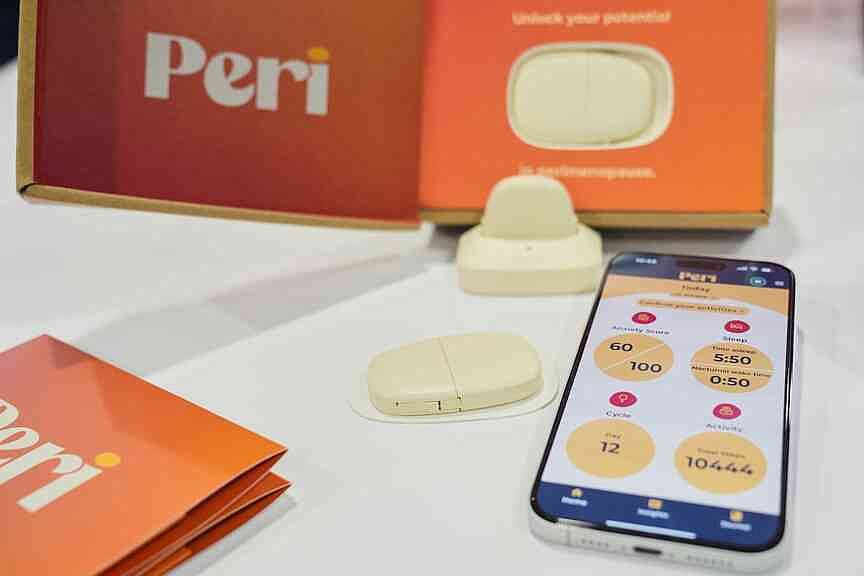
Among the featured products, a device named Peri aims to shed light on perimenopause, the transition leading to menopause. This wearable device monitors symptoms such as hot flashes and night sweats and transmits the data to an accompanying app.
Other innovations showcased at CES are designed to enhance access to health information. For instance, the free medicine-focused AI chatbot 0xmd aims to improve medical information accessibility in areas facing doctor shortages and serves as a cost-effective alternative. Founder Allen Au explained that users can inquire about medical issues, upload images of conditions like moles or rashes, and receive simplified translations of doctors’ notes.
Au emphasized that while these tools are not intended to replace doctors, they can provide users with a valuable second opinion. In a similar vein, OpenAI announced its new platform, ChatGPT Health, aimed at offering health-related advice and information.
Despite the promises of these consumer technologies, Cohn remains cautious, noting that while they can assist individuals in formulating questions for their healthcare providers, they should not be regarded as substitutes for professional medical advice. “People need to remember that these are just tools; they’re not oracles who are delivering truths,” she stated.
See also Scoop AI Hackathon Tokyo Bowl on Jan. 31: $1,000 Prize Pool Awaits Innovators
 Samsung Set to Supply Exynos Processor for OpenAI’s 40M AI Earbud Project
 Embrace Ethical AI in Sales: Boost Trust and Revenue by 1.3x with Transparency
 Arabic.AI Launches Free Arabic Coding Courses on Replit, Revolutionizing Tech Education Access
 Midjourney Launches Niji 7, Elevating Anime AI Art with Enhanced Color and Flexibility