









































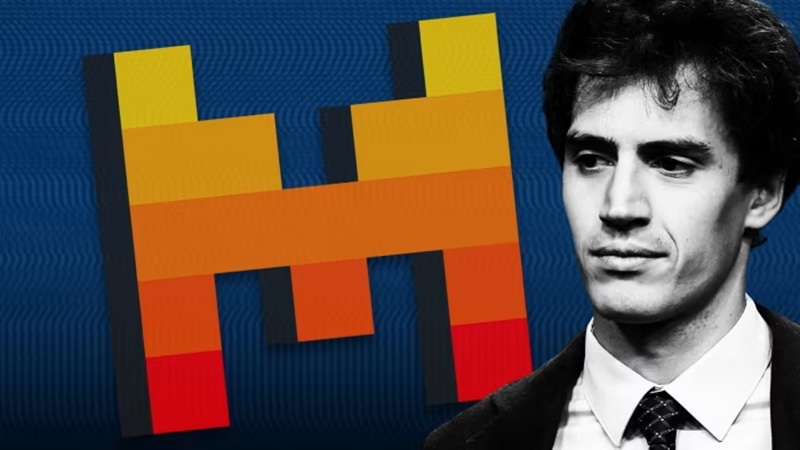
France has formalized a significant shift in its approach to artificial intelligence (AI) within its national security framework by awarding a contract to domestic AI startup Mistral AI. This framework agreement grants the French armed forces, defense agencies, and associated public institutions access to Mistral’s advanced AI models and services, positioning the nascent company at the core of France’s military modernization efforts.
The announcement, made by the Ministry of the Armed Forces, is being managed by the ministry’s newly established defense AI agency, which aims to accelerate the integration of AI into defense planning, logistics, intelligence support, and administration. Although specific financial details were not disclosed, the agreement underscores France’s determination to treat control over AI infrastructure and data as a matter of sovereignty rather than mere convenience.
A key stipulation of the agreement is that Mistral’s AI systems must be deployed on infrastructure controlled by France. This ensures that sensitive military data will not be processed or stored on foreign cloud platforms, thus escaping the jurisdiction of non-French laws. In a climate where governments are increasingly cautious about data handling, particularly under U.S. laws, France’s defense ministry is taking a decisive stance on safeguarding its most critical digital assets.
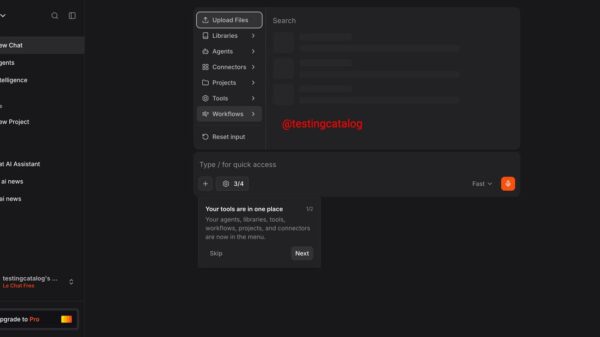
Mistral confirmed via a LinkedIn post that its AI models will be customized using defense-specific data to meet operational requirements, indicating that their applications will extend beyond generic tools. The technology could be harnessed for various functions including logistical optimization, maintenance forecasting, and decision-support systems for military leaders and analysts. This level of customization reinforces the military’s perspective that AI must be tailored to align with national priorities and operational needs.
The defense ministry positioned the partnership within the framework of “technological sovereignty,” a term that has gained prominence in French and wider European technology policies. The ministry stated that the deal is designed to maintain the armed forces’ control over essential AI tools utilized across numerous operations. Bertrand Rondepierre, director of the ministry’s defense AI agency, described the agreement as “a major step” in enhancing generative AI capabilities while ensuring that the armed forces remain equipped for future challenges.
This agreement represents a significant endorsement for Mistral, which was founded in 2023 and has quickly achieved an estimated valuation of $13.6 billion, following a €1.7 billion ($2 billion) funding round. The Paris-based startup, backed by global investors and staffed by alumni from prominent U.S. and European AI labs, has positioned itself as a credible alternative to major American players like OpenAI, Google, and Anthropic.
Securing a defense contract in its home country supports Mistral’s assertion that Europe can cultivate and operate cutting-edge AI systems independently of U.S. platforms. This military contract also sends a strong message to other European governments grappling with similar issues surrounding data sovereignty, export controls, and reliance on foreign technology.
The timing of this agreement is particularly relevant as policymakers across Europe reevaluate their dependence on U.S. technology in sectors long considered politically neutral, including cloud computing, semiconductors, and AI. As generative AI becomes integral to critical workflows, concerns have heightened regarding potential restrictions imposed by foreign policies or geopolitical tensions beyond Europe’s control.
France’s initiative mirrors trends in the United States, where government bodies and the Pentagon have increasingly turned to domestic AI firms to support military and national security objectives. Recent contracts with companies such as OpenAI, xAI, and Anthropic reflect a shared recognition across the Atlantic: AI has emerged as a strategic asset, prompting governments to seek closer partnerships with the firms developing it.
However, France’s strategy exhibits a notable distinction. Unlike U.S. agencies that often utilize commercial cloud services operated by American tech giants, France emphasizes complete national control over the infrastructure, data, and customization of its AI systems. This focus underscores Europe’s prevailing unease with technological dependencies, even with allied nations, as it seeks to preserve autonomy in a rapidly evolving geopolitical environment.
The agreement not only provides access to advanced generative AI but also safeguards the operational independence of the French armed forces. For Mistral, this deal not only represents a lucrative opportunity but also a chance to hone its technology within one of the most challenging environments conceivable. Military applications tend to reveal weaknesses rapidly, necessitating swift enhancements in reliability, explainability, and security—areas where government expectations often surpass those of commercial clients.
As generative AI becomes increasingly integral to military planning, intelligence gathering, logistics, and administrative functions, France’s decision to support Mistral signifies a broader recalibration underway in Europe. The focus is shifting away from mere performance; control, jurisdiction, and alignment with national interests are now central to how governments select their AI partners. This strategic investment indicates that France aims to become more than just a consumer of foreign AI systems in sensitive areas and is committed to nurturing domestic champions to maintain its autonomy in the era of intelligent machines.
See also Nvidia’s Jensen Huang Reveals 1.5 Million AI Models Driving a Revolutionary Market Shift
 Invest in AI Stocks: Nvidia and Serve Robotics Poised for Massive Growth by 2026
 Microsoft’s AI Investment Strategy Sparks Stock Decline Despite Long-Term Growth Potential
 Parents Equip Themselves for AI Challenges at Marquette Library Workshop
 Taiwan Semiconductor: The Trillion-Dollar AI Stock Set to Surge as Demand Soars