













































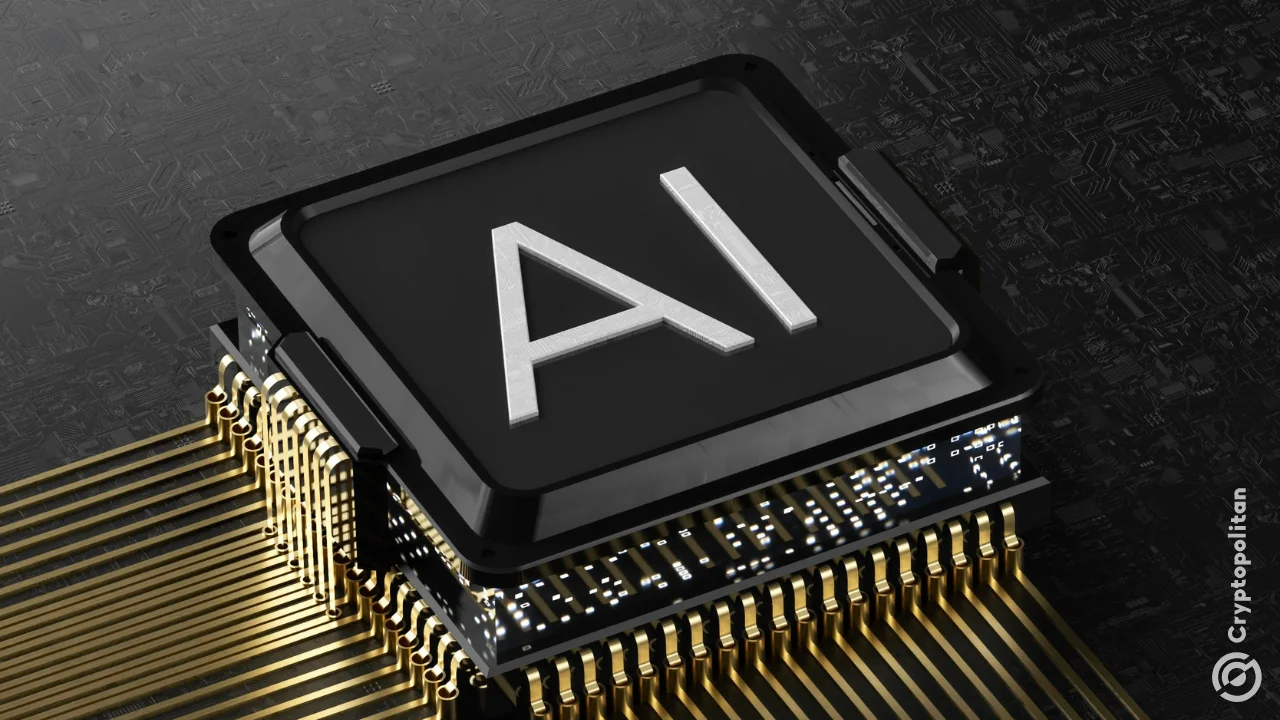
FuriosaAI, a South Korean semiconductor startup, is set to begin commercial production of its latest artificial intelligence inference chip, the RNGD, this month. The company, founded in 2017 by June Paik, a former Samsung Electronics memory-chip engineer, is entering a market long dominated by Nvidia as competition intensifies within the AI sector.
Paik’s journey into AI began during a lengthy rehabilitation period following an Achilles tendon injury incurred at a company soccer event. During this time, he took online AI courses offered by Stanford University, ultimately deciding to pursue an AI-related venture after leaving Samsung. “I left with absolute certainty that I had to get into the AI space,” Paik stated.
The concept for FuriosaAI materialized during discussions with former colleagues at a computing conference in Seoul, where AI was a key topic. After that, Paik partnered with a former Samsung colleague and a specialist in algorithms, leading to the company’s establishment in 2017.
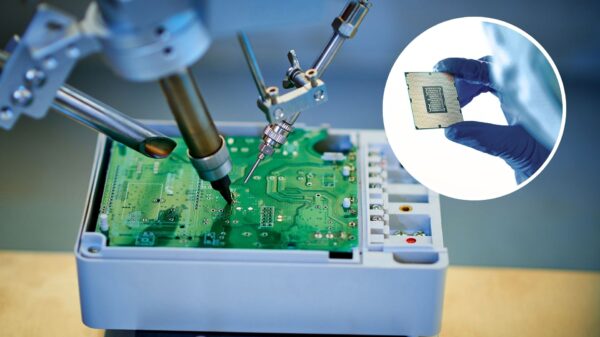
The RNGD chip, whose name stands for “renegade,” is designed specifically for the inference phase of AI, which involves executing trained AI models. Currently, Nvidia’s graphics processing units are the dominant technology in the AI computing market, particularly for training large models. However, startups like FuriosaAI are focusing on the inference segment as a viable area for competition.
FuriosaAI’s latest funding round has valued the company at nearly $700 million. Notably, Meta Platforms considered acquiring Furiosa last year, although negotiations did not culminate in a deal. At a recent event in Seoul, OpenAI showcased the RNGD chip, and LG’s AI research division is testing it, reporting “excellent real-world performance.” FuriosaAI is actively engaging with potential clients for its new technology.
According to Paik, the performance of the RNGD chip is on par with Nvidia’s advanced GPUs while consuming less power, which could significantly lower the costs associated with deploying AI systems. He has expressed concerns about the heavy reliance on a single chip manufacturer for AI computing, stating, “A market dominated by a single player—that’s not a healthy ecosystem, is it?”
Paik’s career began at Advanced Micro Devices (AMD), where he worked on GPU design. He later returned to South Korea in 2013 to join Samsung, where he led a team developing new memory-chip products. FuriosaAI’s chief technology officer, Hanjoon Kim, who also worked at Samsung, noted that Paik emphasized quick decision-making and long-term vision during the company’s early stages.
South Korea is actively positioning itself for growth in AI and inference technologies, leveraging its solid software capabilities and semiconductor expertise from homegrown firms like Samsung and SK Hynix. The South Korean government has prioritized AI development, aiming to establish itself as a technological leader alongside China and the United States. Recently, the government facilitated a significant GPU supply deal with Nvidia, and OpenAI has opened an office in Seoul.
In the early years of FuriosaAI, Paik frequently referenced “Blitzscaling: The Lightning-Fast Path to Building Massively Valuable Companies,” a book highlighting the need for swift decisions and bold moves in market entry. This strategy has informed the company’s rapid development.
At the upcoming Hot Chips conference in 2024, Paik is scheduled to deliver a keynote presentation introducing the RNGD chip, asserting it as a solution for what he describes as “sustainable AI computing.” He plans to share data demonstrating that the chip can operate Meta’s Llama large language model with power efficiency surpassing that of Nvidia’s leading chips by more than double. “It was a moment where we felt we could really move forward with our chip with confidence,” Paik remarked.
Reflecting on his past, Paik considers his Achilles injury a turning point in his career. “I think it could have been a blessing in disguise,” he concluded, as he has now positioned FuriosaAI to compete in a rapidly evolving AI landscape.
See also Microsoft AI CEO Mustafa Suleyman Warns of Existential AI Risks, Demands Global Regulations
 Meta Acquires AI Startup Manus for $2B Amid Legal Challenges and Strategic Shift
 China’s DeepSeek Unveils AI Framework Amid Strong Policy Support, Eyes Global Dominance by 2027
 AI Headset Predicts Epileptic Seizures Minutes in Advance, Revolutionizing Patient Care
 OpenAI’s Data Center Faces Continued Pushback Amid Michigan’s Tech Expansion Plans