
















































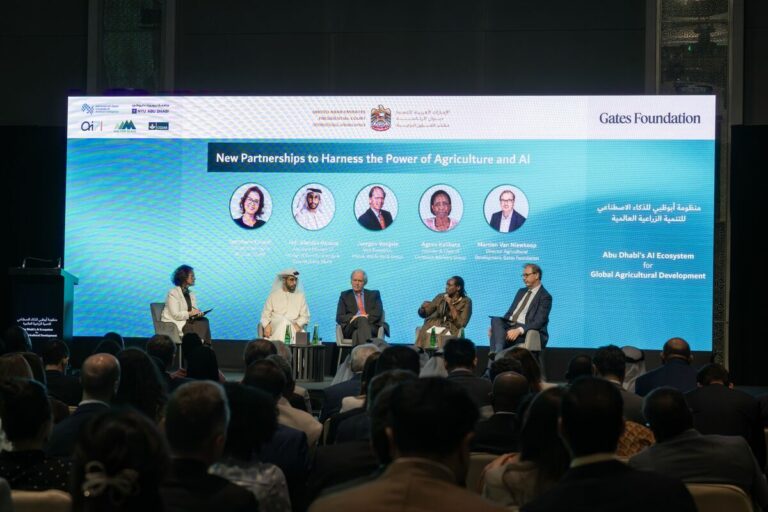
ABU DHABI, Dec 9 (WAM/APP) — Global leaders and experts in agriculture and advanced technologies convened in Abu Dhabi on Monday to discuss the pivotal role of artificial intelligence (AI) in promoting sustainable agriculture and enhancing the resilience of food supply chains. This panel took place in conjunction with Abu Dhabi’s launch of the AI Ecosystem for Global Agricultural Development.
During the discussions, speakers emphasized how AI facilitates timely and accurate responses to agricultural challenges. By consolidating fragmented data into actionable insights, AI provides essential tools for smallholder farmers and policymakers, enabling them to make informed decisions. This integration of technology aims to address various agricultural issues and improve overall productivity.
Highlighting the intersection of AI and water management, Abdulla Balalaa, Assistant Minister of Foreign Affairs for Energy and Sustainability Affairs, noted that water is crucial for agriculture, with the sector consuming 70 percent of the world’s freshwater resources. He stressed the necessity for prudent management of these resources, particularly as AI and future technologies can help forecast weather patterns and manage water-related challenges, such as desertification and groundwater depletion. Balalaa remarked that the upcoming UN Water Conference would present an opportunity to leverage these technologies to support decision-makers in monitoring issues like sea level rise and enhancing policy responses.
In addressing AI’s contribution to global agricultural programs, Juergen Voegele, Vice President of Planet at the World Bank Group, stated that AI can integrate smallholder farmers into agricultural value chains by providing comprehensive information. This includes vital updates on weather, market prices, and pest control strategies, which are essential for improving agricultural outcomes.
Dr. Agnes Kalibata, Founder and Chair of the C4Impact Advisory Group in Rwanda, added that the success of AI-enabled agricultural services hinges on building trust with farmers and local communities. She emphasized the importance of government leadership, clear guidance, and credible service delivery, while also respecting farmers’ traditional knowledge as critical components for success.
The panel also underscored the significance of open data and a robust global infrastructure for agriculture. Martien Van Nieuwkoop, Director of Agricultural Development at the Gates Foundation, articulated that AI can create a global infrastructure that transforms agricultural knowledge into practical services. He advocated for making data and models available as global public goods to ensure recommendations reach hundreds of millions of smallholder farmers by 2030.
Van Nieuwkoop further affirmed that collaborations between the UAE, global research institutions, and the World Bank are essential in empowering farmers to access agricultural knowledge and tools comprehensively and at scale. This synergy aims not just to bolster agricultural productivity but also to create a more equitable landscape for smallholder farmers worldwide.
As discussions concluded, the emphasis on AI’s transformative potential in agriculture illuminated the critical need for integrating advanced technologies into farming practices. The insights shared during this panel reflect a growing consensus among leaders that leveraging AI could significantly change the future of agriculture, enhance food security, and provide sustainable solutions to pressing global agricultural challenges.
The implications of this movement are profound, as the successful implementation of AI in agriculture may pave the way for more resilient food systems and optimized resource management in the face of climate change and other environmental challenges.
See also India to Host Groundbreaking AI Impact Summit, Uniting Global South for Measurable Outcomes
 Novartis Invests $1.7 Billion in AI-Powered Allergy Drug Discovery Partnership with Relation
 OpenAI’s Enterprise AI Report Reveals 320x Increase in Reasoning Tasks Year-over-Year
 Survey Reveals AI Boom Sparks Executive Enthusiasm Amid Public Skepticism on Risks
 Microsoft Announces $17.5 Billion Investment in India’s AI and Cloud Infrastructure