










































In a significant advancement for the field of embodied artificial intelligence, Google DeepMind and Boston Dynamics have announced the integration of the Gemini 3 foundation model into the all-electric Atlas humanoid robot. This collaboration, unveiled at CES 2026, marks a departure from pre-programmed robotic routines, enabling the Atlas to understand complex verbal instructions and navigate unpredictable human environments in real time.
The implications of this integration are profound. Historically, humanoid robots faced limitations in reasoning about the physical world; they could perform impressive feats in controlled environments yet struggled with basic tasks in cluttered settings. By embedding the Gemini 3 model directly into Atlas, Alphabet Inc. (NASDAQ: GOOGL) and Boston Dynamics, a Hyundai Motor Company (OTCMKTS: HYMTF) subsidiary, have developed a machine that not only moves but perceives, plans, and adapts. This synthesis of “brain” and “body” equips Atlas with the capability to perform high-level cognitive tasks autonomously, potentially transforming industries such as automotive manufacturing, logistics, and disaster response.
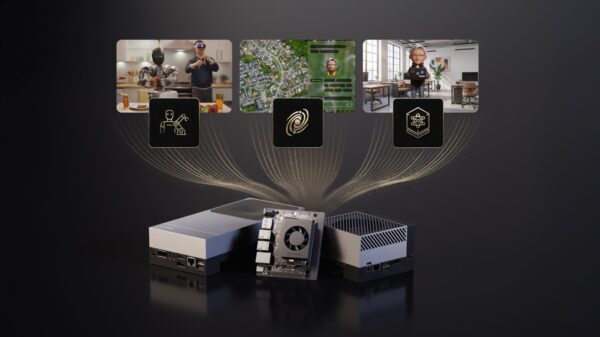
Central to this advancement is the Gemini 3 architecture, which debuted in late 2025. Unlike its predecessors, Gemini 3 employs a Sparse Mixture-of-Experts (MoE) design tailored for robotics and features a 1-million-token context window. This design allows Atlas to retain an extensive memory of its environment without losing focus. The model’s “Deep Think Mode” enables the robot to pause briefly to simulate various outcomes before executing movements, powered by an NVIDIA Corporation (NASDAQ: NVDA) Jetson Thor module that delivers over 2,000 TFLOPS of AI performance, processing video, audio, and tactile sensor data concurrently.
The physical design of the Atlas has also undergone a transformation. The 2026 model incorporates 56 active joints, many capable of 360-degree rotation, surpassing human motion range. To connect high-level AI reasoning with low-level motor control, DeepMind has created a proprietary “Action Decoder” that operates at 50Hz. This digital cerebellum translates Gemini 3’s abstract goals—like “pick up the fragile glass”—into precise torque commands for Atlas’s electric actuators, resolving latency issues that hindered previous humanoid robots and enabling reactions within 20 milliseconds to dynamic events.
Initial reactions from the AI research community have been highly favorable. Dr. Aris Xanthos, a prominent robotics researcher, remarked that Atlas’s ability to understand open-ended commands, such as “Clean up the spill and find a way to warn others,” represents a “GPT-3 moment for robotics.” Unlike prior systems that required extensive reinforcement learning for specific tasks, the Gemini-Atlas integration can acquire new industrial workflows with as few as 50 human demonstrations, heralding a new era of efficient humanoid deployment in dynamic environments.
This collaboration positions Alphabet Inc. and Hyundai Motor Company as frontrunners in the expanding humanoid market, presenting a formidable challenge to competitors. Tesla, Inc. (NASDAQ: TSLA), which has been developing its Optimus robot, now contends with a rival that possesses a significantly more advanced software ecosystem. While Optimus has made notable progress in mechanical design, the incorporation of Gemini 3 provides Atlas with a more sophisticated “world model” and linguistic comprehension, capabilities that Tesla’s current full self-driving architecture may struggle to match in the immediate future.
Moreover, this partnership signifies a broader shift in how AI firms engage with the market. Tech giants are increasingly focused on providing their AI systems with a physical presence, moving beyond traditional applications like chatbots. Startups such as Figure AI and Agility Robotics may find it challenging to compete with the substantial R&D resources and data advantages of Google and Boston Dynamics. The strategic edge lies in the data loop; each hour Atlas operates in a factory generates multimodal data that refines Gemini 3, creating a self-reinforcing cycle of improvement that is difficult for smaller entities to replicate.
Hyundai plans to implement the Gemini-powered Atlas in its “Metaplants,” starting with the RMAC facility in early 2026, a move anticipated to reduce manufacturing costs and set new benchmarks for industrial efficiency. For Alphabet, this integration serves as a showcase for Gemini 3’s versatility, demonstrating that their foundational models extend beyond search engines and coding into essential operational systems for the physical world.
The societal implications of the Gemini-Atlas collaboration are noteworthy as well. The technology signifies a shift from traditional automation, where robots executed repetitive tasks in isolation, to a collaborative approach where robots operate alongside humans as intelligent partners. The capacity of Atlas to navigate complex environments in real time positions it for deployment in various settings—hospitals, construction sites, and retail spaces. This heralds the arrival of the “General Purpose Robot,” a long-sought goal in the realm of robotics.
However, the advanced capabilities of such robots also raise significant concerns. The prospect of robots executing intricate verbal commands prompts questions around safety and job displacement. Although the 2026 Atlas includes “Safety-First” protocols to prevent harmful actions near humans, the ethical implications of autonomous decision-making in critical environments remain a contentious issue. Critics argue that the rapid rollout of these intelligent machines may outpace regulatory frameworks, particularly regarding data privacy and the security of the brain-body connection.
As we advance through 2026, the tech industry will closely observe how the Gemini-Atlas system performs in real-world applications. The success of this collaboration may trigger a wave of similar partnerships as other AI labs search for suitable physical embodiments for their models. Ultimately, the integration of Gemini 3 into the Atlas robot not only signifies a remarkable technical milestone but also represents a potential turning point in how we interact with intelligent machines, granting humanity its first true glimpse of a future where robots are not merely tools, but capable partners in our everyday lives.
See also CES 2026 Wraps Up: Major AI Breakthroughs from Nvidia, AMD, and Robot Innovations by Hyundai
 Mastering Storytelling: The Essential Leadership Skill Driving Success in 2026
 DOJ Revises Maduro Indictment, Downplays ‘Cártel de los Soles’ as a Literal Drug Cartel
 X Faces Backlash Over Grok’s Misuse; Trump Blocks State AI Regulations, Meta Halts Smart Glasses Expansion
 Idaho Secures $4M Federal Grant to Enhance AI Literacy for 90,000 Students Annually