









































The global AI landscape is rapidly evolving, with new players emerging across various regions, from Silicon Valley to Asia and Europe. This article highlights eight leading AI companies that are making significant strides in technology development, including general intelligence, medical discovery, and advanced language models. As the AI race intensifies, these companies are positioned at the forefront, showcasing their innovations and breakthroughs.
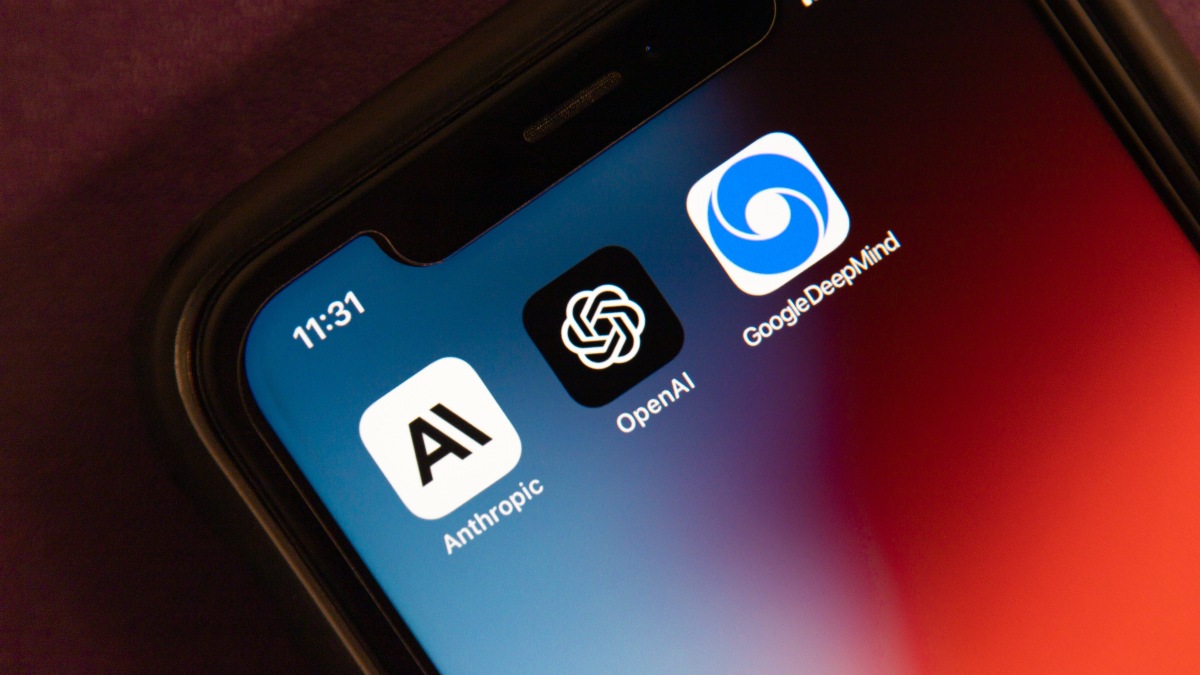
Google DeepMind stands out as one of the premier AI companies globally, specializing in large language models, general intelligence, and medical AI applications. Founded in the UK in 2010 by Demis Hassabis, Shane Legg, and Mustafa Suleyman, DeepMind was acquired by Google in 2014 and later merged with Google Brain in 2023. The lab’s recent release of the Gemini 3 Pro AI model solidifies its reputation for pioneering research, particularly in medical applications and gaming. Notably, the team behind AlphaFold2, which predicts protein structures, received a Nobel Prize, underscoring DeepMind’s impact on healthcare and science.
Following closely is Anthropic, a US-based company founded by former OpenAI employees focusing on AI safety. Led by Dario Amodei, Anthropic is renowned for the Claude AI model, a strong alternative to ChatGPT. The Claude Opus 4.5 and Claude Code models excel in coding tasks, with many researchers considering Claude Code a potential step toward AGI for programming. Anthropic’s emphasis on AI alignment and reliability has attracted enterprise clients seeking trustworthy solutions.
OpenAI, the company that initiated the AI revolution with ChatGPT, ranks third on this list. Under the leadership of Sam Altman, OpenAI has shifted its focus from pure research to product development, aiming to capture market share with models like GPT-4 and GPT-5. While the company has made substantial advancements, including the creation of a vast AI infrastructure through project Stargate, its commitment to AI safety appears diluted as it competes against emerging rivals.
DeepSeek has quickly emerged as a formidable player in the AI sector from China. Its release of the DeepSeek-R1 model in early 2025 showcased its ability to deliver high-quality AI at a lower cost, prompting competitors like OpenAI to follow suit with free offerings. The introduction of DeepSeek V3.2-Speciale has further established the company’s reputation for excellence in various competitive programming contests. Backed by High-Flyer, a Chinese hedge fund, and led by Liang Wenfeng, DeepSeek’s open-sourced training methodologies provide it with a competitive edge over Western counterparts.
Another major contender is Alibaba, known for its dominance in the open-source AI realm. With the latest Qwen 3 series of models, Alibaba competes vigorously against major players like OpenAI and Anthropic. These models include specialized versions for programming and vision-language tasks, with Qwen-Coder and Qwen-VL demonstrating exceptional versatility. Alibaba’s commitment to innovation places it as a leader in the global AI market.
In Europe, Mistral is positioned as a key player, having been founded in 2023 by former researchers from Meta and Google DeepMind. Led by Arthur Mensch, Mistral focuses on multilingual AI capabilities, striving to outperform American models in European languages. Despite significant competition from Chinese companies, Mistral’s open-weight approach has garnered a positive response, with recent model releases like Mistral Large 3 and Devstral 2 showcasing its potential.
Moonshot AI, another innovative Chinese firm, has gained attention for its Kimi-series of AI models. Recently, the Kimi K2 Thinking model emerged, demonstrating capabilities comparable to leading models from OpenAI and Anthropic. With a focus on cost-efficient development and full open-source availability, Moonshot AI is on the rise, making strides in AI capabilities and gaining traction in the competitive landscape.
Finally, xAI, founded by Elon Musk, has established itself rapidly as a significant contender in the AI field. The company boasts Colossus, the world’s largest AI supercomputer, equipped with 200,000 Nvidia GPUs, enabling swift model training and deployment. xAI’s Grok AI chatbot and its controversial output have drawn attention, reflecting both its technological ambitions and the ethical challenges facing AI companies today.
As the AI industry continues to evolve, these eight companies are not just shaping the future of technology but also setting the stage for broader implications in fields like healthcare, education, and beyond. While established giants like Meta and Microsoft are also part of the conversation, their recent struggles highlight the dynamic nature of the AI sector. The competition is fierce, and as these companies push the boundaries of what’s possible, the world watches closely for the next breakthrough.
See also Nvidia’s $57B AI Surge Fuels Groq Partnership, Signals China Market Re-entry for 2026
 AI/ML Innovations Inc. Holds Steady at C$0.035 Amid Market Volatility, Signals Potential Recovery
 China Reveals Photonic AI Chips Achieving 100x Speed Over NVIDIA GPUs in Targeted Tasks
 Bernie Sanders Urges Moratorium on AI Data Centers to Address Wealth Inequality and Environmental Impact