














































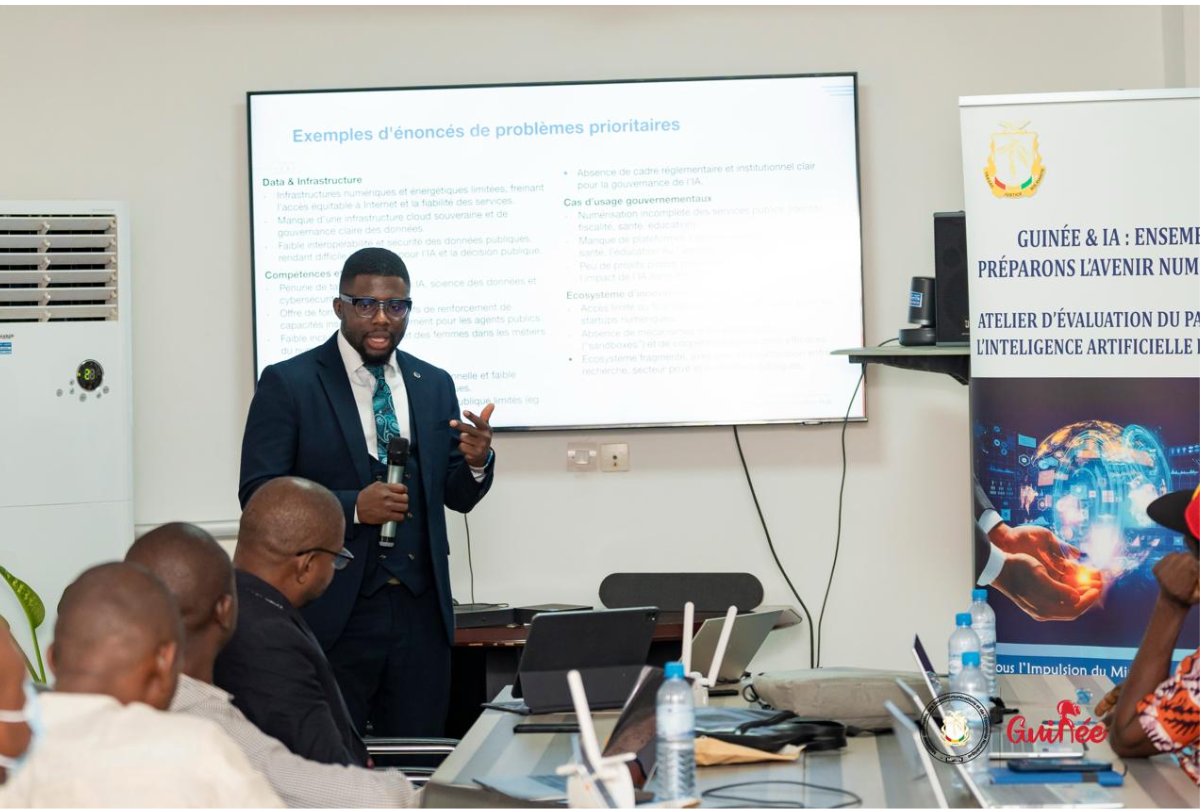
The Ministry of Posts, Telecommunications and Digital Economy (MPTEN), in collaboration with the United Nations Development Programme (UNDP), recently convened a workshop to advance the implementation of the National Artificial Intelligence (AI) Strategy. This event took place shortly after the National Workshop on Artificial Intelligence Landscape Assessment (AILA), held from October 14 to 17, aiming to integrate AI into various public policies across the nation.
Chaired by Mr. Appolinaire Loua, Director General of the BSD of MPTEN, the workshop attracted general managers and representatives from various sectoral Strategic Development Offices (BSDs). Participants engaged in reviewing the findings from the AILA diagnosis, discussing implications across different sectors, and delineating initial actions for AI integration into public policies.
The participatory approach underscores MPTEN‘s commitment to crafting a national AI strategy that is rooted in the pragmatic needs of various sectors. By leveraging the expertise of the BSDs, the Ministry aims to align AI adoption with real-world challenges and opportunities, thereby ensuring that the technology serves as a catalyst for enhancing public services and economic growth.
With the support of UNDP, MPTEN is actively shaping the government’s broader information and communication technology (ICT) and digital economy policies, placing AI at the core of the country’s digital transformation agenda. This strategic focus on AI aims to address pressing developmental issues while fostering sustainable economic growth.
The recent workshops reflect a growing recognition of AI’s potential to drive innovation and efficiency across various sectors, from healthcare to agriculture. By prioritizing AI, the government seeks to harness its capabilities to improve operational effectiveness and service delivery.
As nations around the globe increasingly embrace AI technologies, this commitment by MPTEN illustrates a proactive stance in ensuring that the country is not left behind in the digital economy. The integration of AI into public policies could significantly enhance decision-making processes and improve transparency in governance.
The successful execution of the National AI Strategy will depend on continued collaboration with sectoral leaders and stakeholders, as well as ongoing assessments of AI’s impact on society. With the groundwork laid by these workshops, the path forward appears promising, potentially leading to transformative advancements in various public sectors.
Looking ahead, the outcomes of this collaboration could serve as a model for other nations striving to integrate AI into their public frameworks. As the discourse around AI continues to evolve, MPTEN‘s initiative may position the country as a leader in AI-driven governance within the region.
See also AI Revolutionizes Filmmaking: Tallinn Panel Outlines Ethical Integration and Efficiency Gains
 Meta Stock Rises 2.26% Amid $150B AI Infrastructure Spending Concerns
 Wedbush Updates IVES AI 30: CoreWeave, Iren, and Shopify Named Key Stocks for 2026 Gains
 Disney Partners with Animaj to Reduce Animation Production Time by 80% Using AI
 Opera’s AI Browser Upgrades Drive 17% Query Revenue Growth, Elevating OPRA Investment Case