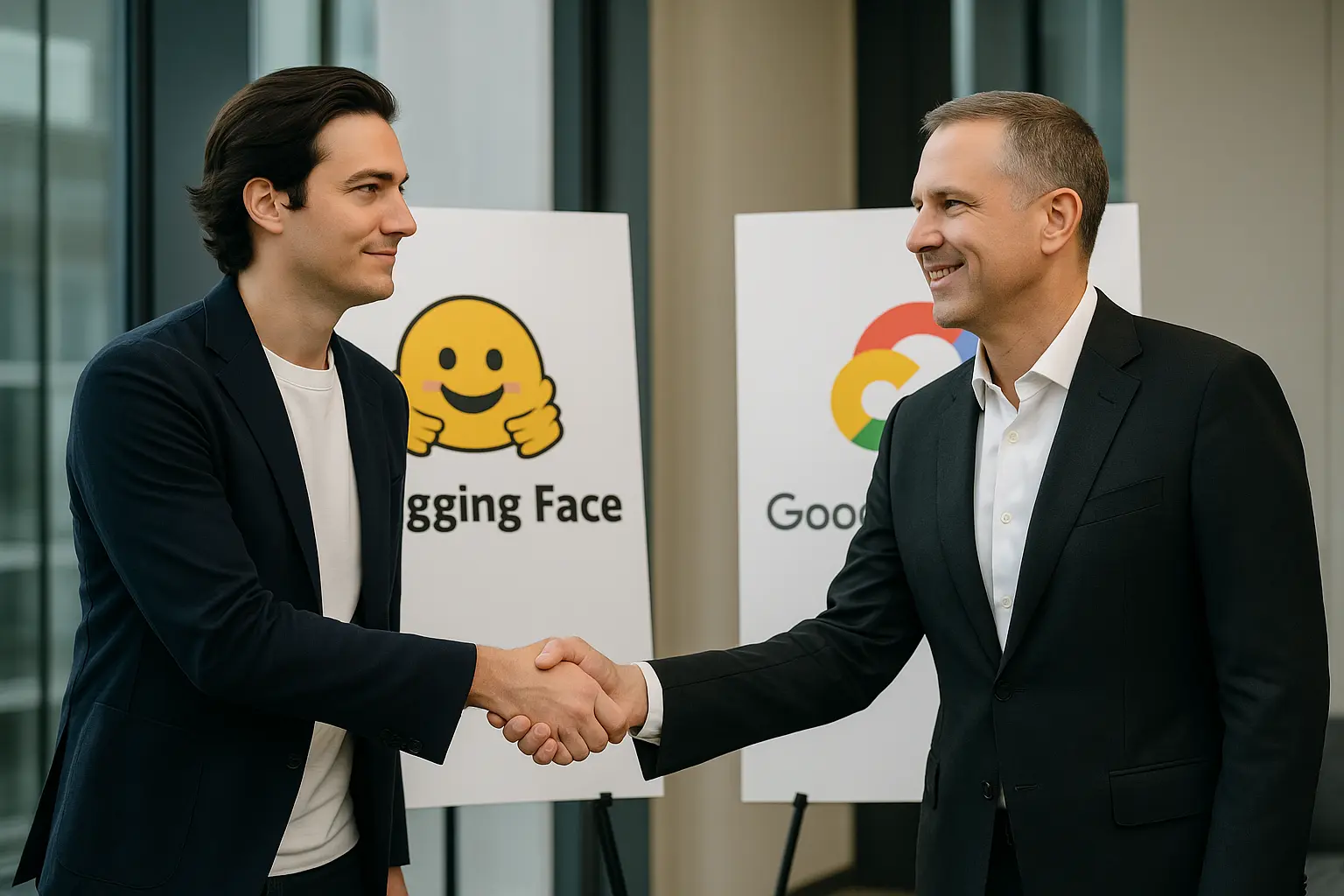
In a notable development within the AI landscape, Hugging Face has expanded its partnership with Google Cloud, aiming to enhance the integration of Google’s AI-optimized infrastructure with Hugging Face’s growing ecosystem of open models and tools. This strengthened collaboration is tailored to assist enterprises in efficiently constructing and deploying AI systems that leverage open, customizable architectures, moving away from reliance on proprietary platforms.
The newly fortified alliance will facilitate a more seamless connection between Google Cloud’s advanced technologies—including TPUs, GPUs, Vertex AI, and Google Kubernetes Engine (GKE)—and Hugging Face’s extensive library of open-source models, datasets, and developer resources. By doing so, the collaboration aims to lower the hurdles associated with adopting flexible and transparent AI foundations for businesses.
“Hugging Face says Google has made some of the most influential contributions to open AI, from the original Transformer architecture to the Gemma family of models. The expanded partnership is expected to lower the barrier for enterprises looking to adopt open, customizable AI solutions rather than relying solely on proprietary systems,” the company said.
Driving Towards Open-Model Development
This announcement underscores a growing trend in the AI industry towards open-model development. Organizations are increasingly emphasizing the need for control, visibility, and cost efficiency in their AI strategies. The move aligns with a broader recognition within the sector that open-source platforms can offer significant advantages, including greater flexibility and customization potential.
With AI technologies evolving rapidly, the collaboration between Hugging Face and Google Cloud could shift the landscape for enterprises looking to integrate AI into their operations. As more companies recognize the value of open architectures, the demand for interoperable and customizable solutions is likely to rise, prompting industry leaders to adapt swiftly.
The integration of Google Cloud’s advanced infrastructure with Hugging Face’s resources provides a unique opportunity for companies aiming to adopt AI solutions without the constraints often associated with proprietary systems. As this partnership unfolds, it may pave the way for more accessible AI technologies, potentially democratizing access to advanced AI tools.
Industry Implications
The implications of this partnership extend beyond mere technical integration. As enterprises increasingly prioritize open and customizable AI solutions, traditional proprietary models may be compelled to evolve or potentially face decline in favor of more transparent options. This shift could lead to a more vibrant ecosystem of AI solutions, fostering innovation and collaboration among developers and businesses alike.
In conclusion, the enhanced collaboration between Hugging Face and Google Cloud represents a significant step toward facilitating open-model AI adoption among enterprises. By leveraging advanced technologies and open resources, the partnership aims to reduce barriers, ultimately contributing to a more flexible, transparent, and inclusive AI landscape. This evolving dynamic emphasizes the importance of adapting to industry trends that prioritize innovation while maintaining control over AI systems, positioning both companies at the forefront of the ongoing AI revolution.
See also Google DeepMind Launches WeatherNext2, Achieving 8x Speed and 99.9% Accuracy in Forecasts
 Sundar Pichai Urges Caution with AI Tools, Warns of Potential Industry Bubble
 Stock Markets Slide as Nvidia Earnings Loom and US Jobs Report Sparks Fed Concerns
 Africa’s AI Market Poised to Reach $20B by 2030, Emphasizes Local Solutions and Inclusion
 AI Chatbots Mislead UK Consumers on Financial Advice, Which? Study Reveals Major Errors