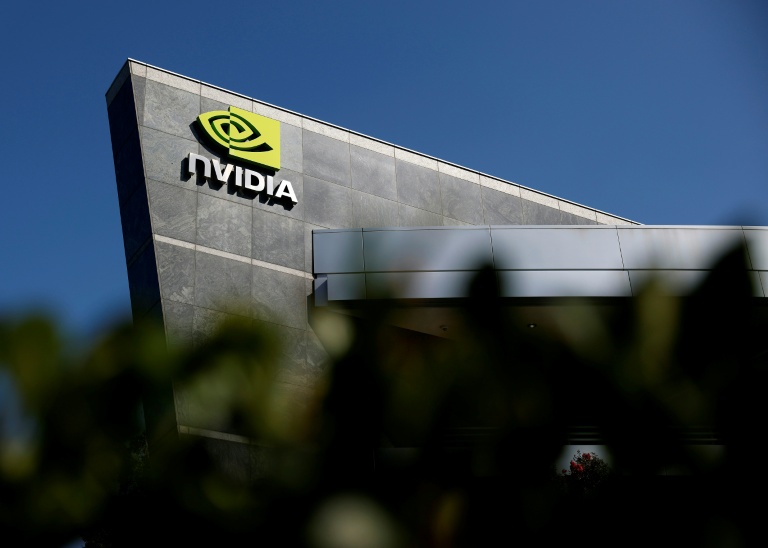
As anticipation builds for Nvidia’s upcoming earnings report, investors are increasingly wary of the tech sector’s inflated valuations. This week’s focus on the semiconductor giant comes amid broader market tensions, with Asian stock indices—particularly in Tokyo and Seoul—experiencing significant declines. The Nikkei 225 fell by over 3%, while the Kospi index in Seoul similarly dropped, reflecting mounting investor anxiety over the sustainability of this year’s impressive rally, predominantly fueled by interest in artificial intelligence (AI).
Nvidia, a leader in AI chip manufacturing, is set to unveil its financial results on Wednesday, with analysts keenly observing any signals about the future of the AI industry. The company’s high-end chips play a critical role in powering AI applications, and the market’s reaction will likely hinge on its profitability. “Analysts are sounding upbeat ahead of the report,” noted Neil Wilson from Saxo Markets. However, he cautioned that “the bar is set very high,” indicating that even slight underperformance could trigger a market backlash.
Concerns are also mounting regarding the Federal Reserve’s monetary policy. As inflation persists and the labor market shows signs of weakness, the Fed’s decision on interest rates is under scrutiny. Economists now project a 50-50 chance of a rate cut in December, with Fed officials, including Vice Chair Philip Jefferson, emphasizing a cautious approach. Jefferson remarked on the need to consider ongoing labor market risks before making further policy adjustments.
This financial backdrop has compounded the unease among investors, especially after reports surfaced that tech billionaire Peter Thiel’s hedge fund sold its entire stake in Nvidia, valued at approximately $100 million. This move sent shockwaves through the AI investment community, triggering questions about confidence levels in the sector.
The week’s economic indicators will not stop at Nvidia’s results. Following closely is the U.S. September jobs report, which was delayed due to a government shutdown. This data will provide essential insights into the health of the world’s largest economy and will be pivotal in shaping expectations around the Fed’s potential policy shifts. Fed Governor Christopher Waller has indicated that upcoming job reports are unlikely to alter his view on the necessity of rate cuts, highlighting the Fed’s cautious stance.
Meanwhile, the broader Asian markets are reflecting these anxieties. Countries like Japan and South Korea, which have enjoyed substantial stock market rallies this year—driven by firms such as Samsung and SK Hynix—are now facing pressure as investors digest potential future implications of rising interest rates and inflation. The Japanese yen has weakened to around 155.38 per dollar, its lowest since January, raising the potential for government intervention to stabilize the currency amidst these economic fluctuations.
In parallel, cryptocurrencies are experiencing turbulence as Bitcoin has slipped below the $90,000 mark, reflecting a risk-averse sentiment among investors. The cryptocurrency has seen dramatic fluctuations this year, reaching as high as $126,251 just last month, underscoring the volatility and uncertainty engulfing the tech landscape.
This week stands as a critical juncture for both Nvidia and the broader AI industry, with the potential to reshape investor sentiment moving forward. As analysts and investors await Nvidia’s earnings report, the ramifications could extend well beyond the company’s bottom line, influencing the very trajectory of AI investments and the tech market as a whole.
See also Africa’s AI Market Poised to Reach $20B by 2030, Emphasizes Local Solutions and Inclusion
 AI Chatbots Mislead UK Consumers on Financial Advice, Which? Study Reveals Major Errors
 Denmark Proposes Landmark Law to Protect Rights to Image and Combat AI Deepfakes
 OpenAI Explores Personalized Ad Model for ChatGPT Amid Rising Commerce Queries
 MMI Wins 2025 AI Pioneer Award for Transformative Mortgage Tech Using AI Insights