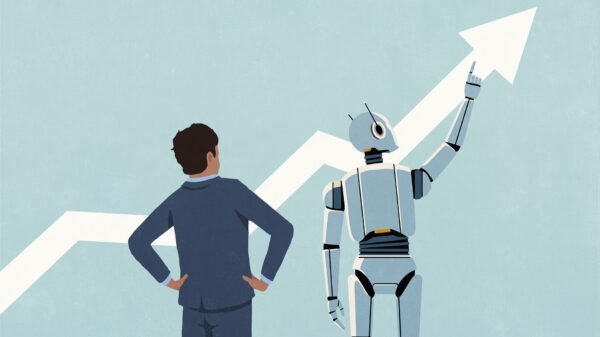
















































As concerns mount about the sustainability of the artificial intelligence (AI) market, industry giants including Bill Gates, the Bank of England, and the International Monetary Fund (IMF) warn that we may be in the midst of an AI bubble. A report from the Massachusetts Institute of Technology (MIT) estimates that as much as 95% of corporate generative AI investments fail, raising alarms about potential risks in the technology sector.
In a comparison to historical market bubbles, Gates indicated that while the current situation may not be as catastrophic as the 17th century Dutch Tulip Mania, it could resemble the late dot-com crash of the 2000s. The Bank of England’s Financial Policy Committee noted that “on a number of measures, equity market valuations appear stretched,” especially for tech companies focused on AI. This heightened valuation, coupled with market concentration, could make equity markets particularly vulnerable if AI’s perceived benefits fall short.
IMF Chief Economist Pierre-Olivier Gourinchas echoed these sentiments, remarking that while markets are currently overheated and shareholders may be at risk, the bursting of the AI bubble is less likely to trigger systemic consequences. The MIT report, titled “The GenAI Divide: State of AI in Business 2025,” analyzed 300 AI deployments and highlighted that most AI pilots falter in the initial stages.
As humanoid robot kick boxers prepare for a televised event in Shenzhen, China, in December, the spotlight on AI hype seems somewhat overshadowed. This event, organized by the robotics company EngineAI, serves as a showcase for advancements in AI and robotics technology, despite the ongoing concerns regarding the speculative nature of AI investments.
Market Context
Contrary to the bubble narrative, Nvidia CEO Jensen Huang remains optimistic about the AI landscape. Nvidia, the world’s first company to achieve a $5 trillion market cap, recently announced a $500 billion order for AI chips and plans to establish seven supercomputers for the U.S. government. Huang stated in an interview with Bloomberg TV, “All of these different AI models we’re using – we’re using plenty of services and paying happily to do it.”
This sentiment is reflected in the widespread adoption of AI technologies, with estimates suggesting that over 1 billion people interact with AI daily. Notably, 50–70 million of these users are in the United States, representing approximately 15–20% of the population. The rapid growth of applications like ChatGPT, which achieved 100 million uses in just two months in 2023, underscores the technology’s penetration into everyday life.
Recent earnings reports from major players such as Alphabet and Meta indicate substantial capital expenditures on AI infrastructure. Google increased its spending plans from $8 billion to $93 billion for the year, while Meta projected spending could reach $100 billion in the next year. Microsoft, for its part, anticipates spending around $140 billion next year.
Looking ahead, McKinsey estimates that data centers supporting AI will require $5.2 trillion in capital expenditures by 2030 to meet the growing demand for AI compute resources. According to Morgan Stanley Research, AI infrastructure capital expenditures from 2025 to 2028 could total $2.9 trillion, with $1.5 trillion anticipated to come from external capital, including $800 billion from private credit.
However, the implications of AI extend beyond capital investments. Amazon’s recent announcement to cut 30,000 corporate jobs exemplifies how AI is reshaping the workforce. CEO Andy Jassy noted that as AI automates more routine tasks, job losses are inevitable.
In the financial sector, AI is gaining traction, particularly in investment management and blockchain data networks. Clearwater Analytics has introduced CWAN GenAI, a generative AI platform integrated into production operations that has already been deployed across more than $10 trillion in institutional assets. This platform has achieved notable results, including a 90% reduction in manual reconciliation and an 80% faster regulatory reporting process.
Amidst these developments, investor sentiment appears cautiously optimistic. A survey commissioned by the U.K.-based fund manager Robocap found that all interviewed professional investors acknowledged the potential of robotics and AI to drive investment opportunities. Approximately 32% of respondents strongly agreed with this assessment. Robocap’s founder, Jonathan Cohen, emphasized the ongoing growth in AI and robotics sectors driven by advances in computing power and big data.
While institutional investors remain aware of the risks associated with potential AI bubbles, they are increasingly pressured by clients to allocate more capital toward AI and robotics. Approximately 90% of respondents expect this pressure to intensify over the next three years. However, nearly 37% of investors expressed concern about the potential for companies to make exaggerated claims regarding AI capabilities.
In light of these risks, institutional investors remain vigilant about privacy, data security, and technological vulnerabilities. Despite these apprehensions, many believe that over-regulation could stifle innovation, with around 35% of participants arguing that current regulations in the U.K. and E.U. hinder creativity. In contrast, more permissive regulatory environments in the U.S. and China may foster greater adaptability and growth for companies in those markets.
As the landscape for AI continues to evolve, the combined perspectives of investors, industry leaders, and regulators will shape the future of this transformative technology and its role in society.
See also Global Leaders Convene in Paris to Address AI, Energy Transition, and Economic Resilience
 Newegg Integrates AI Shopping with PayPal’s Perplexity for Black Friday Deals
 Tennessee Must Embrace AI Revolution to Enhance Economic Growth and Innovation
 Microsoft’s Satya Nadella Warns of AI Growth Stalled by Data Center Power Shortage
 Google and Tel Aviv University Launch $10M AI Research Initiative to Advance Global Innovation