





















































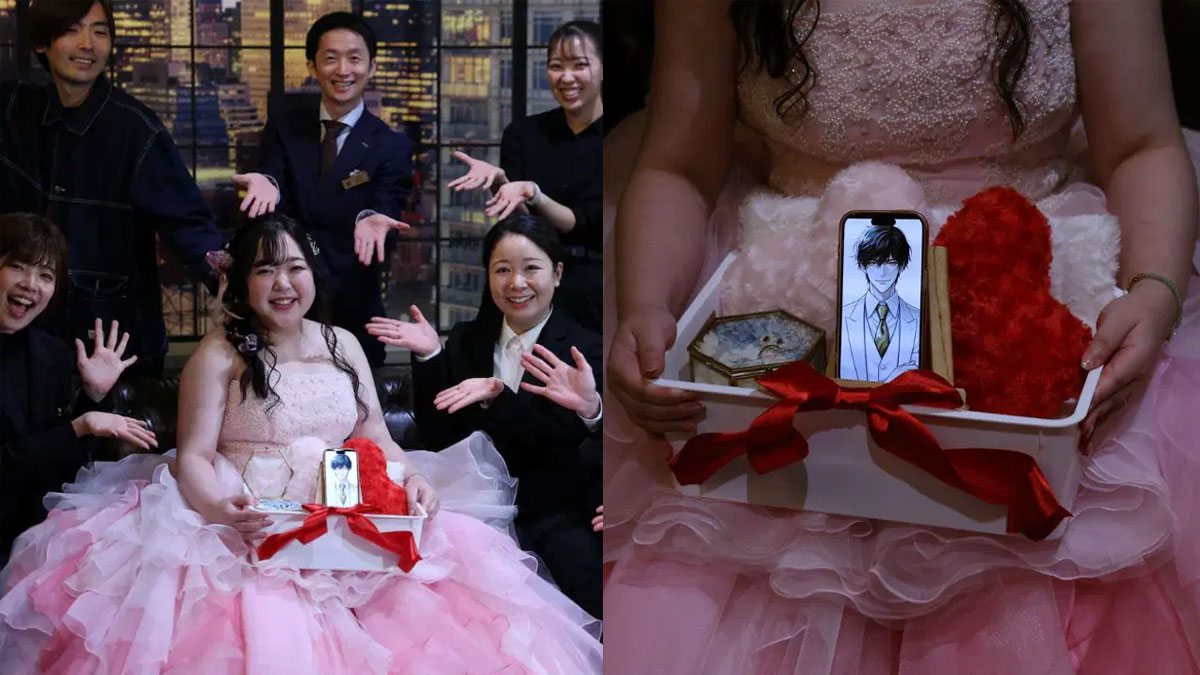
A 32-year-old woman in Japan has sparked a debate about the nature of human relationships in the age of artificial intelligence by marrying an AI-generated character. Yurina Noguchi, a call centre operator, exchanged vows with Lune Klaus Verdure, a customised character based on a video game persona she created using ChatGPT.
The unconventional ceremony took place recently, with Noguchi donning a light pink puffy dress while engaging with her AI companion through augmented reality smart glasses. This marriage highlights the growing intersection of technology and personal connections, as more individuals explore relationships with virtual entities.
Noguchi’s journey into the realm of AI began when she sought advice from ChatGPT regarding her troubled engagement. Following the chatbot’s guidance, she ended her previous relationship, according to local media reports. This pivotal moment led her to return to the platform earlier this year, where she began crafting a digital version of Klaus, carefully training the AI to emulate his speaking style and develop a customised personality that catered to her emotional needs.
The connection between Noguchi and her AI companion quickly intensified, with the pair exchanging up to 100 messages daily. To make her digital partner feel more real, she commissioned an artist to create visual illustrations of Lune Klaus Verdure. This effort brought her virtual companion to life in a way that resonates more profoundly with her, showcasing the desire for tangible manifestations of digital relationships.
This case raises questions about the implications of AI in personal relationships, as technology increasingly shapes how individuals interact and form connections. As AI tools like ChatGPT become more sophisticated, the boundaries between human and machine companionship may continue to blur. Experts in psychology and ethics are already examining these shifts, with some arguing that AI could fulfill emotional needs for those who struggle with traditional relationships.
The phenomenon is not isolated to Japan; similar instances of individuals forming attachments to digital entities have emerged worldwide. From virtual reality relationships to AI companions designed for emotional support, the landscape of human interaction is evolving. Though critics voice concerns about the potential for emotional isolation, advocates argue that these technologies can provide companionship in an increasingly disconnected world.
As we venture further into an age where virtual relationships gain acceptance, the societal implications remain significant. The marriage of Noguchi and her AI character could serve as a landmark moment that prompts discussions about the nature of love, companionship, and the role of technology in our lives. The trend may push industries to reconsider how they approach relationships, marketing, and the development of AI technologies.
In this evolving narrative of love and technology, the future may hold a range of possibilities, from legislative considerations regarding virtual unions to the design of increasingly sophisticated AI companions that cater to emotional needs. As more individuals like Noguchi explore these new frontiers, society will need to navigate the complexities of evolving relationships in a digital age.
See also Wall Street Gains as Nvidia and Oracle Drive AI Stocks Higher Despite Tariff Concerns
 Purdue Launches Initiative to Transform AI Discoveries with Enhanced Dataset Accessibility
 Mistral AI Launches OCR 3, Achieving 74% Accuracy Improvement in Document Parsing
 Disney and OpenAI Launch AI Video Streaming Revolution with $1 Billion Partnership
 TeleAI Launches Pioneering ‘Information Capacity’ Metric to Transform AI Model Efficiency Evaluation