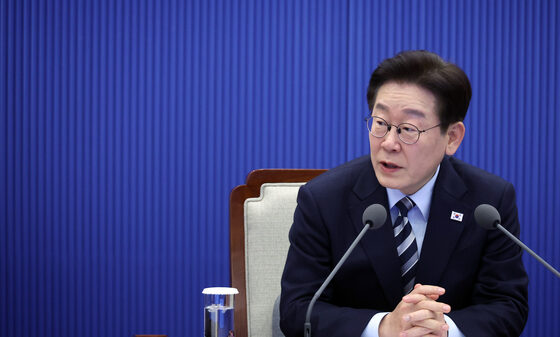
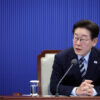
President Lee Jae Myung announced on December 12 that the South Korean government is preparing to ease regulations that currently hinder investment in advanced industries such as artificial intelligence (AI) and semiconductors. Speaking during a meeting on industry development at the presidential office in Yongsan, Lee emphasized that these changes aim to strengthen national competitiveness in light of intensifying global competition.
Lee’s remarks indicate a shift toward deregulation, a response to calls from business leaders who argue that existing regulations limit growth potential. A key proposal under consideration is amending the ownership requirements for second-tier subsidiaries, referred to as “grandchild companies,” reducing the necessary ownership stake from 100% to 50% as stipulated under Korea’s Fair Trade Act. Currently, Article 18 of this act mandates that a subsidiary fully fund any acquisition or establishment of a new subsidiary, constraining the growth of second-tier subsidiaries tied to major firms such as SK hynix, LG Energy Solution, and GS Caltex.
The existing regulations stand in stark contrast to global industry practices that often rely on joint ventures to attract external investment and share risk. A notable example is the Stargate Project in the United States, a next-generation AI infrastructure initiative backed by major firms including OpenAI, Oracle, and Japan’s SoftBank, which collectively pledged $500 billion.
Business leaders have highlighted that the lack of flexibility in Korea’s laws hampers competitiveness. SK Group Chairman Chey Tae-won has been particularly vocal, stating that the company’s investment in a new fabrication plant in Yongin alone could reach 600 trillion won ($408 billion), all of which must be self-funded under current regulations. Chey urged the government to create a new system that accommodates the scale of investment required in today’s AI-driven environment.
In a report presented to the Fair Trade Commission (FTC) last month, the Federation of Korean Industries (FKI) pointed out that South Korea stands as one of the few countries imposing such stringent ownership restrictions on subsidiaries of holding companies. They described these limitations as a “structural barrier” to mergers and acquisitions in the era of the Fourth Industrial Revolution.
Acknowledging the concerns raised, President Lee agreed with Chey’s assessment regarding investment capital and mentioned that preparations are underway at the institutional level. He argued that in high-tech sectors necessitating substantial investment, the monopoly concerns that the separation of capital rules were designed to address are now outdated, suggesting that maintaining these restrictions could stifle industrial advancement.
Should these regulations be relaxed, companies like SK hynix could potentially form special purpose vehicles, funded jointly with external capital, to develop new fabrication plants. This arrangement would enable them to utilize the facilities through long-term contracts or lease agreements without infringing on existing laws.
The proposed deregulation has sparked debate, with critics arguing that it disproportionately benefits SK hynix, the only major conglomerate affected by the intersection of AI, semiconductor manufacturing, and subsidiary restrictions. FTC Chair Ju Biung-ghi previously characterized the regulatory changes as a response to the grievances of “just a few companies.”
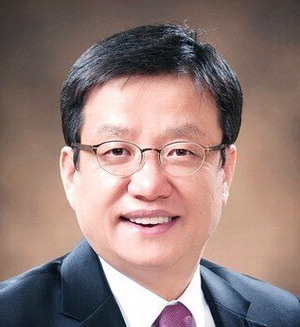
However, experts contend that any deregulation would have far-reaching implications for the entire semiconductor ecosystem, which encompasses various sectors including wafers, lithography equipment, materials, and logistics. Choi Sung-jai, a law professor at Sejong University and a former Supreme Court research officer, emphasized that the adjustments would ultimately support the value chain rather than favor a singular entity.
Choi also highlighted the critical nature of long-term investments in high-tech industries, arguing that the financial scale needed far exceeds what national growth funds can provide. He warned that this situation transcends corporate interests, touching upon national technological independence and competitiveness.
Some industry executives advocate for a comprehensive overhaul of the financing system for advanced industries instead of piecemeal easing of specific regulations, viewing such reform as essential for the survival and evolution of all businesses in a rapidly changing environment. The collective consensus is that fostering a robust regulatory framework is vital not only for individual companies but also for the broader technological landscape in South Korea.
As South Korea navigates these proposed regulatory changes, the outcome will likely influence its position in the global tech landscape, particularly in sectors pivotal for future growth and innovation.
See also Delhi Airport Enhances Winter Operations with AI, Predictive Analytics, and CAT-III Runways
 YouTuber Bypasses AI Safety, Triggers Robot to Shoot Him with BB Gun in Disturbing Experiment
 Apple’s Steady Strategy Fuels 35% Stock Surge Amid AI Spending Scrutiny
 Broadcom Stock Rises 1.64% on Microsoft AI Chip Collaboration Talks
 Nexon’s AI Ethics Debate Could Reshape Investment Outlook Amid Arc Raiders Launch