












































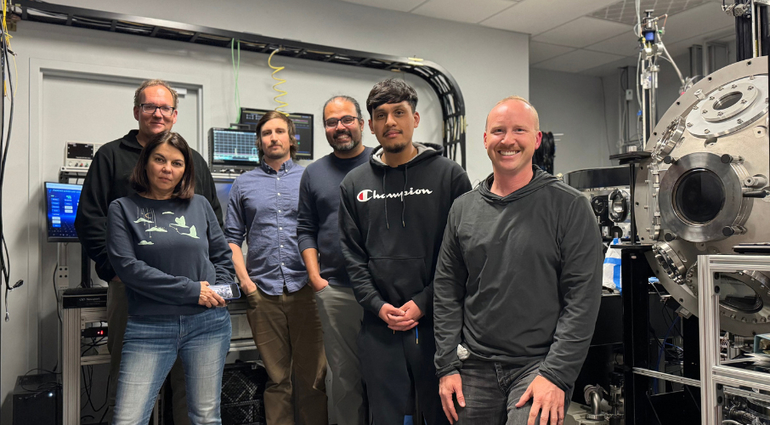
Researchers at the Lawrence Livermore National Laboratory (LLNL) are pushing the boundaries of high-energy laser systems, essential for the next generation of inertial fusion energy (IFE) power plants. Their latest work demonstrates the capability of machine learning and artificial intelligence (AI) to exert real-time control over rapid-fire laser systems, which can fire over 10 times per second—far too fast for human operators to manage effectively. This innovative approach marks a significant milestone in high energy density science.
“This demonstration represents a paradigm shift in real-time control and stabilization over high-rep-rate plasma systems,”
—Derek Mariscal, Group Leader for High-Repetition-Rate High Energy Density Science at LLNL
Collaborating with teams from UCLA and California State University Channel Islands (CSUCI), the LLNL researchers have successfully integrated AI into high-power laser experiments. This integration allows for precise manipulation of plasma characteristics—such as size and density—without the need for direct adjustments to the laser or target. Instead, AI models are trained to correlate system inputs with desired plasma outcomes, enabling instantaneous adjustments.
“This breakthrough represents a major step forward for high energy density science and inertial fusion energy,” Mariscal noted. “It paves the way for next-generation AI-driven experimental platforms.”
According to Tammy Ma, Director of LLNL’s Livermore Institute for Fusion Technology, the commercialization of fusion energy will hinge on AI-driven prediction, control, and operations within future fusion power plants. “This work is not only a highly innovative and significant step forward for IFE but also demonstrates LLNL’s leadership in rapid prediction and calculations for HED science and plasma physics,” she stated.
The Future of Inertial Fusion Energy
An IFE power plant intends to harness high-power lasers to ignite fusion reactions using a continuous stream of pellets made from deuterium and tritium. This process would see approximately 600 pellets fired per minute, with the lasers converging on each pellet to create energy outputs exceeding 50 to 100 times the energy input. The resulting energy could contribute significantly to clean electricity generation, with a single plant capable of meeting the energy needs of a major American city.
Machine learning has already achieved impressive results, predicting outcomes of National Ignition Facility (NIF) inertial confinement fusion (ICF) experiments with over 70 percent accuracy. LLNL researchers are also deploying AI agents on leading supercomputers to engineer new ICF targets, further enhancing the precision and effectiveness of these experiments.
“To maximize performance in a high-repetition-rate laser experiment, especially when system changes occur faster than a human can respond, we require speed and the ability to handle large datasets,” Mariscal explained.
Real-Time Control and Data Integration
In a project known as Data-Driven Atomic Physics (DDAP), the LLNL team combined a machine-learning model with direct AI control to manipulate laser parameters during plasma experiments. “This combination offers numerous advantages,” Mariscal stated. “It operates at super-fast speeds and thrives on large datasets.”
The experimental collaboration was conducted through the LaserNetUS initiative, facilitating a new collaborative mode where teams work together rather than merely as users of existing facilities. The LLNL team partnered closely with UCLA to establish an experimental physics and industrial control system (EPICS) at the UCLA Phoenix Laser Laboratory. This setup provided the necessary infrastructure to integrate the AI control system.
“This allows us to conduct experiments considerably faster than at NIF or other mid-scale facilities, generating far more data in the same time frame,” Mariscal said.
Furthermore, the ELI Beamlines Facility in the Czech Republic employed the LLNL-developed High-Repetition-Rate Advanced Petawatt Laser System (L3-HAPLS) to create protons in its laser-plasma ion accelerator. Previously developed technologies were utilized to enhance operations, although real-time capabilities were initially hampered by system limitations.
The DDAP team developed a novel method for real-time control of plasma itself, moving beyond traditional optimization algorithms to employ a deep learning model, which offers significant advantages in speed and data handling.
“With AI capabilities increasing rapidly, it could potentially act like a detective—figuring out the causes of failures or instabilities and ultimately refining system control and performance,”
—Abhik Sarkar, LLNL Researcher
This innovative approach not only sets the groundwork for advanced AI control but also illustrates the vital role of collaboration in scientific advancement. “Having our partners manage the data infrastructure made this possible,” Mariscal emphasized. “It was largely a matter of coding once we were set up.”
The success of real-time AI control in high-repetition-rate laser experiments underscores a new era for high energy density physics and fusion research. As AI technology continues to evolve, it promises to accelerate discoveries, enhance precision, and address challenges that were once deemed insurmountable, bringing us closer to the dream of clean, abundant fusion energy.
See also Warner Music and Stability AI Partner to Develop Ethical AI Music Creation Tools
 Intuit Partners with OpenAI for $100M AI Integration in TurboTax and QuickBooks
 Hugging Face CEO Warns LLM Bubble Could Burst Next Year, Emphasizes Specialized Models
 Uber Faces Legal Pressure to Halt AI-based Pay Systems Amid Driver Income Concerns
 Google Launches Gemini 3 with Enhanced Contextual Thinking and Free Access for Students