















































Infrastructure Innovations in Crypto and Financial Markets
The past week marked significant advancements in the crypto and financial sectors, highlighted by the London Stock Exchange Group’s announcement of a blockchain-based Digital Securities Depository intended for tokenized securities. This initiative aims to streamline the issuance, custody, and settlement of tokenized financial instruments within regulated markets, focusing on enhancing post-trade processes such as asset servicing and transaction reconciliation.
On February 12, the LSEG revealed that the project would enable interactions between traditional securities and their digital representations, all while adhering to existing regulatory frameworks. This development forms part of the exchange’s broader digital asset strategy, which emphasizes infrastructure advancement over new retail offerings.
Activity within the Bitcoin ecosystem continues to gain momentum, particularly through initiatives categorized under BTCFi. These frameworks aim to integrate Bitcoin-backed liquidity into decentralized finance (DeFi) without altering its consensus layer. By leveraging sidechains, wrapped Bitcoin, and cross-chain bridges, BTCFi models allow Bitcoin liquidity to engage with smart contract platforms while maintaining the integrity of the original protocol.
Recent progress includes various integration announcements and development milestones, reflecting ongoing efforts to support financial use cases like collateralization and liquidity provisioning. The overall expansion of Bitcoin’s role within decentralized financial applications signifies a shift toward deeper integration of crypto assets into mainstream financial systems.
In parallel, MegaETH launched its public testnet on February 9, positioning itself as a high-performance execution environment for Ethereum-based development. The public testnet allows developers to assess metrics such as throughput and transaction stability under real-world conditions, with the goal of facilitating large-scale decentralized applications and robust transaction loads.
This launch enters a competitive landscape already populated with Layer 2 scaling solutions and alternative execution-focused platforms, showcasing the ongoing emphasis on scalability within the Ethereum ecosystem. As developers continue to seek methods to enhance transaction capacity while preserving compatibility with the Ethereum base network, the significance of such initiatives cannot be understated.
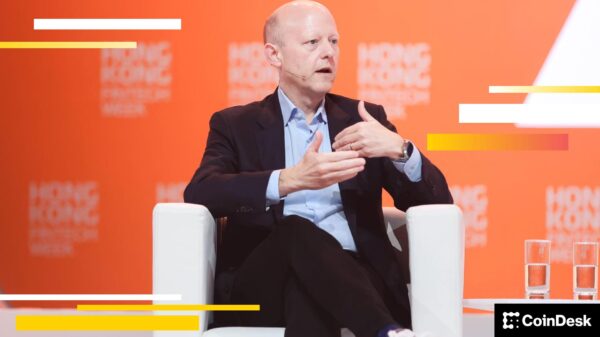
At the Consensus Hong Kong event on February 11, Charles Hoskinson introduced the roadmap for Midnight, a privacy-centric blockchain that utilizes selective disclosure mechanisms. This architecture allows users to validate attributes without revealing full identity details, employing cryptographic proof systems designed to verify information in a controlled manner.
Midnight is associated with the Cardano ecosystem and is currently advancing through various development phases. As privacy-focused blockchain architectures evolve, selective disclosure represents one of several approaches aimed at enhancing user privacy while balancing verification needs.
In another notable update, Telegram’s TON wallet now supports cross-chain deposits, allowing users to fund their wallets with assets from both the Ethereum and Solana networks. This functionality reduces users’ reliance on external bridging interfaces and underscores the growing trend of cross-chain integration as decentralized ecosystems expand.
The TON wallet’s capabilities align with Telegram’s broader strategy to enhance accessibility to decentralized applications, marking a significant step in wallet-level infrastructure development.
Furthermore, the Intercontinental Exchange recently unveiled regulated futures contracts based on CoinDesk benchmark indices. These cash-settled contracts provide diversified digital asset exposure, enabling market participants to gain exposure to various digital assets without directly holding them. This launch expands the spectrum of regulated digital asset derivatives available through established exchange infrastructure.
In a move reflecting the growing intersection between traditional sectors and emerging technologies, Bitcoin mining company IREN announced its expansion into artificial intelligence and high-performance computing data centers. Leveraging infrastructure initially developed for Bitcoin mining, IREN aims to adapt its resources to support AI workloads while continuing its mining operations.
As the digital asset landscape evolves, the integration of AI capabilities into existing mining infrastructure indicates a broader trend among operators seeking diversification strategies. The adaptability of data centers designed for mining to accommodate compute-intensive operations represents a forward-thinking approach to infrastructure utilization.
Across multiple blockchain ecosystems, ongoing development activity encompasses protocol testing, performance optimization, and infrastructure integration. These updates reflect a concerted effort by both crypto-native firms and traditional financial institutions to enhance backend systems, ensuring that the digital asset infrastructure continues to grow within both regulated and decentralized environments. As these advancements unfold, they pave the way for a more interconnected and efficient financial ecosystem.
See also ValleyNXT Ventures Unveils ₹400 Crore Bharat Breakthrough Fund for AI and Defence Startups
 Google Hosts 200 SENCOs at SEND Symposium to Enhance AI in Inclusive Education
 President Dissanayake Joins 45-Nation AI Impact Summit in India, Addresses Global Challenges
 Pentagon Considers Supply Chain Risk Designation for Anthropic Amid Tensions
 Cohu’s Mixed 2025 Results and AI Wins Reshape Investment Landscape Amid Growing Losses