
















































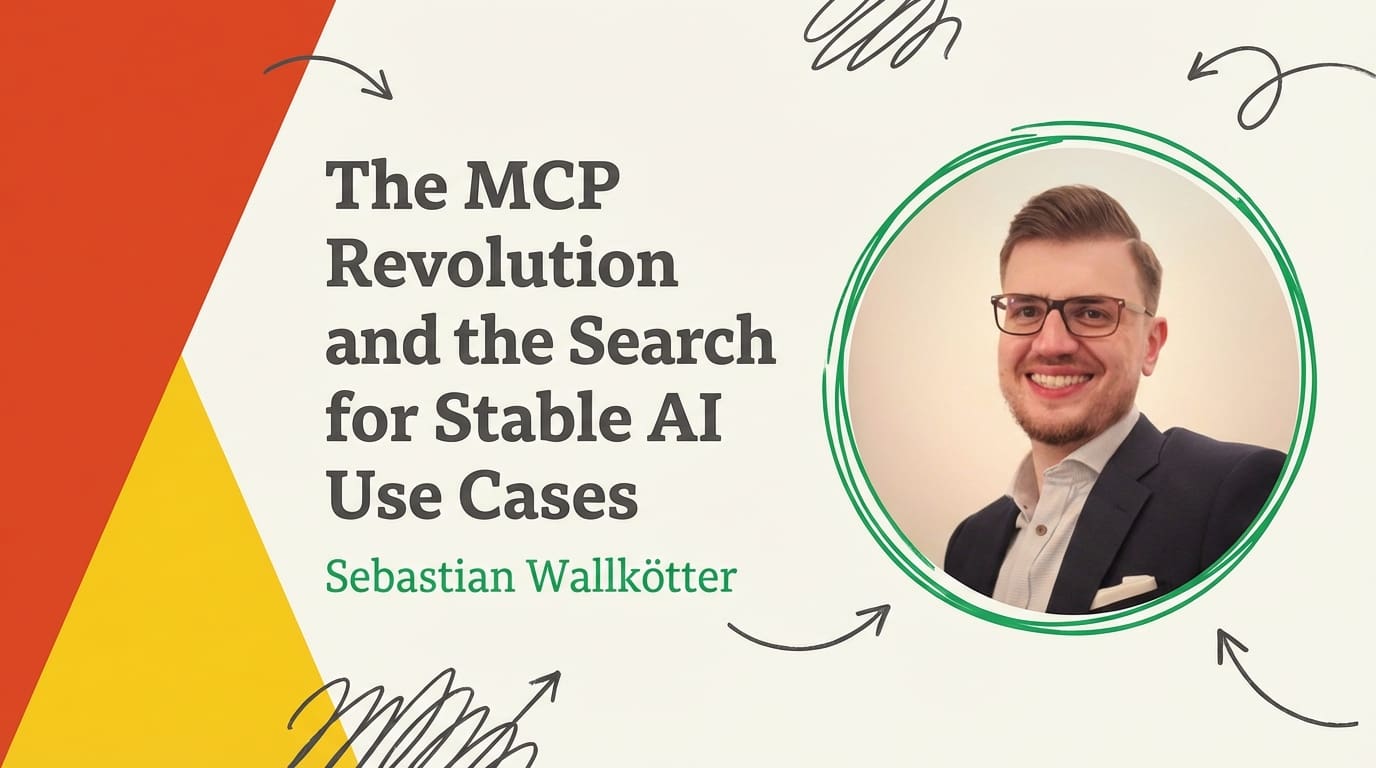
The Model Context Protocol (MCP), released by Anthropic in late 2024, has rapidly transformed the landscape of artificial intelligence (AI) by establishing a standardized method for AI models to interact with external tools. Within months, MCP’s straightforward design not only facilitated implementation but also created a demand that led to widespread adoption across various platforms. However, as noted by AI researcher Sebastian Wallkötter, this swift acceptance has brought to light pressing concerns regarding security and the practical applications of AI agents.
Wallkötter, who earned his PhD in human-robot interaction at Uppsala University in 2022, has since transitioned to the commercial AI sector, focusing on large language model (LLM) applications. His background in both academia and business equips him with a nuanced understanding of the technical capabilities and limitations of AI systems.
MCP emerged from the need to streamline the integration of AI models with various tools and services. Prior to its introduction, developers faced the cumbersome task of creating custom integrations for each LLM and tool. Wallkötter emphasized that MCP’s primary focus is on “tool calling,” allowing AI agents to seamlessly interact with platforms like Google Docs or GitHub. This standardization mirrors other successful platform adoption stories, as it relies on network effects that drive both user and provider participation.
The speed of MCP’s adoption has surprised many in the industry. Major platforms integrated MCP support merely months after its release, driven by developers who recognized its practical value. Wallkötter suggested that the initial momentum was likely fueled by curious engineers eager to experiment with this new format. As more providers adopted the protocol, the appeal of compatibility grew, leading to a broader acceptance across geographic regions.
However, the rapid rollout of MCP exposed significant security vulnerabilities. Wallkötter highlighted that the initial version lacked any authentication measures, allowing unauthorized users to access MCP servers without restriction. The challenge of authentication in MCP is more complex than traditional web security, as it involves three parties: the user, the LLM provider, and the service provider. Wallkötter elaborated on the intricacies of this triad, questioning how to authenticate each participant effectively.
The situation becomes even more complicated with autonomous agents. When a user instructs an AI agent to execute tasks, the question of accountability arises. Who is responsible for unauthorized actions—the developer of the agent, the user, or the service provider? Such dilemmas encompass technical, legal, and ethical considerations that the industry still grapples with.
Beyond authentication, MCP implementations face the challenge of prompt injection, a vulnerability that allows malicious actors to manipulate AI behavior through crafted inputs. Wallkötter likened this issue to early SQL injection vulnerabilities, where user input could be used to exploit databases. He speculated that solutions similar to those developed for SQL databases, such as separating query structure from user data, could be effective, although no widely adopted fix currently exists. The implications of prompt injection extend beyond security, as unexpected data can disrupt AI workflows, posing risks for agents operating without human oversight.
The ease of integrating tools through MCP has inadvertently led to what Wallkötter termed the “tool overload trap.” Developers, enticed by the straightforward addition of new tools, have found themselves managing an overwhelming number of MCP servers. This proliferation can degrade performance, as excessive tool definitions consume valuable context in the LLM’s operational window. Wallkötter suggested that organizations should adopt a more strategic approach, utilizing specialized agents for distinct tasks rather than crowding a single agent with numerous capabilities.
Wallkötter’s insights also extend to the broader question of AI implementation. His robotics background sheds light on the necessity of identifying stable use cases where AI offers genuine advantages. He cautioned against applying AI to problems that could be resolved with simpler, more efficient solutions. The allure of advanced technology can obscure the benefits of straightforward alternatives, which can often yield more reliable outcomes.
As discussions about AI’s role in the job market evolve, Wallkötter’s observations highlight a more complex reality than previously anticipated. While early predictions suggested AI would augment rather than replace jobs, he now sees varying impacts across different sectors. For instance, roles in software engineering may experience shifts in task allocation due to increased efficiency, while customer support roles face greater risks of displacement as AI can handle requests more effectively than human teams.
The rapid adoption of MCP underscores the AI industry’s need for standardization and interoperability, while also revealing significant challenges that must be addressed. Security issues related to authentication and prompt injection require foundational solutions tailored to the unique dynamics of AI interactions. As the industry seeks to refine the protocol and address emerging concerns, the critical question remains: just because it is possible to apply AI, should we? Thoughtful engineering and careful consideration of simpler alternatives will be essential as MCP continues to influence the future of AI integration.
See also Investors Back OpenAI and Anthropic’s $30B Funding Amid AI Sector Competition
 Australia Launches First Cisco Secure AI Factory with NVIDIA’s 1,024 Blackwell GPUs
 Mistral AI Acquires Koyeb for $13.8B to Enhance Full-Stack AI Cloud Capabilities
 Amazon Invests $12B in AI Data Centers in Louisiana, Creating 540 Jobs Amid Market Skepticism
 Amazon Invests $12B in Louisiana AI Data Centers, Creating 540 Jobs