








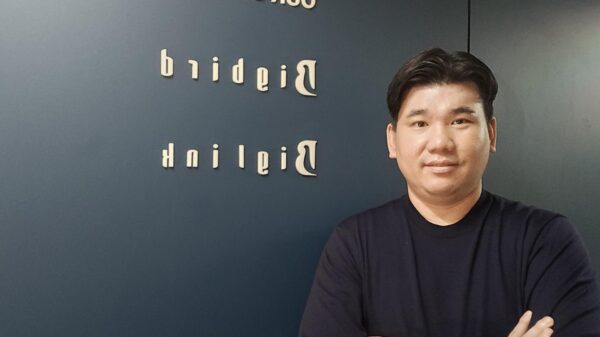
















Two 23-year-olds from rural France, Nicolas Dehandschoewercker and Luc Mahoux-Nakamura, have achieved a significant milestone by surpassing Google DeepMind in an industry benchmark within just 40 days. Their startup, Minitap, an AI-powered mobile development platform, announced on December 1, 2025, that it has successfully raised $4.1 million in seed funding, co-led by Moxxie Ventures and Mercuri. This funding round also saw participation from notable investors, including unicorn founders from companies like Hugging Face and SumUp.
Minitap’s rapid ascent is particularly noteworthy given that it achieved the number one position on AndroidWorld, an industry benchmark for AI-controlled mobile devices, besting established research teams from tech giants such as ByteDance, Microsoft Research, and Alibaba. This achievement came just four months after the company’s founding.
The mobile development landscape has long faced challenges, with the pace of mobile development lagging significantly behind that of web development. Dehandschoewercker noted, “Mobile is 60% of internet usage but moves at 10% of web speed.” He pointed out that while AI tools like Cursor and Claude have streamlined web development, they have not effectively addressed the specific needs of mobile development. Minitap aims to bridge this gap, allowing engineering teams to develop mobile features in days instead of the usual six weeks.
Luc Mahoux-Nakamura emphasized the necessity of rapid experimentation for mobile companies, stating, “The companies that run 10x more experiments will win their markets.” The duo’s background reflects a strong foundation in both mobile development and AI research, which they believe uniquely positions them to tackle the challenges in this space.
Hailing from Cosne-Cours-sur-Loire, a village in Burgundy, France, Dehandschoewercker and Mahoux-Nakamura’s partnership flourished during their academic years. Dehandschoewercker, who previously studied Biomedical Engineering at Imperial College London, and Mahoux-Nakamura, who built delivery drone infrastructure at Rakuten, combined their expertise to form a team capable of unprecedented achievements. Daniel Dippold, CEO of EWOR, commented on their dynamic, stating, “Nicolas is leading one of the fastest teams I’ve seen… This combination is unprecedented and ideal for solving this specific problem.”
Minitap’s technical innovations primarily revolve around two products: mobile-use, an open-source framework that enables AI agents to control phones like humans, and minitap cloud, which allows for instant deployment of any phone configuration across thousands of devices simultaneously. These tools connect to AI coding environments, permitting autonomous code generation, testing, bug identification, and feature deployment.
Within their first 40 days, Minitap claimed the top slot on Google DeepMind’s AndroidWorld benchmark, a significant achievement within the field. Subsequently, the founders made their entire solution open-source, contributing to the advancement of the field and attracting substantial attention on platforms like GitHub, where their repository has garnered 1,900 stars.
The recent funding round has attracted a notable concentration of unicorn founders and AI infrastructure experts, including Thomas Wolf of Hugging Face, and leaders from companies such as FlixBus and Worldcoin. Katie Jacobs Stanton, founder of Moxxie Ventures, remarked, “When you see two 23-year-olds from rural France beat Google in 40 days, you recognize something rare.”
Minitap’s goal is to allow engineering teams at consumer mobile companies to build features significantly faster, enabling growth teams to ship features without direct engineering involvement. A product manager can describe a feature and provide a design, with AI generating code, testing it, and conducting A/B tests—all in one afternoon.
Looking ahead, the founders envision a future where mobile applications can autonomously optimize themselves, running experiments, analyzing user behavior, generating hypotheses, and iterating without human intervention. Esha Vatsa, a partner at Mercuri, noted, “Minitap is one of the first companies that is bringing agentic AI to mobile use… This is a substantial challenge and a huge opportunity.”
Minitap aims to redefine mobile development by making it accessible not just to technical teams but also to non-technical members within consumer app companies. The startup’s innovative approach stands to significantly alter the dynamics of mobile app development, marking a crucial advancement in the industry.
See also Guinea Accelerates Digital Transformation with AI Strategy and UNDP-Backed BSD Partnerships
 AI Revolutionizes Filmmaking: Tallinn Panel Outlines Ethical Integration and Efficiency Gains
 Meta Stock Rises 2.26% Amid $150B AI Infrastructure Spending Concerns
 Wedbush Updates IVES AI 30: CoreWeave, Iren, and Shopify Named Key Stocks for 2026 Gains
 Disney Partners with Animaj to Reduce Animation Production Time by 80% Using AI