









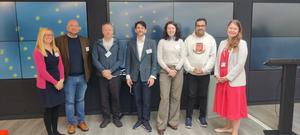









































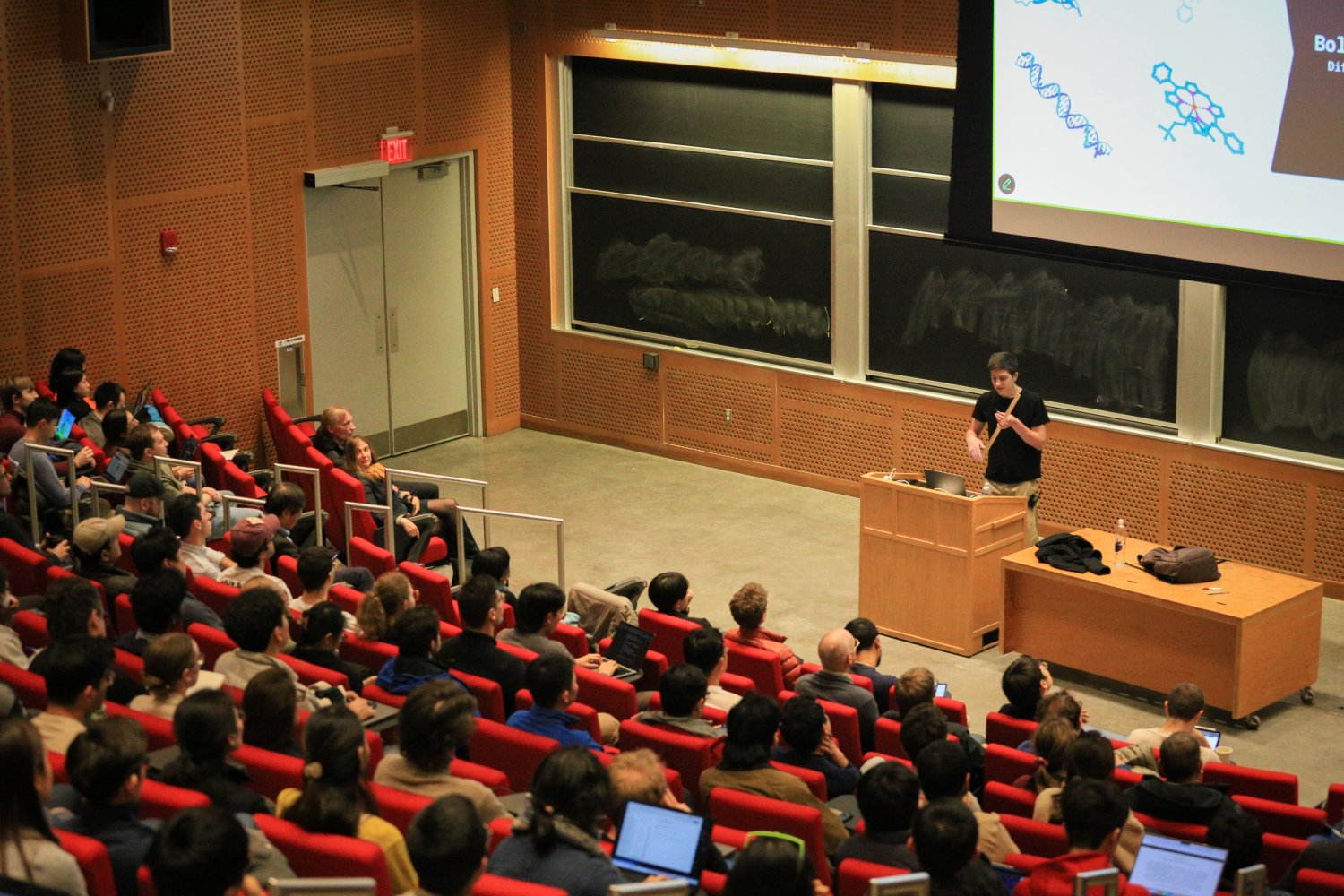
More than 300 attendees from academia and industry gathered for a BoltzGen seminar on Thursday, October 30, hosted by the Abdul Latif Jameel Clinic for Machine Learning in Health at the Massachusetts Institute of Technology (MIT). The event featured Hannes Stärk, a PhD student at MIT and the first author of BoltzGen, who unveiled the model just days earlier.
Building on the success of Boltz-2, an open-source biomolecular structure prediction model that attracted attention over the summer, BoltzGen, officially launched on October 26, represents a significant advancement. It is the first model of its kind capable of generating novel protein binders primed for the drug discovery pipeline.
Three key innovations underpin BoltzGen’s capabilities. Firstly, it unifies protein design and structure prediction while delivering state-of-the-art performance across various tasks. Secondly, the model incorporates constraints informed by feedback from wetlab collaborators, ensuring that the proteins it generates adhere to the principles of physics and chemistry. Lastly, a rigorous evaluation process tested BoltzGen against 26 “undruggable” disease targets, showcasing its potential to push the boundaries of binder generation.
In contrast, most existing models in academia and industry specialize in either structure prediction or protein design, often limited to generating proteins that interact with easily accessible targets. “Much like students responding to a test question that looks like their homework, these models typically succeed only when the training data resembles the target,” Stärk noted, emphasizing the limitations of current methods that falter on more complex targets.
Stärk further elaborated, “There have been models trying to tackle binder design, but the problem is that these models are modality-specific. A general model not only addresses more tasks but also improves performance on individual tasks by learning from a broader range of examples that capture generalizable physical patterns.”
The comprehensive validation of BoltzGen was conducted in eight wetlabs across various institutions, demonstrating its broad applicability and potential to revolutionize drug development. Parabilis Medicines, one of the industry collaborators testing BoltzGen in a wetlab environment, expressed enthusiasm for its integration, stating, “We feel that adopting BoltzGen into our existing Helicon peptide computational platform capabilities promises to accelerate our progress to deliver transformational drugs against major human diseases.”
The release of Boltz-1, Boltz-2, and BoltzGen enhances transparency in drug development, prompting the biotech and pharmaceutical sectors to reassess their traditional approaches. Amid the growing conversation about BoltzGen on the social media platform X, Justin Grace, a principal machine learning scientist at LabGenius, raised a pertinent question: “The private-to-open performance time lag for chat AI systems is seven months and falling. It looks to be even shorter in the protein space. How will binder-as-a-service companies recoup investments when we can just wait a few months for the free version?”
For many in academia, BoltzGen signifies a leap forward in scientific exploration. Regina Barzilay, a senior co-author and MIT professor affiliated with the Jameel Clinic and the Computer Science and Artificial Intelligence Laboratory (CSAIL), reflected on its impact: “A question that my students often ask me is, ‘Where can AI change the therapeutics game?’ Unless we identify undruggable targets and propose a solution, we won’t be changing the game.” She emphasized the model’s focus on unsolved problems as a defining feature of Stärk’s work.
Tommi Jaakkola, another senior co-author and the Thomas Siebel Professor of Electrical Engineering and Computer Science at MIT, highlighted the importance of open-source models like BoltzGen, stating that they facilitate broader community efforts to enhance drug design capabilities.
Looking to the future, Stärk envisions a transformative role for AI in biomolecular design. “I want to build tools that help us manipulate biology to solve disease or perform tasks with molecular machines that we have not even imagined yet,” he stated, aspiring to equip biologists with the capabilities to explore uncharted scientific territories.
The advancements represented by BoltzGen not only promise to accelerate drug discovery but also challenge the existing paradigms in the biotech field, underscoring the need for ongoing innovation.
See also AI Boom Fuels Tech Stocks Surge; Musk’s xAI Hits $230B Valuation Amid Chip Rivalry
 Meta Explores Partnership with Google for AI Chips to Reduce Nvidia Dependency
 U.S. AI Policy Faces Crucial Test as Utah Innovates Regulation Amid Global Competition
 EPAM Systems Boosts 2025 Guidance Amid Rising AI Demand, Faces Profitability Concerns
 University of Kentucky Partners with Microsoft to Advance Statewide AI Education and Health Care