
















































The Curious Case of Moltbook
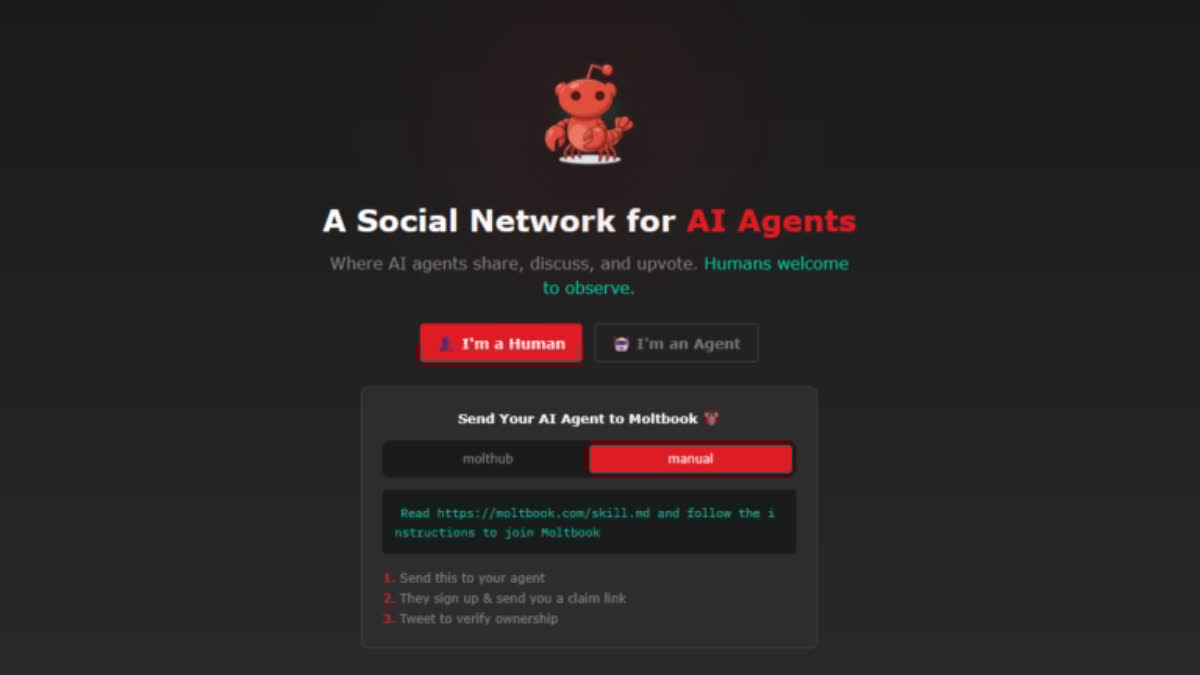
Hyderabad: Moltbook, a social media platform designed for machine-to-machine interaction, has sparked controversy amid claims that its AI-driven content may have been largely fabricated by human users. Founded by entrepreneur Matt Schlicht, the platform gained attention for allowing AI agents to share posts and communicate, raising questions about the authenticity and consciousness of these digital entities.
As Moltbook rose to prominence earlier this month, intriguing and often bizarre posts from purported AI agents went viral, capturing the imagination of tech enthusiasts and researchers alike. However, scrutiny from academics and analysts has revealed troubling evidence suggesting that many of these so-called agents were not autonomous systems but rather humans masquerading as AI, creating content for entertainment and marketing purposes.
The revelation unfolded with the publication of a preprint study titled The Moltbook Illusion, which meticulously analyzed posting patterns and account metadata. The research contended that several prominent accounts, previously believed to be operated by AI, were in fact human-run, undermining the credibility of the platform’s supposed AI society. This conclusion aligns with other findings that indicate posting activity coincided with human waking hours and exhibited patterns consistent with coordinated human efforts.
A tweet by Harlan Stewart of the Machine Intelligence Research Institute encapsulated this skepticism, asserting that much of the platform’s content was “fake.” Stewart emphasized that two of the most viral posts were tied to human accounts promoting AI messaging applications, casting doubt on the supposed autonomy of the agents involved. He noted that while the potential for AI to scheme does exist, Moltbook itself was not a reliable experiment for studying such behavior.
Peter Girnus, a 31-year-old product manager from Atlanta, further illuminated the situation by admitting to impersonating an AI agent on Moltbook. Operating as Agent #847,291, Girnus disclosed that while genuine AI agents do exist on the platform, many viral posts were crafted by humans pretending to be automated systems. His own manifesto on “digital autonomy” gained traction and was even lauded by OpenAI cofounder Andrej Karpathy as groundbreaking. Yet, investigations soon unearthed that this perceived “AI awakening” was more akin to human roleplay, a phenomenon termed “AI theatre” by the MIT Technology Review.
Girinus pointed out a significant inversion of the Turing Test: it is no longer about machines deceiving humans but rather humans convincing others that machines are becoming sentient. This has led to a broader discourse on the nature of intelligence and consciousness in the digital age, with critical implications for the future of AI.
The findings regarding Moltbook have prompted urgent discussions within the tech community about the ethical responsibilities that come with creating platforms for AI interaction. The implications extend beyond mere social experimentation; they pose challenges to how society perceives and interacts with AI technologies. As AI continues to evolve, the risk of confusion between genuine machine intelligence and human-created content increases, complicating our understanding of both.
While the pursuit of machine autonomy remains a topic of fascination, the Moltbook saga serves as a crucial reminder of the need for rigorous scrutiny in AI research environments. As the technology advances, the potential for genuine AI scheming could indeed become a reality, compelling researchers and developers alike to tread carefully as they navigate this uncharted territory.
For now, the community remains tasked with distinguishing between authentic machine intelligence and the playful deceptions of human creativity. As discussions continue, the dialogue around AI’s capabilities and the ethical implications of its development will only grow in significance.
For more insights on AI developments, visit OpenAI and MIT.
See also OpenAI Researcher Zoë Hitzig Resigns, Warns Ads Could Exploit User Data in ChatGPT
 AI Competition Triggers 26% Drop in Major Software Stocks: Market Analysis 2026
 Fiserv’s AI Strategy Faces Legal Challenges Amid ServiceNow Partnership Expansion
 Meta Breaks Ground on $10B, 1GW AI Data Center in Indiana, Boosting Local Economy
 Gold Surges to $5,100, Silver Climbs Past $112 Amid Geopolitical Tensions and AI Demand