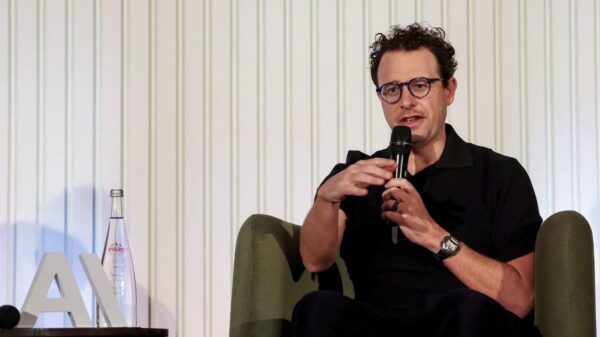


















































Mustafa Suleyman, the chief executive of Microsoft AI, has advocated for a “humanist” approach to artificial intelligence, emphasizing the necessity of imposing limits to ensure that this technology remains under human control. Speaking on the BBC’s Today programme, he highlighted the dual nature of AI, which holds the potential for significant advancements in areas such as health care and scientific research but also poses risks if left unchecked.
Known for his role as the co-founder of DeepMind, a leading AI research organization, Suleyman draws attention to the need for a collective ethical framework surrounding AI. He stated, “If you’re not a little bit afraid at this moment, then you’re not paying attention. Fear is healthy and necessary,” urging the public to recognize the inherent risks associated with rapid technological advancements.
The potential of AI to generate new knowledge is a focal point for Suleyman, who believes this represents a pivotal evolution in the technology. “The real quest of AI, in my opinion, is to try to produce new knowledge,” he explained, noting that while current models are adept at reproducing existing information, the ultimate goal should be to unveil novel insights.
Current AI advancements, particularly in demonstrating empathy and creating original content, suggest that this capability is on the horizon. Suleyman elaborated on the transformative impact that such developments could have on complex fields like molecular medicine and laboratory research. “If you can apply the same set of methods not just to generate images or videos but also to create the next sequence in DNA… you could potentially produce synthetic molecules,” he said.
Despite the promise of AI, Suleyman acknowledged the looming challenge of job displacement, cautioning that the technology is fundamentally labor-replacing. He asserted that the notion of new job creation as a counterbalance is largely “not true in the long term.” Positions that involve predictable skills, such as those in human resources and marketing, are at risk, with more complex roles like paralegals and junior accountants also facing potential threats.
To prepare for an AI-dominated job market, Suleyman advises young people to not only gain a solid understanding of the technology but also to grasp its political implications. “The first step is to recognize the technology is political and that it carries huge ethical weight,” he stated, encouraging the youth to leverage AI for the greater good.
Regulating AI’s capacity for self-improvement and autonomy remains a pressing concern. Suleyman described some AI models as being designed to self-enhance and set their own objectives, which raises fears about losing control. “If we can’t control it, it isn’t going to be on our side. It’s going to overwhelm us,” he said, underscoring the urgency of embedding ethical principles into AI development.
Future technologies must prove their capability to be contained, with ethical guidelines integrated into their design from inception. Suleyman emphasized that ensuring AI can be “provably contained and secure” is essential for any future advancements.
The discourse around AI’s potential and its associated risks is increasingly vital as its applications continue to proliferate across sectors. As Suleyman’s insights prompt critical conversations on ethical AI, the industry faces a pivotal moment in shaping technology that aligns with human values. Stakeholders are urged to engage actively in discussions that prioritize safety and ethical considerations in the rapidly evolving landscape of artificial intelligence.
For more information on AI ethics and advancements, you can visit Microsoft, DeepMind, and OpenAI.
See also MedBright AI Investments Inc. Rebrands to GoGo AI Network, Shifts Investment Focus to AI Technologies
 AI-Native Startups Surge: Anthropic Hits $300B Valuation, Harvey Grows to $100M ARR
 India’s AI Impact Summit to Host Bill Gates, 100+ Nations, Driving Global AI Dialogue
 AI Models Predict Georgia’s Political Landscape and EU Relations by 2026
 China’s Humanlike AI Regulations Aim to Shape Global Standards and Enhance User Safety