















































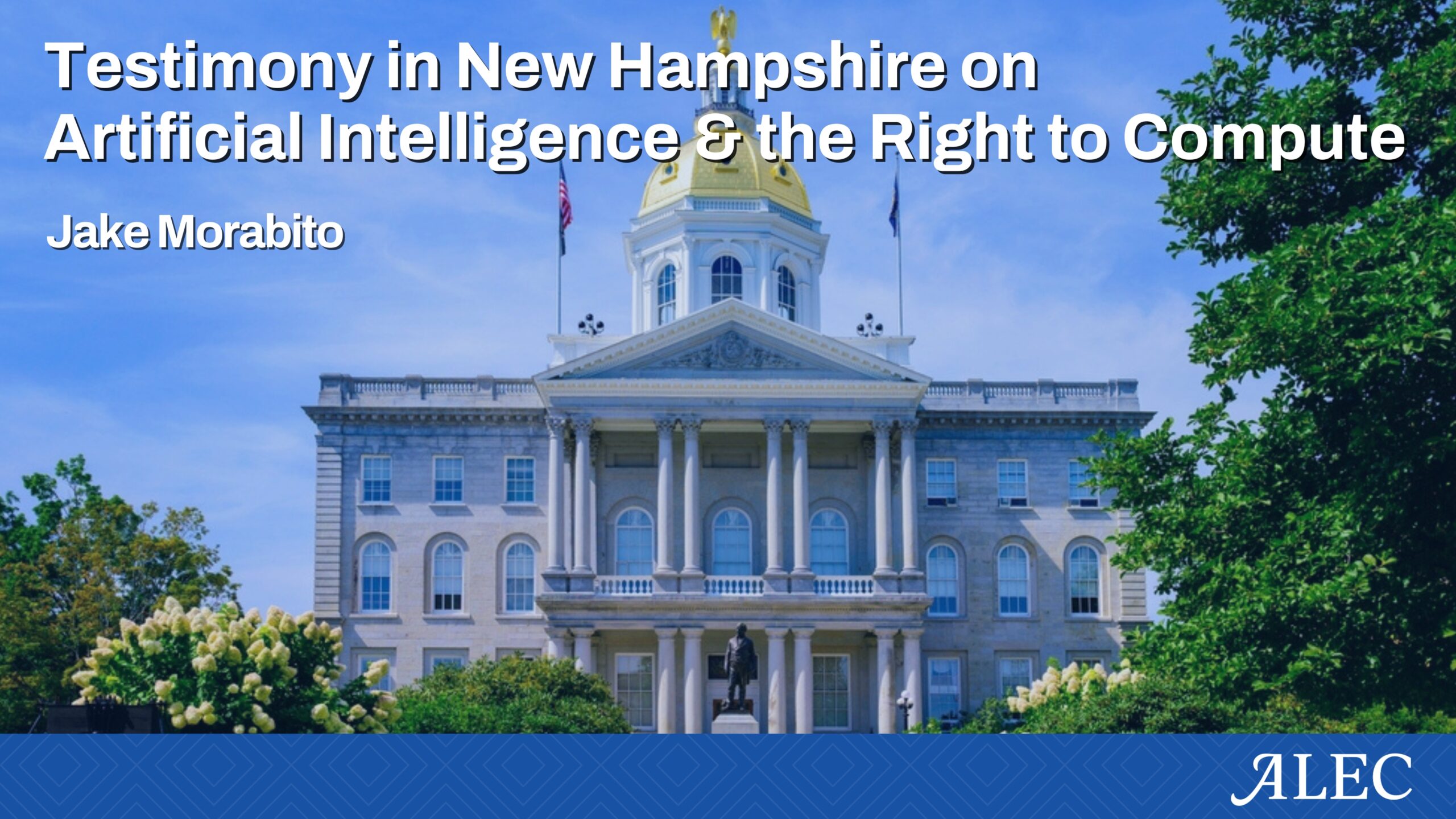
Jake Morabito, Senior Director of Policy at the American Legislative Exchange Council (ALEC), addressed the New Hampshire House Commerce and Consumer Affairs committee regarding HB 124, highlighting the implications of new technologies, particularly artificial intelligence (AI), on the state. In his written testimony, Morabito emphasized the importance of crafting legislation that supports innovation while protecting individual liberties and economic opportunities in the state.
Morabito’s remarks come in the wake of a Federal AI Action Plan released last summer by President Trump’s Office of Science and Technology Policy. This plan aims to accelerate AI innovation and promote worker-first policies, viewing AI as a means to enhance American labor rather than replace it. Despite the rapid emergence of generative AI tools in the past three years, regulatory responses have surged, with over 2,000 bills targeting AI and related technologies introduced across the country since 2022.
Many of these proposed regulations seek to restrict AI’s application in critical sectors like education and healthcare, raising concerns about potential legal complexities that could hinder small and medium-sized businesses looking to adopt AI technologies. Morabito warned that increased regulatory burdens might deter these businesses from leveraging AI tools, potentially stifling innovation and economic growth.
Morabito advocated for HB 124 as a proactive measure to establish a “Right to Compute” in New Hampshire, which would protect individuals’ rights to utilize technological tools, including computational resources. Citing similar legislation enacted in Montana in 2025, he argued that this approach respects the state’s historical commitment to private property rights and liberties. Under HB 124, any government restrictions on the Right to Compute would need to be strictly necessary and justified by a compelling government interest.
This legislative initiative aims to flip the burden of proof from citizens to the government, requiring officials to substantiate any proposed regulations that might restrict individual rights. Morabito believes that this framework would not only encourage responsible entrepreneurship but also ensure that any regulatory efforts are focused on tangible threats rather than limiting fundamental freedoms.
Moreover, HB 124 clearly defines “compelling government interest” to include safeguarding citizens from scams, protecting against deceptive deepfake media, and ensuring safety at critical infrastructure facilities. By doing so, it allows for necessary government intervention while maintaining strict boundaries against unwarranted regulations.
As New Hampshire navigates the complexities of the evolving AI landscape, Morabito suggested that the Right to Compute could serve as a foundational step in creating a regulatory environment conducive to innovation. He urged lawmakers to adopt a framework that respects individual rights while ensuring that government resources are allocated to protect citizens from verified harms and illegal activities.
With growing interest in AI technologies and their potential impact on various sectors, the conversation around HB 124 may signify a larger trend in legislative responses to emerging technologies across the United States. As states grapple with the balance between innovation and regulation, the outcome of this bill could position New Hampshire as a leader in fostering a responsible approach to AI implementation.
See also AI Tools Revolutionize Construction: Enhance Tracking, Reduce Risks Amid Labor Shortage
 Amazon Poised to Invest $50 Billion in OpenAI, Reshaping AI Landscape Amidst Competition
 Virginia Beach Mom Sues Character.AI After Son’s Disturbing Chatbot Encounters
 Microsoft’s AI Copilot Faces Scrutiny as $50B Investment Sparks Adoption Doubts