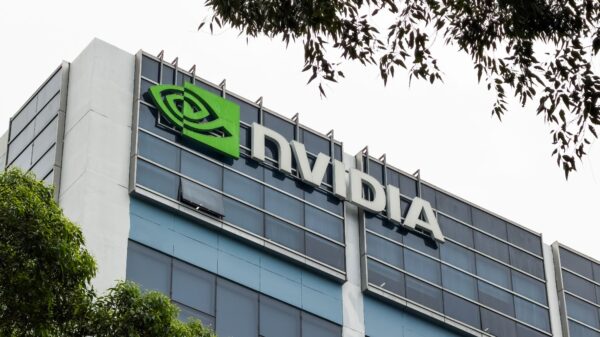



















































Nvidia, the world’s leading GPU manufacturer and a critical player in the AI data center expansion, has announced a non-exclusive licensing agreement valued at $20 billion with AI chip competitor Groq. This agreement includes the acquihire of several key Groq employees, a move that surpasses Nvidia’s previous record of $7 billion spent on the Israeli chip company Mellanox in 2019.
Groq is an American startup focused on developing Language Processing Units (LPUs), which it claims are significantly more efficient and cost-effective than traditional GPUs. The LPUs are custom-designed ASICs, attracting interest from various firms due to their suitability for specific AI tasks, particularly large-scale inference. Groq has emphasized its strengths in inference, positioning it within a high-volume, low-margin market.
Nvidia stands to gain substantially from this agreement, as it is a major supplier to the world’s data centers and has established partnerships with virtually all players in the AI sector. Historically, Groq has accused Nvidia of employing predatory practices aimed at maintaining exclusivity, leading potential customers to be wary of engaging with Groq. This licensing deal appears to alleviate those concerns.
“We plan to integrate Groq’s low-latency processors into the NVIDIA AI factory architecture, extending the platform to serve an even broader range of AI inference and real-time workloads… While we are adding talented employees to our ranks and licensing Groq’s IP, we are not acquiring Groq as a company,” stated Jensen Huang, Nvidia’s CEO, in an interview with CNBC.
Earlier in the year, Groq constructed its first data center in Europe as part of its strategy to counter Nvidia’s dominance in the AI market. The deployment of Groq’s LPUs in Nvidia’s AI factories, as the licensing agreement covers “inference technology,” marks a significant collaborative shift in the competitive landscape, according to reports from SiliconANGLE.
As part of this transaction, key figures from Groq, including founder and CEO Jonathan Ross and president Sunny Madra, will be joining Nvidia, while Simon Edwards, the current finance chief at Groq, is set to become the new CEO in the restructured organization. Ross’s background includes a tenure at Google, where he contributed to the development of the Tensor Processing Unit (TPU).
The practice of acquihiring—acquiring a company’s talent while avoiding antitrust scrutiny—is common in the tech industry. Notable examples include Meta’s aggressive hiring practices in AI and Nvidia’s recent recruitment of Enfabrica’s CEO. Interestingly, the announcement of the licensing agreement characterizes it as non-exclusive, meaning Groq will retain its independence, allowing its GroqCloud platform, through which it licenses its LPUs, to continue operating autonomously.
Prior to this agreement, Groq was valued at $6.9 billion in September and was projected to generate $500 million in fiscal revenue. This new partnership could potentially reshape the dynamics of the AI hardware market, as it allows both companies to leverage their strengths: Nvidia’s expansive reach and Groq’s specialized technology.
As the AI industry continues its accelerated growth, the implications of this deal extend beyond immediate financial terms. It signifies a shift towards collaborative strategies among competitors in an increasingly complex technological landscape. The integration of Groq’s innovative technology within Nvidia’s ecosystem may set a precedent for future partnerships, illustrating how companies can navigate competition while collectively advancing the capabilities of AI technologies.
See also Tether CEO Predicts AI’s Major Influence on Bitcoin Markets by 2026
 Kazakhstan Rises to 60th in Global AI Readiness, Leading Central Asia in Adoption and Strategy
 Grok AI Set for US Military Integration Amid Controversies and Security Concerns
 Global AI Awards 2025: Innovators Honored for Transformative AI Solutions Across 12 Categories
 OpenAI Enhances ChatGPT with Custom Tone Settings for User Personalisation