



















































NEW YORK, Dec. 27, 2025 — Wall Street is entering the last full trading stretch of 2025, with artificial intelligence stocks continuing to dominate the market landscape. As U.S. exchanges closed for the weekend on a light-volume post-Christmas session, major indexes reflected a fractional decline but remained up for the week. This environment often amplifies stock-specific news, particularly for megacap AI leaders. In a recent report, Carson Group chief market strategist Ryan Detrick described the quiet pullback as a necessary “catching our breath” following a strong run, while highlighting the seasonal “Santa Claus rally” window that extends into early January, which could present opportunities for investors.
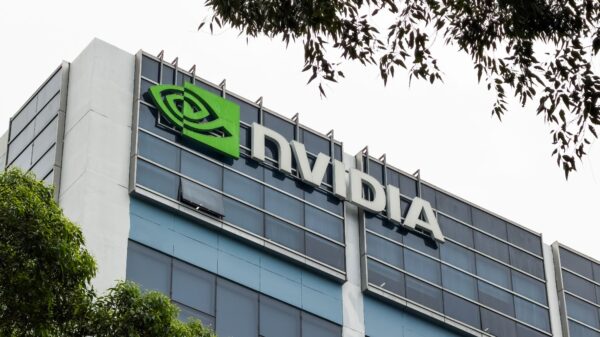
Among the companies making headlines, Nvidia (NVDA) once again emerged as a leader in the AI space. The latest news centered not on a new GPU but on a deal that underscores the growing competition in the AI arms race through talent acquisition, intellectual property licensing, and supply-chain control. Nvidia has announced a “non-exclusive” licensing agreement with Groq and will be hiring key leaders, including founder Jonathan Ross and President Sunny Madra. Groq will maintain its independent operations, with Simon Edwards stepping in as CEO.
This arrangement initially sparked speculation of a major acquisition, particularly due to discussions surrounding a reported valuation of $20 billion. However, investing platforms clarified that Groq’s description of the deal as a non-exclusive licensing agreement rather than a standard buyout was crucial for investor understanding.
The significance of this move becomes clear when considering the transition in AI from training to inference. Nvidia’s dominance in training has firmly established its role in the AI sector, but inference—the real-time execution of AI models—opens avenues for more custom silicon and cloud-designed accelerators. This shift is particularly critical as competitors like AMD (AMD), along with various startups such as Groq and Cerebras, aim to capture market share.
Initial analyst responses to the Nvidia-Groq deal have been mixed. Rosenblatt regarded the licensing arrangement as a strategic win, suggesting it could address concerns over inference alternatives and extend the use of Groq’s LPU through Nvidia’s CUDA software ecosystem. The firm maintained a 12-month price target of $245. In contrast, D.A. Davidson raised questions about whether the initiative is genuinely technology-focused or a defensive maneuver. They pointed out Groq’s limitations in on-chip SRAM compared to Nvidia’s larger memory configurations necessary for advanced inference workloads.
Antitrust considerations also loom large in this evolving landscape. Analyst Stacy Rasgon of Bernstein noted that the non-exclusive nature of the deal might preserve the “fiction of competition,” despite key talent migrating to Nvidia. As AI investments evolve, the market is increasingly scrutinizing deal structures that facilitate technology and talent transfer without full acquisitions.
Memory and packaging bottlenecks, a recurring theme throughout the AI boom, are once again in the spotlight. Reports indicate that Samsung Electronics plans to commence mass production of next-generation HBM4 memory chips in February, which are anticipated to feature in Nvidia’s forthcoming AI processors, codenamed “Rubin.” Additionally, SK Hynix is gearing up for its own HBM4 production, having previously provided samples to Nvidia in 2025. This development has significant implications for AI stocks, affecting delivery schedules and the capacity to meet backlogged demand.
A recent factbox compiled by Reuters highlighted a surge in multi-billion-dollar commitments within AI, cloud, and chip sectors, illustrating the rapid scaling of infrastructure associated with AI’s growth. Notable partnerships include Broadcom (AVGO), which is collaborating with OpenAI on in-house AI processor production, and a multi-year agreement between AMD and OpenAI that allows for chip supply and an option for OpenAI to acquire a stake in the chipmaker. Oracle (ORCL) is also making waves with one of the largest cloud deals ever signed with OpenAI, marking a massive commitment to computing resources over several years.
As these dynamics unfold, AI stock investors are increasingly focused on which companies can balance heavy investment with sustainable margins, particularly as they face rising capital expenditures. Oracle recently reported a 68% year-over-year increase in cloud infrastructure revenue, while GPU-related revenue surged by 177%, but also projected capital expenditures of around $50 billion for fiscal 2026, leading to negative free cash flow of roughly $10 billion in the November quarter. In contrast, Microsoft and Amazon are anticipated to spend $120 billion and $125 billion respectively in 2026 on AI infrastructure.
As 2025 draws to a close, the AI sector is experiencing a notable momentum shift, extending beyond traditional chip and cloud companies to include defense and enterprise AI firms such as Palantir (PLTR) and BigBear.ai (BBAI). With the landscape rapidly evolving, the key focus for investors will likely shift from whether AI is a reality to how effectively companies can capitalize on this rapidly changing environment. Essential factors such as contract timing, renewals, deployment scales, and the transition from pilot projects to sustainable revenue will likely dictate performance as the year progresses.
With only a few trading sessions remaining in 2025, market participants should be vigilant about upcoming developments. The Nvidia-Groq arrangement may provide insights into regulatory scrutiny, while the competition in inference could either bolster profit margins or create new challenges. Furthermore, the supply chain dynamics surrounding HBM4 memory will play a critical role in production capacity. As AI continues to reshape market expectations, the segmentation of winners and losers will become increasingly pronounced, hinging on sustained demand, defensible differentiators, and the ability to scale profitably.
See also Shane Legg Introduces ‘Laptop Rule’ to Identify Jobs at Risk from AI Replacement
 Salesforce Cuts 4,000 Jobs, Shifts to Predictable AI Systems Amid Profitability Focus
 China Proposes Strict Regulations for Anthropomorphic AI to Mitigate Risks and Enhance Safety
 Mistral Reveals Beta Workflows Tool, Challenging LangChain’s Middleware Dominance
 Invest Now: 5 AI Stocks Like Nvidia and Alphabet Set to Surge by 2035