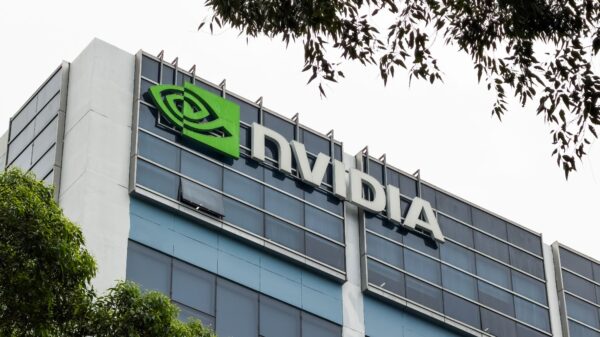
Nvidia (NVDA) stands at a remarkable crossroads, identified by some analysts as potentially the most undervalued artificial intelligence (AI) stock in the market, despite its staggering market capitalization of approximately $4.5 trillion. This dichotomy arises as Nvidia faces criticism for a trailing price-to-earnings (P/E) ratio of around 45.5, which may appear exorbitant. However, analysts project a forward P/E below 25 for 2026, coupled with a price/earnings-to-growth (PEG) ratio under 0.7, indicating undervaluation by traditional metrics.
Nvidia’s financial health is underscored by its robust balance sheet, boasting around $52 billion in net cash and securities. The company is on track to generate an impressive $85 billion in free cash flow this year. For a corporation experiencing rapid growth, these valuation metrics seem attractive.
In the latest quarter, Nvidia reported a striking 62% year-over-year revenue increase, with an almost tenfold revenue growth over the past two years. Furthermore, the company’s adjusted earnings per share rose by 60% year over year. This upward trend is projected to continue, with revenue expected to climb 65% year-over-year in fiscal Q4, reaching around $65 billion. Major players in cloud computing, including Meta Platforms and OpenAI, have indicated aggressive spending plans on data infrastructure, further buoying Nvidia’s outlook.
Policy shifts also play a crucial role in Nvidia’s prospects. The U.S. government has recently allowed the sale of Nvidia’s H200 chips to approved commercial customers in China, reversing a previous ban on the H20 chips. This development could enhance sales in 2026, especially since the U.S. government will receive a 25% cut from these sales.
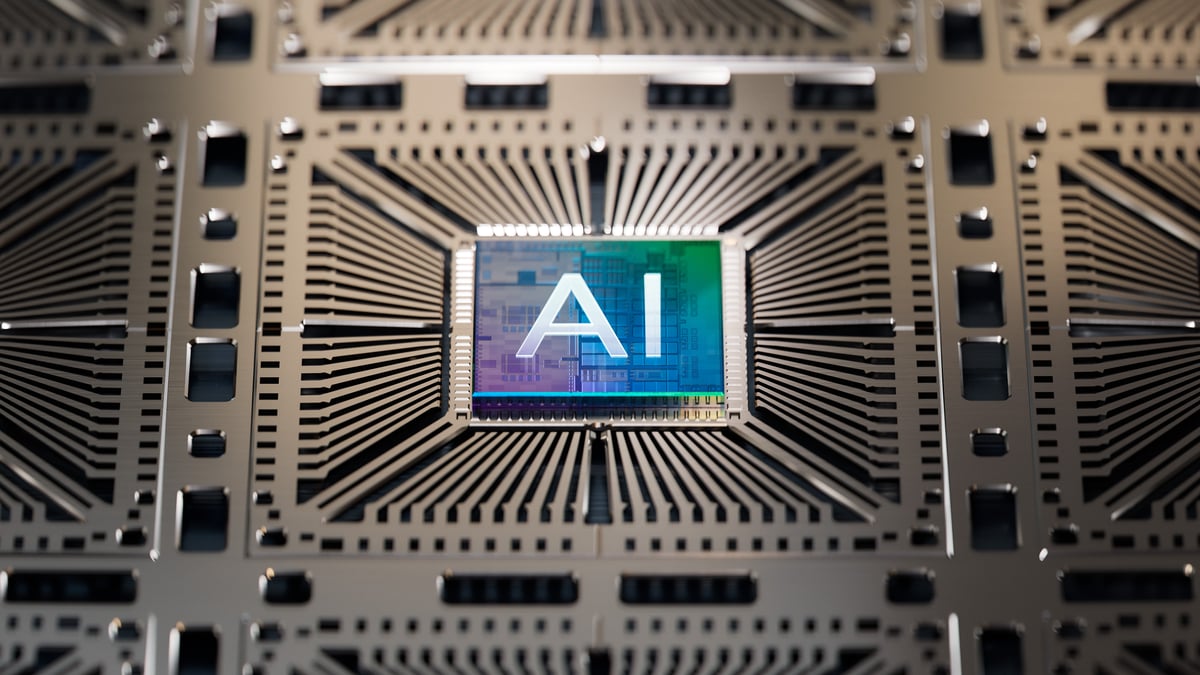
As Nvidia positions itself in the AI landscape, the medium-term forecast suggests that data center capital expenditure could reach $4 trillion by the end of the decade. As the leading provider of chips that support AI workloads, Nvidia is strategically poised to capture a substantial portion of this burgeoning market.
The company’s success is anchored in the ecosystem surrounding its graphics processing units (GPUs), which initially served to enhance graphics rendering in video games. Through the development of the CUDA software platform, Nvidia enabled developers to program its chips for a diverse range of tasks. By distributing this platform for free to top universities and research institutions, Nvidia ensured that foundational AI code is predominantly written on CUDA and optimized for its GPUs.
In addition, Nvidia has expanded into networking, creating the proprietary NVLink interconnect systems that facilitate rapid data sharing and memory access among its chips, functioning collectively as a powerful unit. This strategic approach has resulted in Nvidia commanding over 90% of the data center GPU market, a segment that is experiencing unprecedented growth. While competition is intensifying, Nvidia’s unmatched scale, ecosystem, and chip flexibility solidify its leadership position for the foreseeable future.
Looking ahead, projections indicate that Nvidia could achieve earnings of approximately $20 per share by fiscal 2030, if revenue growth continues on a gradual decline. Such potential makes Nvidia one of the most promising names in AI investment today.
In summary, as the AI infrastructure boom continues, Nvidia’s unique market positioning, coupled with strong financial fundamentals and growth trajectory, suggests that it remains a compelling stock to consider.
See also Amazon Pulls AI Recap from Fallout After Major Errors in Key Flashback Details
 Oracle Delays $300B Data Center for OpenAI, Signaling Risks in AI Investment Boom
 AI-Generated Videos of Minors Surge on TikTok, Raising Global Child Safety Concerns
 China’s Tech Giants Launch AI Chatbots, Narrowing Gap with US Post-ChatGPT
 Alphabet’s Strong Q3 Growth and AI Innovations Position It to Dominate Market by 2026