
















































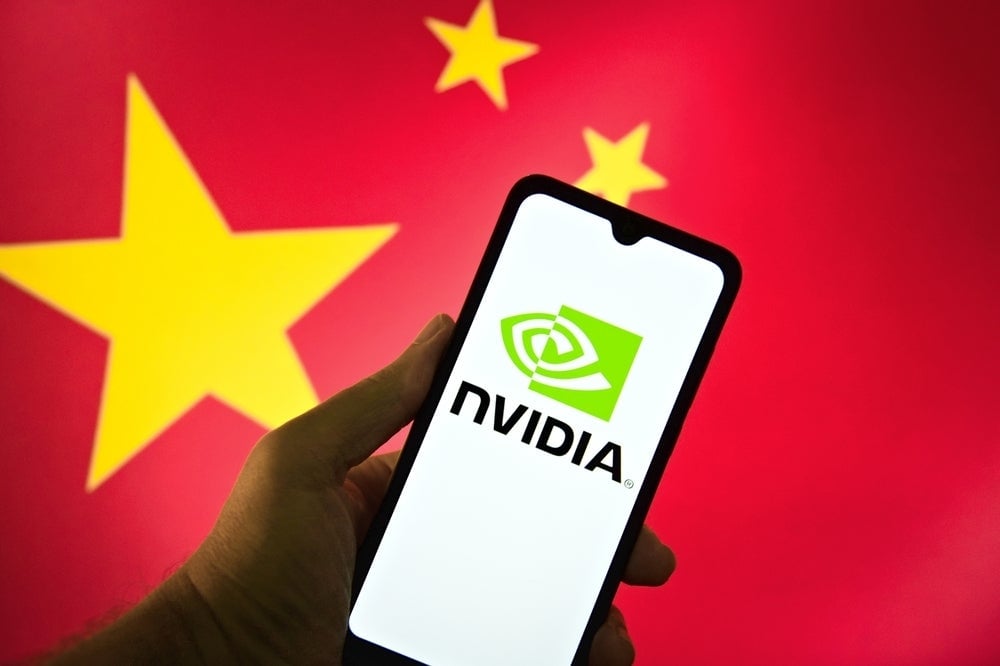
Nvidia Corp. (NASDAQ:NVDA) is ramping up efforts to satisfy surging demand from Chinese technology firms, underscoring the evolving risks tied to semiconductor ETFs. China’s increasing role in chip production decisions is shifting from a background factor to a pivotal player.
According to anonymous sources cited by Reuters, Chinese tech companies have placed orders for over 2 million of Nvidia’s H200 artificial intelligence chips for delivery in 2026, significantly exceeding the company’s current inventory of around 700,000 units. In response to this demand, Nvidia has reached out to Taiwan Semiconductor Manufacturing Co. Ltd. (NYSE:TSM) to enhance production of the Hopper-based H200. Concurrently, it is accelerating the development of its newer Blackwell and forthcoming Rubin chips.
This strategic shift holds critical implications for semiconductor ETFs. Funds heavily invested in Nvidia and TSMC now find their performance increasingly intertwined with regulatory decisions emerging from China. While the U.S. has recently permitted exports of the H200 to China, it has attached a 25% fee, and China is still deliberating its approval for imports of the chip.
Major ETFs, such as the iShares Semiconductor ETF (NASDAQ:SOXX) and the VanEck Semiconductor ETF (NASDAQ:SMH), maintain substantial stakes in both Nvidia and TSMC, positioning them as particularly vulnerable to potential delays or restrictions stemming from Chinese authorities. Even more diversified funds like the SPDR S&P Semiconductor ETF (NYSE:XSD) could feel the impact, given that many of their holdings are deeply reliant on global demand for AI and shared manufacturing capabilities.
The heightened focus on the H200 also brings to light persistent supply chain challenges affecting AI chips. Nvidia’s decision to recommence production of an older chip, originally released in mid-2024, indicates that demand from China is robust enough to influence production priorities at TSMC, a significant bottleneck in the semiconductor landscape. This concentration risk poses an increasing concern for ETF investors as production shifts to accommodate demand from a specific region.
AI-centered ETFs, like the Global X Artificial Intelligence & Technology ETF (NASDAQ:AIQ), also exhibit indirect exposure through their investments in semiconductors. This intertwines broader AI investment strategies with the regulatory and trade uncertainties facing the industry.
For investors, the primary takeaway is that semiconductor ETFs are not suddenly categorized as high-risk. Rather, the nature of the risk is evolving. What was once a peripheral geopolitical issue has escalated into a pressing concern as Nvidia’s orders driven by China begin to shape supply decisions that affect the entire ETF ecosystem.
As the global landscape continues to shift, the implications of these developments could resonate through various sectors, highlighting the intricate interplay between technology demand and geopolitical dynamics.
Read Next:
Market News and Data brought to you by Benzinga APIs.
See also India’s AI Policy Must Shift from Deployment to Innovation to Compete Globally
 Google DeepMind Achieves Quantum Breakthrough with AlphaQubit, Reducing Errors by 30%
 AI Transforms K-Pop: Major Labels Integrate Technology, Launch Virtual and Robot Idols
 Global AI Leaders Confirm Attendance at India’s AI Impact Summit, Feb 15-20, 2026