




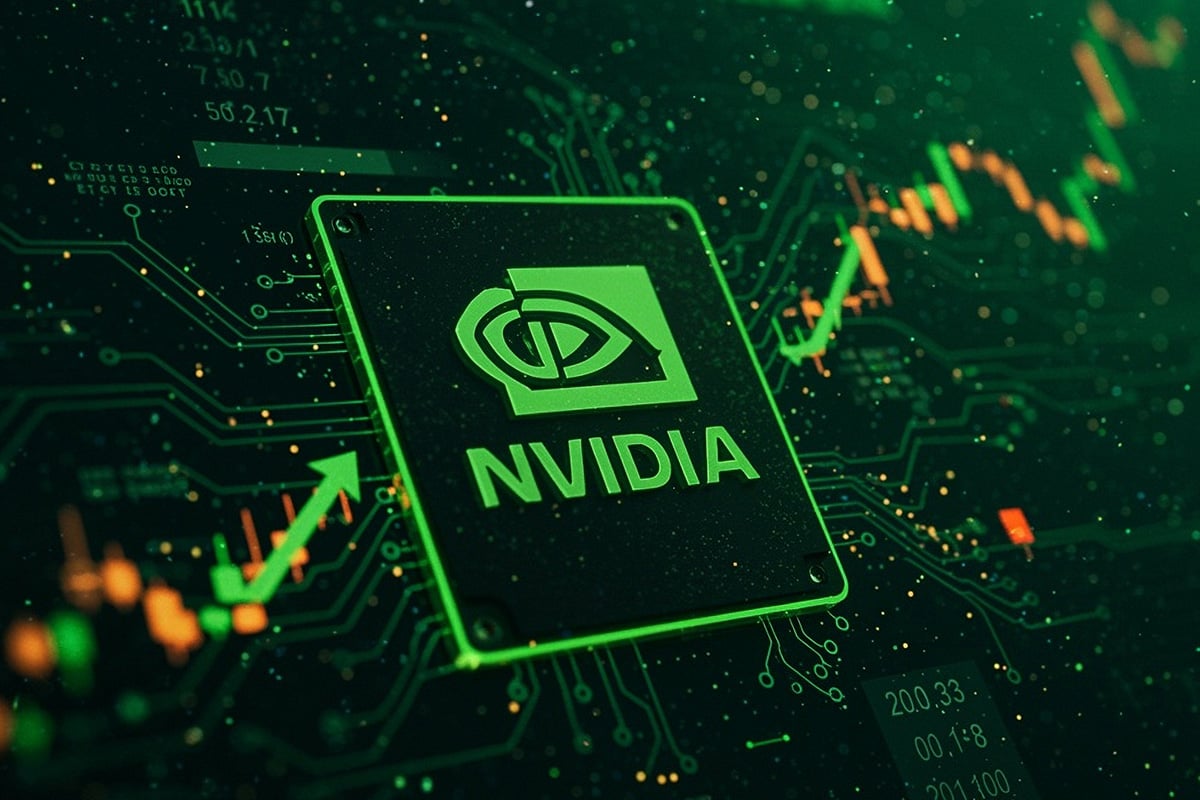
Starcloud has achieved a monumental milestone by successfully training an artificial intelligence model in space. The Washington-based company launched its satellite, featuring an Nvidia H100 graphics processing unit, in early November 2025. This marked the first time a large language model (LLM) has been operated on a high-powered GPU outside of Earth’s atmosphere.
The satellite, named Starcloud-1, has been pivotal in running Google’s Gemma model and training the NanoGPT model developed by Andrej Karpathy, a notable figure in OpenAI’s founding team. The H100 chip provides an impressive 100 times more computing power than any previous space-based GPU, making this achievement a significant leap in space computing capabilities.
Following the successful operation, Gemma transmitted a message saying, “Greetings, Earthlings,” detailing its mission to observe and analyze from space. According to CEO Philip Johnston, this advancement underscores the potential for data centers to function efficiently in orbit, addressing some of the pressing energy challenges faced by terrestrial data centers.
As the demand for data centers grows, so does the strain on Earth’s energy resources. The International Energy Agency projects that electricity use in data centers will more than double by 2030. Johnston emphasized that operations in space could be ten times more energy-efficient compared to their ground-based counterparts, with Starcloud’s planned 5-gigawatt solar-powered orbital data center aiming to alleviate some of this pressure.
The envisioned space data center will consist of solar panels covering approximately four kilometers in each direction, harnessing uninterrupted solar energy—a significant advantage as it is not affected by weather or the Earth’s rotation. Johnston elaborated, “Anything you can do in a terrestrial data center, I’m expecting to be able to be done in space.”
The orbital satellite is designed to respond to real-time queries regarding its operational status and positioning. It can also provide valuable data for commercial applications, such as utilizing imagery from Capella Space to locate lifeboats during maritime emergencies or identify wildfire ignition points swiftly. The satellite tracks essential telemetry data, including altitude, orientation, and geographic position, enhancing its utility for emergency response teams.
As the landscape of space computing evolves, competition is intensifying. On November 4, Google announced Project Suncatcher, which also aims to deploy solar-powered satellites equipped with tensor processing units. Other contenders include Lonestar Data Holdings, which is developing a commercial data center for the lunar surface, and Aetherflux, which plans to launch its orbital data center satellite in the first quarter of 2027.
Despite the promise of orbital data centers, analysts at Morgan Stanley have pointed out challenges such as radiation damage, repair complexity, debris risks, and regulatory hurdles that could impede progress. Nevertheless, the pursuit of technology with unlimited solar access and the ability to operate large-scale computing in space remains an attractive proposition for many companies.
Looking ahead, Starcloud’s anticipated launch in October 2026 will include several additional Nvidia H100 chips and the Nvidia Blackwell platform, further expanding its capabilities. The satellite will incorporate a Crusoe cloud platform module, allowing customers to run AI workloads from orbit, potentially revolutionizing how computational tasks are handled in space.
See also Azio AI Fuels Philippines’ Sovereign Investment Fund Revamp with Advanced AI Infrastructure Strategy
 OpenAI Launches GPT-5.2 with 40.3% Math Problem Accuracy and New Discovery
 Rivian Unveils Advanced AI Strategy with Custom Processor, Plans LiDAR for 2026 R2 Models
 Elon Musk’s xAI Launches Grok Chatbot in 5,000 El Salvador Schools for 1M Students
 BCC Research Reveals $1.5T AI Market Surge Driven by Biotech, Food & Beverage Innovations