






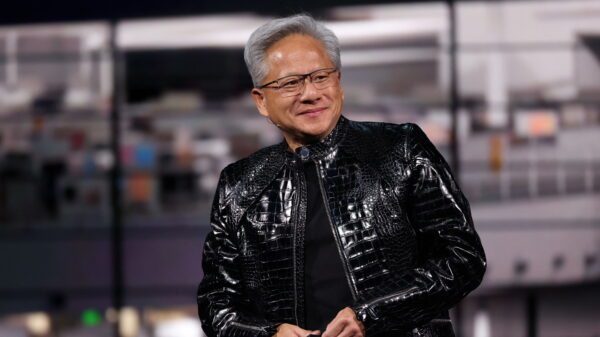































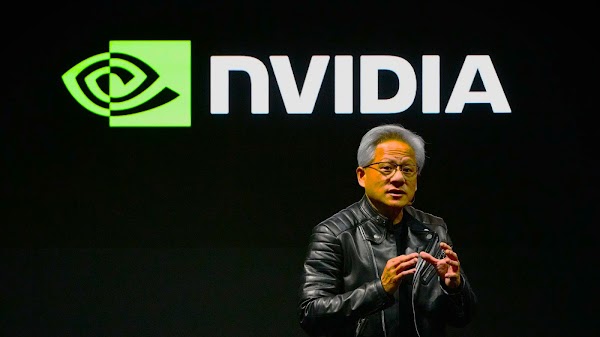
In a recent discussion, NVIDIA CEO Jensen Huang outlined transformative changes within the artificial intelligence (AI) sector, projecting significant advancements by 2025. Huang emphasized the remarkable strides in AI grounding and reasoning, addressing early fears about the technology generating nonsensical outputs. He suggested that these advancements have solidified AI’s role as a reliable assistant for experts in critical fields such as medicine and law.
Huang tackled the prevalent narrative of mass job displacement caused by AI, framing the conversation around the distinction between task and purpose. He argued that while AI can perform specific tasks—such as coding or analyzing medical scans—it does not supplant the fundamental purpose of jobs, which is to solve complex problems. Notably, he cited the case of radiologists, whose anticipated obsolescence has not materialized. Instead, the integration of AI has allowed them to read more scans and improve diagnostic accuracy, ultimately increasing demand for their skills.
Additionally, Huang pointed out that AI is generating new industries and addressing labor shortages, particularly in manufacturing and trucking. He mentioned the establishment of new chip plants and AI facilities as evidence of this growth. Furthermore, with a billion robots projected to exist, Huang foresees the emergence of the largest repair and maintenance sector in history, driven by the demand for upkeep of this expanding robotic workforce.
Huang also addressed the geopolitical implications of AI technology, particularly in relation to China. He visualized the AI technology stack as a five-layer cake—energy, chips, infrastructure, AI models, and applications—and underscored the essential role of open source in fostering innovation. Huang cautioned that without robust open source frameworks, advancements in sectors like healthcare and manufacturing could be stifled. He advocated for policies that encourage innovation rather than hinder it.
On the matter of U.S.-China relations, Huang asserted that a complete decoupling from China is overly simplistic. He argued for a balanced approach, recognizing China as both a competitor and a partner, given its significance as a market for American technology and a contributor to numerous open source projects that have benefited U.S. AI research.
Huang expressed concern over prevailing “doom” narratives surrounding AI, which he believes can lead to misguided tax policies that stifle innovation. He dismissed the notion of an “AI bubble,” advocating for a broader understanding of the market. He asserted that the health of the AI sector should not be overly tied to the revenues of chatbot companies, emphasizing that NVIDIA’s business extends into various sectors, including autonomous vehicles and financial services—areas that are already generating billions independent of generative AI technologies.
Highlighting a fundamental shift in computing, Huang attributed growth in the industry to the transition from general-purpose computing to accelerated computing, a trend accelerated by the limitations of Moore’s law. He described AI as an application of this broader shift, not its sole driver, reinforcing the idea that the demand for computing capacity is universally recognized across industries. “Name one startup that said, ‘Nah, we don’t need it.’ They are all dying for computing capacity,” he remarked.
Looking Ahead: Future Innovations in AI
As for the future, Huang foresees advancements in multimodality and synthetic data leading several industries to experience their own “ChatGPT moment.” His enthusiasm for generative AI in digital biology is particularly notable, with aspirations for breakthroughs in protein generation and chemical understanding. Huang also expressed optimism about the potential of robotics and self-driving vehicles, anticipating that improvements in reasoning capabilities will enable these systems to navigate unexpected scenarios more effectively.
In conclusion, Huang’s insights paint a picture of an AI landscape rich with opportunities for both innovation and collaboration. While challenges persist, particularly in the realm of geopolitics, the ongoing evolution in AI technologies offers a promising horizon for industries poised to harness its capabilities.
See also WEF Report Warns: AI, Geopolitical Fragmentation Fuel Cyber Fraud Risks by 2026
 Meta Unveils Ambitious AI Infrastructure Initiative, Targeting Tens of Gigawatts Expansion
 Apple Partners with Google to Integrate Gemini AI into Siri, Enhancing User Experience
 Australian Investors Surge Toward AI, Global Markets with 92% Seeking AI Tools for 2026
 Navigating Geopolitical Risks: Impacts on Global Data, Cybersecurity, and AI Strategies