











































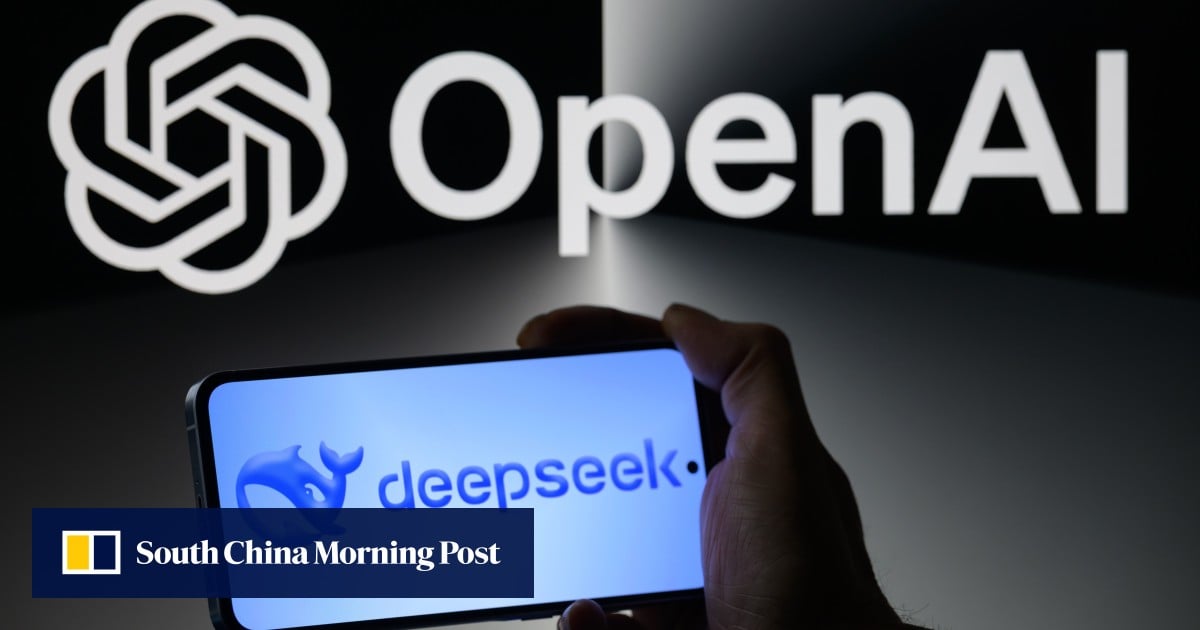
The competition for supremacy in the global artificial intelligence industry between the United States and China has become increasingly unpredictable, according to insights shared by OpenAI, the organization behind the development of ChatGPT. In a recent analysis, OpenAI’s intelligence and investigations team noted that while the U.S. continues to excel in model capabilities, particularly in areas of advanced reasoning and scientific applications, China is making significant strides in terms of the depth and deployment of its AI technologies.
“The U.S. continues to lead on model capabilities, and U.S. models also have maintained a meaningful lead in science and more complex reasoning,” OpenAI stated. However, the landscape is shifting. “What has changed more decisively is depth and deployability: China now has a broad field of near-frontier models, many of them open-weight and aggressively priced, making them easier to deploy across industries and government systems.”
This evolving dynamic underscores China’s strategic emphasis on the export of domestically developed technologies as a cornerstone of its AI ambitions. According to CLSA, a financial services firm, the gap between China and the U.S. in AI capabilities has narrowed substantially, now estimated at around three months, a significant reduction from over a year. This shift reflects a growing trend where Chinese technology firms, like Alibaba Cloud, have advanced their services to drive global adoption of their AI models.
The rapid deployment of these open-source AI models has played a crucial role in this acceleration. OpenAI’s report highlights how the ability to release AI solutions “in weeks, rather than months” has enabled Chinese companies to capture market share quickly, establishing these systems as the default choices for numerous developers both locally and internationally. The aggressive pricing and accessibility of these tools are further factors contributing to their widespread adoption.
As the landscape of artificial intelligence continues to evolve, the implications for global competitiveness cannot be overstated. The focus on rapid deployment and cost-effectiveness in China is not merely a reaction to U.S. advancements but rather a calculated strategy to carve out a significant role in the burgeoning AI economy. This approach raises questions about long-term sustainability and innovation capacity in both nations.
With the U.S. maintaining its edge in complex reasoning and scientific applications, the challenge will be to leverage this strength while also enhancing the adaptability and deployability of its technologies. The rapid advancements made by Chinese companies in the AI sector showcase their growing capabilities, which pose a direct challenge to U.S. dominance.
As the world watches this pivotal race, both nations appear poised to redefine the landscape of artificial intelligence, with the outcome likely to have lasting implications for technological leadership, economic power, and global influence. The ongoing developments will determine how these two superpowers navigate the complexities of AI while addressing issues of regulation, ethical considerations, and international collaboration.
See also AI Ethics Crisis: Grok’s Misconduct Highlights Urgent Need for Responsible AI Standards
 Children in Isle of Man Create AI-Generated Images for Bullying, Facing Legal Consequences
 Google DeepMind Integrates Gemini AI with Atlas Robots for Real-World Factory Tasks
 Invest $3,000 in 4 AI Stocks: Alphabet, Nvidia, TSMC, and Microsoft for Long-Term Gains
 Global Risks Surge as Geopolitical Tensions and AI Fears Threaten Economic Stability by 2026