


































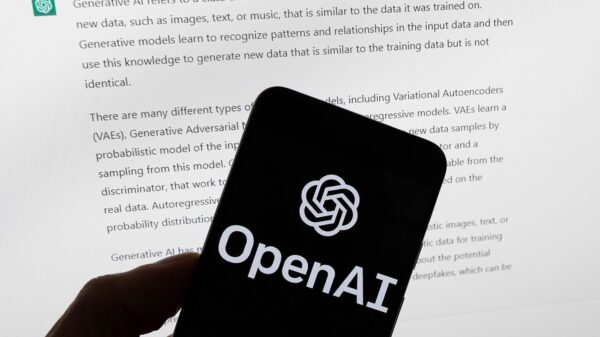







OpenAI Inc. successfully persuaded a federal judge to rescind an order that mandated the company to reveal confidential communications with its attorneys, amid allegations from authors and media outlets claiming copyright violations for training its AI models on their works. This ruling was issued by Judge Sidney H. Stein in the US District Court for the Southern District of New York on Friday.
The judge characterized the earlier November ruling, which required OpenAI to disclose messages related to its efforts in deleting pirated copies of books, as “clearly erroneous” and “contrary to law.” Stein articulated that OpenAI had not disclosed material protected by the attorney-client privilege, reinforcing the importance of safeguarding legal communications in corporate operations.
This legal battle stems from concerns by authors and publishers about the use of their copyrighted materials in training AI models. Lawsuits have emerged as a reaction to the rapidly evolving landscape of artificial intelligence, where companies like OpenAI are employing vast datasets, including potentially copyrighted texts, to enhance their technologies.
OpenAI’s legal team argued that the materials sought by the plaintiffs were integral to the company’s defense, and disclosing them could undermine the legal protections afforded under the attorney-client privilege. The ruling not only marks a significant victory for OpenAI but also underscores the complexities of intellectual property rights in the context of AI development.
The decision reflects the broader tensions between technological advancement and copyright law. As AI continues to evolve, the legal frameworks governing such technologies are also being tested, raising critical questions about the limits of copyright in an age where machine learning relies heavily on existing content.
Industry experts speculate that this case may set a precedent for future disputes involving AI and intellectual property. As companies continue to innovate, the intersection of technology and law is expected to witness increased scrutiny, prompting ongoing discussions among legislators, legal experts, and technologists about the need for updated regulations.
OpenAI’s victory may encourage other technology firms to defend their practices with similar legal strategies, potentially reshaping the landscape for future copyright disputes in the tech industry. The ruling also highlights the critical balance that must be struck between fostering innovation and protecting intellectual property rights.
As this case unfolds, it will be crucial to monitor how it influences broader legal interpretations of copyright in relation to artificial intelligence, as both sectors continue to develop rapidly. The implications of this ruling may resonate well beyond the current dispute, impacting how AI companies navigate the complex world of copyright law moving forward.
See also AI Fuels Samsung and Micron’s Surge as They Eye Trillion-Dollar Valuations
 AI-Driven Revenue Deflation in Indian IT Stocks Likely Exceeds 3%, Warns Bhavin Shah
 Macron Announces 2026 Ban on Social Media for Under-15s Amid AI Mental Health Concerns
 New York Governor Hochul Proposes Stricter AI Chatbot Regulations to Protect Children
 Waymo Integrates DeepMind’s Genie 3 to Enhance Robotaxi Safety in Complex Scenarios