









































Perplexity AI this week filed an appeal with the United States Court of Appeals for the Ninth Circuit, challenging a preliminary injunction granted to Amazon in March 2026. The 96-page brief argues that the injunction misinterprets federal computer fraud law and could enable internet platforms to use criminal statutes to suppress competing technologies that their users opt to utilize.
Prepared by Quinn Emanuel Urquhart & Sullivan, LLP, the brief presents three primary arguments for reversal: Amazon is unlikely to succeed on the merits of its claims under the Computer Fraud and Abuse Act (CFAA) and California’s equivalent statute; the district court improperly merged separate legal tests for injunctive relief into a single merits finding; and the lower court abused its discretion by declining to require Amazon to post a bond.
Founded in 2022, Perplexity launched its Comet browser on July 9, 2025, initially available only to subscribers of its $200-per-month Max plan. Broad availability followed on October 2, 2025, after a three-month restricted access period that attracted millions of waitlist sign-ups. Building Comet was a significant effort, with Perplexity acquiring the browser company Sidekick and assembling nearly 100 engineers, the largest team for a single project in the company’s history.
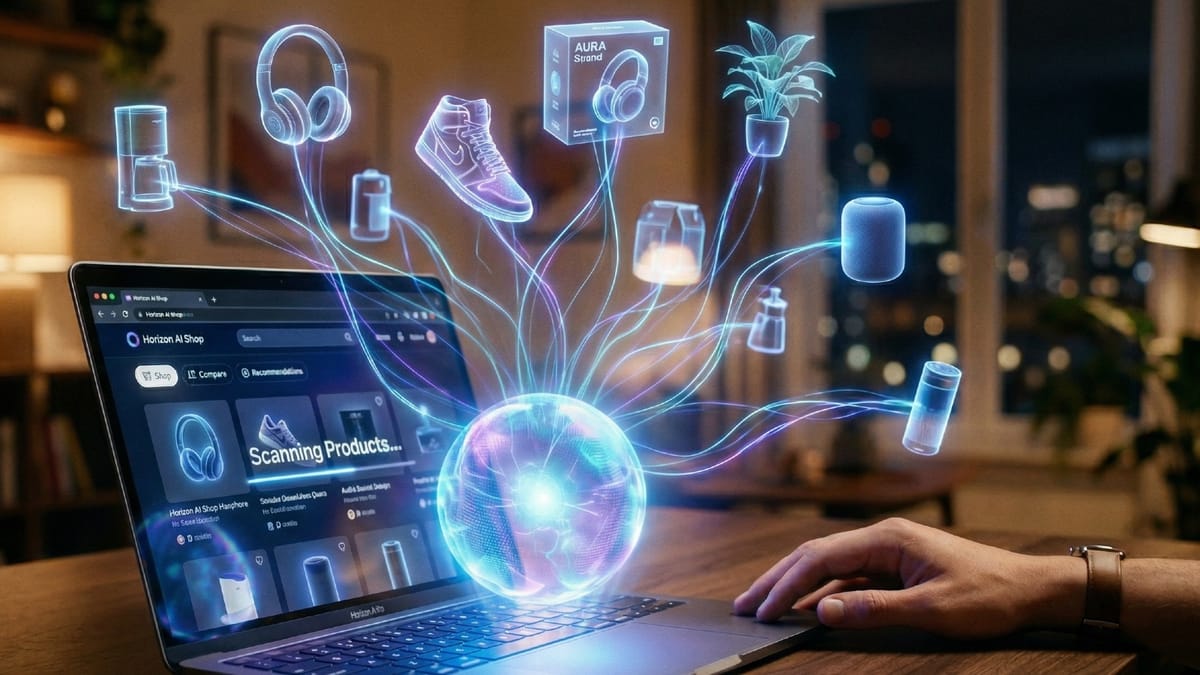
Comet is built on Chromium, the same open-source engine that supports browsers like Google Chrome. The software runs locally on users’ machines and includes an optional AI “Assistant” feature. This Assistant, when activated, can perform tasks such as browsing Amazon.com for goods at the user’s direction. The technical mechanism involves the Assistant taking a screenshot or HTML snapshot of the browsing session and sending it in an encrypted format to Perplexity’s servers, which then provide instructions back to the user’s computer. Perplexity emphasizes that its computers never directly access Amazon’s systems, a fact acknowledged by Amazon’s own expert in court.
The conflict escalated when Amazon contacted Perplexity in August 2025 to express concerns over its Conditions of Use, which require AI agents to operate transparently when accessing the Amazon Store. Amazon later conceded that Perplexity is not bound by those conditions. The company claimed that Comet’s user-agent string was misleading, making it appear as though an automated system was browsing rather than a human. However, the brief contends that Comet’s user-agent string is comparable to those used by other Chromium-based browsers, and asserts no legal obligation exists to utilize a specific string.
A major factor in the dispute is Amazon’s substantial advertising revenue, which reached $17.7 billion in the third quarter of 2025, growing 22 percent year-over-year. The Comet Assistant’s functionality, which bypasses Amazon’s advertising mechanisms, is at the heart of Amazon’s complaint. Amazon has developed its own suite of agentic AI tools and recently launched a feature allowing users to make purchases from third-party sites without their knowledge.
On October 31, 2025, Amazon sent Perplexity a letter accusing it of violating the CFAA and the California Comprehensive Computer Data Access and Fraud Act (CDAFA). Subsequently, Amazon filed a lawsuit on November 4, 2025, in the Northern District of California. The suit was bolstered by Amazon’s new AI agent rules formalized in a Business Solutions Agreement effective March 4, 2026.
The preliminary injunction issued by U.S. District Judge Maxine M. Chesney on March 9, 2026, barred Perplexity from accessing Amazon’s systems via AI agents, a ruling she characterized as unprecedented. The court found the case challenging due to the broad nature of the CFAA, which it acknowledged might encompass beneficial actions. The injunction also declined to impose a $1 billion bond that Perplexity requested, citing insufficient data to quantify potential losses.
In its appeal, Perplexity argues that Amazon fails to meet the five elements necessary to establish a CFAA violation. The brief asserts that a user accessing Amazon through Comet does not equate to Perplexity accessing Amazon. Moreover, it argues that users themselves authorize the Assistant to access their data. The brief distinguishes this case from past precedents by noting that no private information is accessed beyond what the user can see in their own browser.
Perplexity also challenges the notion of financial loss, stating that Amazon’s damages stem from lost advertising impressions rather than any technological harm, which is not what the CFAA addresses. The CFAA was initially designed to combat hacking, and Perplexity argues that its actions do not constitute the invasions that the statute was intended to prevent.
Beyond the legal merits, Perplexity raises concerns about the lower court’s misapplication of injunctive relief standards, asserting that economic injury does not warrant such measures. Furthermore, blocking the Assistant would severely cripple the Comet browser’s primary feature, potentially driving users to competing products. The brief also invokes Amazon’s own practices to argue that the company cannot seek equitable relief while engaging in similar conduct.
The outcome of this legal battle holds significant implications for the broader ad tech and marketing industry. Should the Ninth Circuit uphold the injunction, it would enable platform operators to restrict third-party AI agents that users choose to employ, fundamentally impacting the development of AI tools. Conversely, a reversal could clarify that the CFAA does not apply to AI agents functioning locally on users’ devices, potentially changing the landscape for companies building such technology.
The Ninth Circuit is set to hear arguments in this expedited appeal, and its ruling could set a precedent for interactions between AI agents and commercial websites, a topic of increasing relevance as the industry evolves.
See also Germany”s National Team Prepares for World Cup Qualifiers with Disco Atmosphere
 95% of AI Projects Fail in Companies According to MIT
 AI in Food & Beverages Market to Surge from $11.08B to $263.80B by 2032
 Satya Nadella Supports OpenAI’s $100B Revenue Goal, Highlights AI Funding Needs
 Wall Street Recovers from Early Loss as Nvidia Surges 1.8% Amid Market Volatility