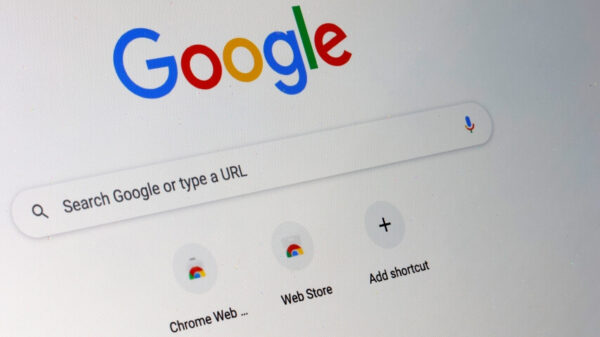

















































Perplexity AI CEO Aravind Srinivas has acknowledged the superior performance of Google Search, stating that it excels in navigational queries, which make up a significant portion of mobile web traffic. This admission coincides with the launch of Perplexity’s new Comet browser for iOS, which defaults to Google Search for these types of inquiries. The browser combines Google’s rapid search capabilities with Perplexity’s AI-driven functionalities, aiming to enhance users’ overall browsing experience.
Launched recently, the Comet iOS app offers a different approach than its desktop counterpart, which does not rely on Google as the default search engine. Srinivas explained that this strategy allows Comet to leverage Google’s “navigational speed and breadth of verticals” while integrating Perplexity’s advanced AI for more complex queries. The Comet Assistant, a key feature of the browser, can overlay any webpage, including Google’s own search results, to provide additional information when standard navigational answers fall short. The app also includes voice mode access, native ad blocking, and background video playback.
This pragmatic pivot comes seven months after Srinivas made headlines by proposing a $34.5 billion acquisition of Google’s Chrome browser, a figure that nearly doubled Perplexity’s valuation at the time. Although that bid ultimately failed when a US District Judge ruled against forcing Google to divest either Chrome or Android, Perplexity has continued to innovate. The Comet browser is now available across multiple platforms, including iPhone, Android, Windows, and Mac, although it currently lacks a dedicated iPad app.
While many tech companies position themselves in direct competition with Google, Srinivas has chosen a different path. He openly concedes that Google “does a much better job here than anyone else in the world, including Perplexity” for common, quick-hit searches such as finding local restaurants or checking sports scores. By framing Comet as a complementary tool rather than a Google competitor, Srinivas is adopting a more nuanced approach to the highly competitive search landscape.
Comet’s user interface is still built on Chromium, the open-source engine that also powers browsers like Chrome and Edge. However, Srinivas asserts that the user interactions and overall look of Comet are designed to match the polished aesthetic of Apple’s Safari browser on iOS. This attention to detail may help attract users who prioritize design and usability alongside search functionality.
As the landscape of web browsing continues to evolve, Perplexity’s strategy may represent a significant shift in how smaller companies can coexist with tech giants like Google. Rather than attempting to eliminate competition, Srinivas seems focused on carving out a niche for Perplexity by enhancing the browsing experience through AI integration. By aligning with Google for basic navigational queries, Comet positions itself as a more versatile tool for users with diverse needs.
Srinivas’s candid remarks encapsulate a broader shift in the tech industry, where collaboration may become increasingly important in the face of dominant players. As consumers demand more sophisticated and efficient tools, the ability to blend the strengths of various platforms will likely define future strategies for tech companies. In this vein, Perplexity’s Comet browser may serve as a case study in how to navigate a complex competitive environment while still delivering value to users.
See also Germany”s National Team Prepares for World Cup Qualifiers with Disco Atmosphere
 95% of AI Projects Fail in Companies According to MIT
 AI in Food & Beverages Market to Surge from $11.08B to $263.80B by 2032
 Satya Nadella Supports OpenAI’s $100B Revenue Goal, Highlights AI Funding Needs
 Wall Street Recovers from Early Loss as Nvidia Surges 1.8% Amid Market Volatility